
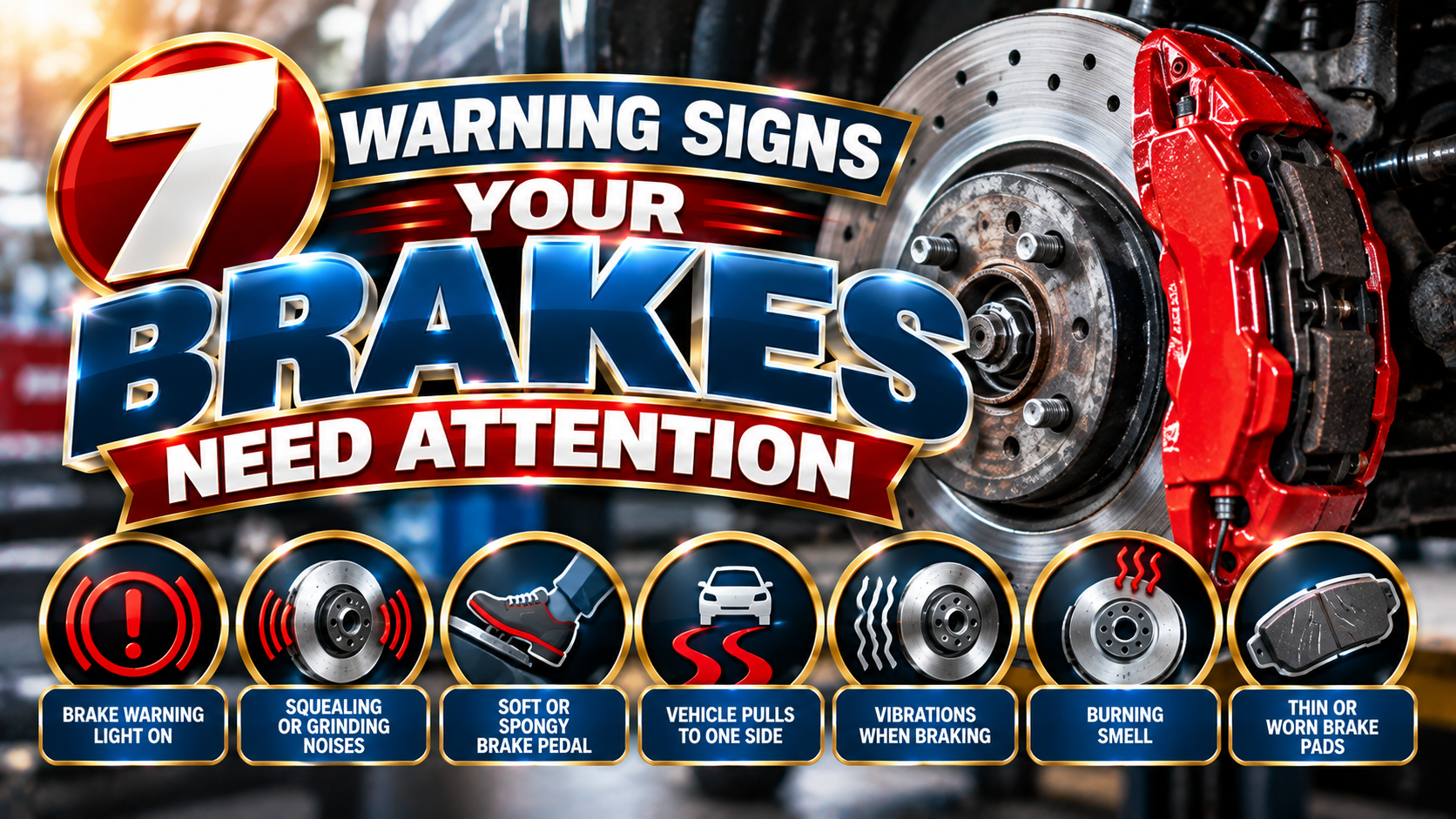
7 Warning Signs Your Brakes Need Attention: Don’t Ignore These Brake Problems
Learn How to Recognize Brake Problems and When to Schedule Professional Brake Repair in Watkinsville, GA
Your vehicle’s braking system is one of its most important safety features. Whether you’re commuting through Watkinsville, navigating traffic in Oconee County, or traveling along Georgia highways, you depend on your brakes to slow down and stop safely.
But how do you know when your brakes need attention?
Brake problems often develop gradually. You might notice a faint squealing sound, a slight vibration when stopping, or a brake pedal that feels different than usual. Although these symptoms may seem minor at first, they can indicate worn components or developing mechanical problems.
Ignoring brake warning signs can reduce braking performance, increase repair costs, and potentially compromise your safety.
At Car Craft of Watkinsville, we believe recognizing brake problems early is an important part of responsible vehicle maintenance.
In this guide, we’ll explain seven warning signs your brakes need attention, what may cause them, and when you should schedule a professional brake inspection.
1. Your Brakes Squeal or Squeak
One of the most common warning signs of brake wear is a high-pitched squealing or squeaking noise when you press the brake pedal.
Some brake pads include built-in wear indicators designed to produce a squealing sound when the friction material becomes thin.
This sound alerts drivers that the brake pads may be approaching the end of their service life.
Common Causes of Squealing Brakes
- Worn brake pads
- Brake pad wear indicators
- Brake dust or debris
- Moisture on brake components
- Brake pad vibration
- Glazed brake pads or rotors
- Improperly installed or worn brake hardware
Are Squealing Brakes Always Dangerous?
Not necessarily.
A brief squeal after rain or overnight parking may result from surface moisture or light rust on the brake rotors.
However, persistent squealing should be inspected, especially if the noise becomes louder or occurs during most stops.
Professional Tip: If your brakes repeatedly squeal, don’t assume the noise is normal. A brake inspection can help determine whether the pads are worn or another problem is present.
2. You Hear Grinding When Braking
Grinding noises are among the more concerning signs of brake trouble.
A harsh grinding or scraping sound may indicate that brake pads have worn down enough for metal components to contact the brake rotor.
This can damage the rotor and reduce braking effectiveness.
Possible Causes of Grinding Brakes
- Severely worn brake pads
- Metal-to-metal contact
- Damaged brake rotors
- Debris caught between brake components
- Worn or damaged brake hardware
- Caliper problems
Why Grinding Brakes Shouldn’t Be Ignored
Continuing to drive with severely worn brake pads can lead to additional rotor damage and potentially compromise braking performance.
What might have started as a routine brake pad replacement could require more extensive repairs.
Safety Warning: If your brakes are grinding, have the vehicle inspected promptly. If braking performance is reduced or the vehicle feels unsafe, stop driving and arrange professional assistance.
3. Your Brake Pedal Feels Soft or Spongy
Your brake pedal should generally feel firm and respond consistently when you apply pressure.
If the pedal feels unusually soft, spongy, or travels farther than normal, there may be a problem with the hydraulic braking system.
Common Causes of a Soft Brake Pedal
- Air in the brake lines
- Brake fluid leaks
- Low brake fluid
- Master cylinder problems
- Deteriorated brake hoses
- Other hydraulic system malfunctions
Why a Spongy Brake Pedal Is Serious
Most passenger vehicles use hydraulic pressure to operate their brakes.
If the system cannot maintain proper pressure, braking effectiveness may be reduced.
What Should You Do?
A sudden change in brake pedal feel requires immediate attention.
If your brake pedal sinks unusually far, reaches the floor, or the vehicle does not stop normally, pull over safely and arrange towing rather than continuing to drive.
A professional brake inspection can help identify the underlying hydraulic problem.
4. Your Vehicle Vibrates or Shakes When Braking
If your steering wheel or brake pedal vibrates when you slow down, your braking system may need attention.
Vibration during braking can occur when the brake rotors have uneven thickness, surface irregularities, or other problems.
Common Causes of Brake Vibration
- Brake rotor thickness variation
- Uneven brake pad deposits
- Excessive rotor runout
- Worn suspension components
- Loose or damaged steering components
- Other wheel or tire problems
What Does Brake Vibration Feel Like?
You may notice:
- Steering wheel shaking during braking
- Brake pedal pulsation
- Vehicle vibration while slowing down
- Shuddering during higher-speed braking
Does Brake Vibration Always Mean Warped Rotors?
No.
Although drivers often refer to this problem as “warped rotors,” brake pulsation can result from several conditions.
A technician can measure rotor condition and inspect related components to determine the actual cause.
5. Your Car Pulls to One Side When Braking
Your vehicle should generally remain stable and predictable when you apply the brakes.
If it consistently pulls left or right during braking, there may be an imbalance in braking force or another vehicle handling problem.
Possible Causes
- Sticking brake caliper
- Uneven brake pad wear
- Restricted brake hose
- Contaminated brake friction material
- Tire pressure differences
- Tire or suspension problems
Why Pulling During Braking Matters
Uneven braking force can affect vehicle control, particularly during emergency stops or on wet pavement.
If your vehicle pulls sharply when braking, have it inspected promptly.
6. Your Brake Warning Light Comes On
Modern vehicles use dashboard warning lights to alert drivers to certain brake system problems.
Depending on the vehicle, you may see a red brake warning light, an ABS warning light, or an electronic parking brake warning.
Common Brake Warning Lights
Brake System Warning Light: May indicate low brake fluid, an applied parking brake, or another braking system problem.
ABS Warning Light: Indicates a detected problem with the anti-lock braking system.
Electronic Parking Brake Warning: May indicate a parking brake or control system issue.
What Should You Do?
If a brake warning light appears, consult your owner’s manual and determine whether the parking brake is fully released.
If the warning remains illuminated, have the vehicle inspected.
Important: A red brake system warning accompanied by poor braking performance requires immediate attention. Stop driving safely and arrange professional assistance.
7. Your Vehicle Takes Longer to Stop
One of the most important signs of brake trouble is reduced stopping performance.
If your vehicle requires more distance to stop than it normally does under similar conditions, something may be affecting the braking system.
Possible Causes of Increased Stopping Distance
- Worn brake pads
- Brake fluid problems
- Overheated brakes
- Contaminated friction material
- Hydraulic system issues
- Tire traction problems
- Other mechanical faults
Why Reduced Braking Performance Is Dangerous
Longer stopping distances can increase the risk of a collision, especially during heavy traffic, sudden stops, or wet road conditions.
Safety Warning: If your vehicle is not slowing down normally, stop driving when safe and arrange professional inspection or towing.
Quick Reference: 7 Warning Signs Your Brakes Need Attention
| Warning Sign | Possible Cause | Recommended Action |
|---|---|---|
| Squealing or squeaking | Worn pads, moisture, or brake hardware | Schedule brake inspection |
| Grinding noise | Severely worn pads or damaged components | Prompt inspection; avoid driving if unsafe |
| Soft or spongy pedal | Hydraulic pressure problem or fluid leak | Stop driving if braking is compromised |
| Vibration when braking | Rotor irregularities or related components | Professional brake evaluation |
| Pulling while braking | Uneven braking force or handling problem | Schedule prompt inspection |
| Brake warning light | Brake system or ABS fault | Investigate warning immediately |
| Longer stopping distance | Reduced brake performance or tire traction | Stop driving if braking is impaired |
Because these symptoms may have several possible causes, professional diagnosis is important before replacing parts.
How Often Should Your Brakes Be Inspected?
Brake inspection intervals vary depending on the vehicle, driving conditions, and manufacturer recommendations.
As a practical preventive maintenance approach, having your brakes evaluated during regular vehicle service appointments can help identify developing problems.
Factors That Affect Brake Wear
- Stop-and-go traffic
- Frequent hard braking
- Mountain driving
- Vehicle weight
- Towing
- Driving habits
- Brake component quality
- Road conditions
Drivers who frequently travel in heavy traffic or on steep roads may experience faster brake wear.
Follow your manufacturer’s maintenance recommendations and schedule an inspection whenever warning signs appear.
How Long Do Brake Pads Usually Last?
Brake pad lifespan varies considerably.
Many passenger vehicle brake pads may last approximately 25,000 to 70,000 miles, but actual service life can fall outside that range.
Factors That Influence Brake Pad Life
- Driving style
- Traffic conditions
- Vehicle weight
- Brake pad material
- Terrain
- Towing frequency
- Condition of brake components
A driver who frequently brakes in heavy traffic may need replacement sooner than someone who primarily travels on open highways.
The most reliable way to determine brake pad condition is through inspection, not mileage alone.
What Happens During a Professional Brake Inspection?
A professional brake inspection helps identify worn components, mechanical problems, and potential safety concerns.
Depending on the vehicle and inspection requested, a technician may evaluate:
Brake Pads
The technician checks friction material thickness and wear patterns.
Brake Rotors
Rotors may be inspected for excessive wear, scoring, damage, or thickness variation.
Brake Calipers
Calipers and related hardware may be checked for proper operation and signs of sticking or damage.
Brake Fluid
The technician may inspect fluid level, condition, and visible leaks.
Brake Lines and Hoses
Hydraulic lines and hoses may be checked for deterioration, corrosion, or leakage.
Brake Warning Systems
Relevant warning lights and diagnostic information may be evaluated.
Overall Braking Performance
When appropriate, the technician may perform additional testing to assess brake operation.
The goal is to identify actual problems and recommend the repairs needed to restore proper braking performance.
Brake Pads vs. Brake Rotors: What’s the Difference?
Brake pads and brake rotors work together to slow your vehicle.
Brake Pads
Brake pads contain friction material that presses against the brake rotor when you apply the brakes.
Over time, this friction material wears down and eventually requires replacement.
Brake Rotors
Brake rotors are metal discs that rotate with the wheels.
When brake pads press against the rotors, friction helps slow the vehicle.
Rotors may require replacement if they become excessively worn, damaged, or fall outside manufacturer specifications.
Do You Always Need New Rotors with Brake Pads?
Not necessarily.
Whether rotors require replacement or resurfacing depends on their condition, measurements, vehicle specifications, and the manufacturer’s service guidance.
A professional inspection can determine the appropriate repair.
Can Worn Brakes Damage Other Parts of Your Vehicle?
Yes.
Continuing to operate a vehicle with severely worn or malfunctioning brakes can contribute to additional damage.
Potential problems include:
- Damaged brake rotors
- Overheated brake components
- Increased wear on related hardware
- Reduced braking effectiveness
- Additional repair requirements
Addressing brake problems early can sometimes help prevent more extensive repairs.
How Much Does Brake Repair Cost?
Brake repair costs vary depending on the vehicle and the specific problem.
Factors That Affect Brake Repair Costs
- Vehicle make and model
- Brake pad type
- Rotor condition
- Number of wheels requiring service
- Caliper condition
- Hydraulic system repairs
- Additional diagnostic work
A routine brake pad replacement is generally less involved than repairing a hydraulic system problem or replacing multiple damaged components.
A professional inspection and estimate can help determine what repairs are necessary.
How to Help Your Brakes Last Longer
Although brake components naturally wear over time, certain driving habits can help reduce unnecessary wear.
Avoid Unnecessary Hard Braking
Maintain a safe following distance and anticipate traffic conditions.
Reduce Excessive Vehicle Weight
Avoid carrying unnecessary heavy loads that increase braking demands.
Follow Recommended Maintenance
Have brake components inspected according to your manufacturer’s guidance.
Pay Attention to Warning Signs
Unusual noises, vibrations, and changes in pedal feel should not be ignored.
Maintain Your Tires
Proper tire condition and inflation support traction and braking performance.
Use Appropriate Driving Techniques on Mountain Roads
Follow your vehicle manufacturer’s recommendations for descending steep grades, including appropriate gear selection when applicable.
Why Brake Maintenance Matters for Watkinsville, GA Drivers
Drivers throughout Watkinsville, Oconee County, Bishop, Bogart, and surrounding Northeast Georgia communities encounter a variety of road conditions.
Stop-and-Go Traffic
Frequent braking can increase brake pad wear.
Wet Georgia Roads
Rain reduces available tire traction, making properly functioning brakes and tires especially important.
Rural and Curving Roads
Reliable braking performance is essential when approaching intersections, curves, and unexpected hazards.
Highway Travel
At higher speeds, maintaining proper braking performance becomes particularly important.
Routine brake inspections help drivers identify problems before they compromise vehicle safety.
Professional Brake Repair in Watkinsville, GA
If your brakes squeal, grind, vibrate, pull, or feel different than normal, professional inspection can help determine the cause.
At Car Craft of Watkinsville, our experienced automotive technicians provide brake inspection and repair services for drivers throughout Watkinsville and Oconee County.
Whether your vehicle needs brake pads, rotor service, or diagnosis of another braking system problem, identifying the underlying issue is the first step toward an appropriate repair.
Trust Car Craft of Watkinsville for Honest Brake Repair
At Car Craft of Watkinsville, we understand how important dependable brakes are for your safety and peace of mind.
Our family-owned automotive repair shop is committed to providing honest recommendations, clear communication, and quality workmanship.
Our experienced, ASE-certified technicians provide automotive maintenance and repair services, including:
- Brake Repair
- Vehicle Safety Inspections
- Tire Rotation & Balancing
- Wheel Alignment
- Diagnostic Services
- Oil Change Services
- Other Automotive Maintenance and Repair Services
We believe customers should understand their vehicle’s condition and the recommended repairs before authorizing service.
Are Your Brakes Showing Warning Signs?
Don’t wait for a minor brake concern to become a serious safety problem.
Squealing, grinding, vibration, pulling, warning lights, and changes in stopping performance can indicate that your brakes need professional attention.
Contact Car Craft of Watkinsville today to schedule a professional brake inspection or brake repair in Watkinsville, GA.
Let our experienced automotive team help keep your vehicle stopping safely and reliably.