
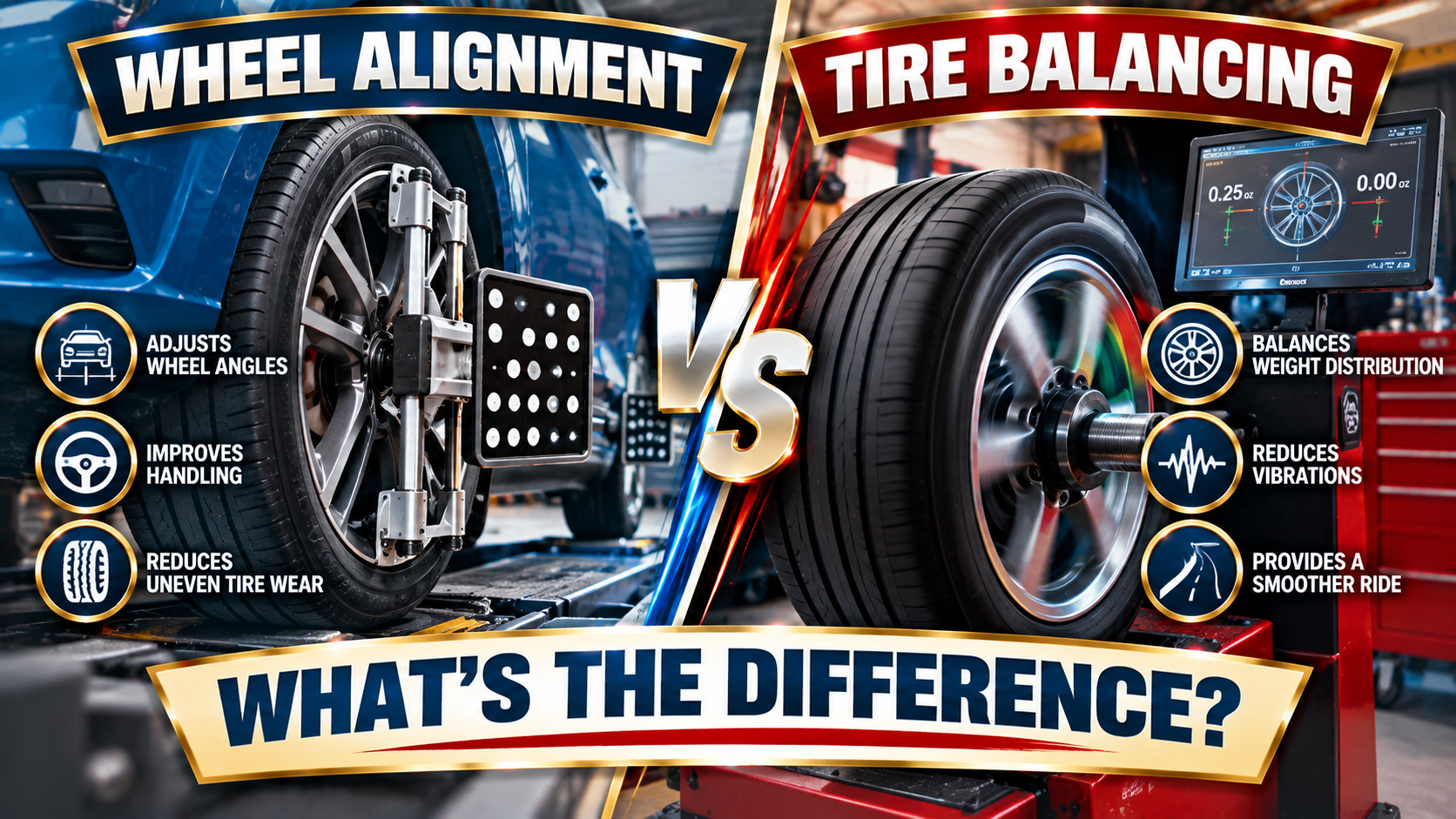
Wheel Alignment vs. Tire Balancing: What’s the Difference?
Understanding Wheel Alignment and Tire Balancing Services in Watkinsville, GA
Have you ever noticed your steering wheel vibrating while driving down the highway? Or perhaps your vehicle pulls to one side even when you’re traveling on a straight road?
These symptoms may indicate a problem with your wheel alignment or tire balancing. Although the two services are often mentioned together, they address different issues.
Understanding the difference between wheel alignment and tire balancing can help you recognize potential vehicle problems, protect your tires from premature wear, and maintain a smoother, safer driving experience.
At Car Craft of Watkinsville, we believe informed drivers make better vehicle maintenance decisions. Whether you’re commuting through Watkinsville, traveling around Oconee County, or driving across Northeast Georgia, properly maintained tires and suspension components are essential for dependable transportation.
In this guide, we’ll explain what wheel alignment and tire balancing are, how they differ, the warning signs of each problem, and when you should consider professional service.
What Is Wheel Alignment?
Wheel alignment is the process of measuring and adjusting specific suspension and steering angles so your vehicle’s wheels are positioned according to manufacturer specifications.
Proper alignment helps your tires maintain appropriate contact with the road and supports predictable steering and handling.
Despite the name, wheel alignment generally involves adjusting suspension geometry rather than physically moving or repositioning the tires on their wheels.
What Does a Wheel Alignment Adjust?
Depending on your vehicle’s design, a technician may evaluate three primary alignment angles.
Camber
Camber describes the inward or outward tilt of a wheel when viewed from the front of the vehicle.
- Positive camber: The top of the wheel tilts outward.
- Negative camber: The top of the wheel tilts inward.
Excessive camber can contribute to uneven tire wear and handling problems.
Caster
Caster describes the angle of the steering axis when viewed from the side of the vehicle.
Caster influences steering stability, directional control, and steering wheel return.
Toe
Toe describes whether the fronts of the tires point slightly inward or outward when viewed from above.
- Toe-in: The fronts of the tires point toward each other.
- Toe-out: The fronts of the tires point away from each other.
Incorrect toe settings are a common contributor to rapid or irregular tire wear.
Important: Not every alignment angle is adjustable on every vehicle. A technician will evaluate the vehicle’s design and manufacturer specifications before recommending adjustments or repairs.
What Is Tire Balancing?
Tire balancing is the process of correcting uneven weight distribution in a tire and wheel assembly.
Even a properly manufactured tire and wheel can have small differences in weight distribution.
When the assembly rotates at highway speeds, these differences may cause vibrations.
During tire balancing, a technician uses specialized equipment to identify imbalance and determine where corrective wheel weights should be placed.
How Tire Balancing Works
A typical tire balancing service includes:
- Removing the wheel and tire assembly from the vehicle.
- Mounting the assembly on a balancing machine.
- Rotating the assembly to measure imbalance.
- Identifying the appropriate locations for corrective weights.
- Installing the necessary weights.
- Rechecking the assembly to confirm proper balance.
Some shops also use road-force balancing equipment to evaluate additional tire and wheel characteristics.
Proper balancing helps reduce vibrations and supports a smoother driving experience.
Wheel Alignment vs. Tire Balancing: Key Differences
Although both services help maintain vehicle performance and tire condition, they solve different problems.
| Feature | Wheel Alignment | Tire Balancing |
|---|---|---|
| Primary purpose | Correct wheel and suspension angles | Correct uneven rotating weight distribution |
| Main components involved | Steering and suspension geometry | Tire and wheel assemblies |
| Common warning sign | Vehicle pulling or uneven tire wear | Vibration at certain speeds |
| Equipment used | Wheel alignment measurement system | Tire balancing machine |
| Typical correction | Adjust alignment angles where possible | Install or reposition wheel weights |
| Tire wear impact | Incorrect alignment can cause rapid uneven wear | Imbalance can contribute to irregular wear |
| Steering effect | May affect directional stability | May cause steering wheel vibration |
| When commonly checked | After impacts, suspension repairs, or alignment symptoms | During tire installation, rotation, or vibration diagnosis |
The simplest difference: Wheel alignment helps your vehicle track and steer correctly, while tire balancing helps your wheels rotate smoothly.
1. Signs Your Vehicle Needs a Wheel Alignment
A vehicle with incorrect alignment may develop noticeable handling problems or uneven tire wear.
Your Vehicle Pulls to One Side
If your vehicle consistently drifts left or right on a relatively level road, an alignment problem may be present.
However, tire pressure differences, tire construction, road slope, and brake problems can also cause pulling.
Your Steering Wheel Is Off-Center
If your steering wheel appears crooked while driving straight, the vehicle may need an alignment inspection.
Your Tires Wear Unevenly
Incorrect alignment can cause certain areas of a tire to wear faster than others.
Common patterns include excessive inner-edge or outer-edge wear and feathering across the tread.
Your Steering Feels Unstable
Some alignment problems can contribute to wandering or reduced directional stability.
You Recently Hit a Large Pothole or Curb
A significant impact can affect alignment settings or damage suspension components.
If your vehicle begins handling differently after an impact, schedule an inspection.
2. Signs Your Tires Need Balancing
Tire imbalance most commonly produces vibrations that become noticeable at certain driving speeds.
Steering Wheel Vibration
Imbalance in a front wheel assembly may cause vibration felt through the steering wheel.
Seat or Floor Vibration
Imbalance in a rear wheel assembly may be felt through the seat or vehicle floor.
Vibration at Highway Speeds
Tire imbalance often becomes more noticeable as wheel speed increases.
However, vibration can also result from tire damage, bent wheels, suspension wear, or other mechanical problems.
Vibration After Tire Installation
If your vehicle begins vibrating after new tires are installed, the tire and wheel assemblies may need to be rechecked.
Missing Wheel Weights
If a balancing weight comes loose, the affected wheel assembly may become imbalanced.
Professional Tip: Not every vibration is caused by tire imbalance. Accurate diagnosis is important before performing repairs.
Can Bad Wheel Alignment Cause Tire Vibration?
Incorrect wheel alignment typically causes pulling, steering concerns, or irregular tire wear rather than the speed-specific vibration commonly associated with tire imbalance.
However, severe alignment problems can contribute to uneven tire wear that eventually produces vibration.
If your vehicle vibrates while driving, a technician may need to inspect:
- Tire balance
- Tire condition
- Wheel damage
- Suspension components
- Steering components
- Wheel bearings
- Other drivetrain components
Identifying the actual cause helps avoid unnecessary service.
Can Unbalanced Tires Cause Uneven Tire Wear?
Yes. Tire imbalance can contribute to irregular tire wear under certain conditions.
When a tire and wheel assembly is significantly imbalanced, vibration and repeated loading may contribute to uneven tread wear.
However, uneven tire wear can also result from:
- Incorrect tire pressure
- Wheel alignment problems
- Worn shocks or struts
- Damaged suspension components
- Tire defects
- Improper tire rotation practices
The tread wear pattern can provide useful clues, but a complete inspection may be necessary to identify the cause.
What Happens During a Professional Wheel Alignment?
A wheel alignment service generally involves measuring the vehicle’s suspension geometry and making appropriate adjustments.
Step 1: Initial Inspection
The technician may inspect tires, steering components, and suspension parts for problems that could affect alignment.
Step 2: Alignment Measurements
Specialized equipment measures the vehicle’s alignment angles.
Step 3: Compare Measurements to Specifications
The technician compares the readings with manufacturer specifications.
Step 4: Make Necessary Adjustments
Adjustable alignment angles are corrected where possible.
Step 5: Verify Results
The technician confirms the final measurements and may perform additional checks.
If worn or damaged components prevent proper alignment, repairs may be necessary before alignment can be completed.
What Happens During Professional Tire Balancing?
Tire balancing focuses on the rotating tire and wheel assembly.
Step 1: Inspect the Tire and Wheel
The technician checks for visible damage, abnormal wear, and other concerns.
Step 2: Mount the Assembly on a Balancer
The tire and wheel are secured to a balancing machine.
Step 3: Measure Imbalance
The machine identifies the amount and location of imbalance.
Step 4: Install Corrective Weights
Wheel weights are added or adjusted according to the machine’s measurements.
Step 5: Verify the Balance
The assembly is rechecked to confirm that the imbalance has been corrected within the equipment’s tolerances.
If a tire or wheel has excessive runout or damage, balancing alone may not eliminate vibration.
How Often Should You Get a Wheel Alignment?
There is no universal alignment interval that applies to every vehicle.
Some manufacturers provide specific recommendations, while others recommend alignment checks when symptoms appear or after certain repairs.
Consider an Alignment Inspection When:
- Your vehicle pulls to one side.
- Your steering wheel is off-center.
- Your tires show unusual wear.
- You hit a significant pothole or curb.
- Steering or suspension components have been replaced.
- Your vehicle’s handling changes noticeably.
Periodic alignment checks may also be helpful for vehicles frequently driven on rough roads.
Follow your manufacturer’s guidance and your technician’s recommendations.
How Often Should You Balance Your Tires?
Tire balancing is commonly performed when new tires are installed or when tires are removed and remounted.
Balancing may also be appropriate when:
- You notice speed-related vibration.
- A wheel weight is missing.
- A tire has been repaired and remounted.
- Tires are being rotated and a vibration concern exists.
- A technician identifies a possible imbalance.
Tire rotation and tire balancing are different services. Rotation changes tire positions on the vehicle, while balancing corrects weight distribution in each assembly.
Not every tire rotation automatically requires balancing.
Do You Need Wheel Alignment and Tire Balancing at the Same Time?
Not always.
Because the services address different problems, one may be needed without the other.
For example:
Scenario 1: Your vehicle pulls to the right.
An alignment inspection may be appropriate, along with checks for tire and brake problems.
Scenario 2: Your steering wheel vibrates at highway speeds.
Tire and wheel balance may be one of the first areas evaluated.
Scenario 3: Your vehicle pulls and vibrates.
Both alignment and balancing may need evaluation, along with other steering, suspension, and tire components.
Scenario 4: You purchased new tires.
The tires should generally be balanced during installation. An alignment inspection may also be beneficial if uneven wear or handling symptoms are present.
A professional evaluation can determine which services are appropriate.
Can Potholes Affect Wheel Alignment and Tire Balance?
Yes. Significant pothole impacts can affect both wheel alignment and tire or wheel condition.
Georgia roads can develop potholes because of pavement deterioration, moisture, heavy traffic, and temperature changes.
Possible Damage from Potholes
- Alignment changes
- Bent wheels
- Tire sidewall damage
- Broken internal tire components
- Damaged steering parts
- Bent suspension components
- Lost wheel weights
If your vehicle develops a vibration, pulling sensation, or unusual noise after hitting a pothole, have it inspected.
Safety Reminder: A tire with a sidewall bulge or other serious structural damage should not be driven on. Have it evaluated and replaced as appropriate.
Can Incorrect Tire Pressure Feel Like an Alignment Problem?
Yes.
Unequal tire pressures can sometimes cause a vehicle to pull or handle differently.
Underinflated tires may also create unusual steering sensations and contribute to uneven wear.
Before assuming your vehicle needs an alignment, check tire pressure according to the manufacturer’s recommended cold inflation values.
These values are typically found on the driver’s door placard or in the owner’s manual.
Do not inflate tires to the maximum pressure printed on the sidewall unless that value is specifically required by the vehicle manufacturer.
How Much Do Wheel Alignment and Tire Balancing Cost?
The cost of wheel alignment and tire balancing varies based on the vehicle and the work required.
Wheel Alignment Cost Factors
- Vehicle make and model
- Suspension design
- Number of adjustable alignment angles
- Condition of steering and suspension components
- Additional repairs needed
Tire Balancing Cost Factors
- Number of wheels being balanced
- Wheel and tire size
- Wheel design
- Balancing equipment and procedure
- Additional tire or wheel concerns
A professional inspection and estimate can help determine the appropriate service.
At Car Craft of Watkinsville, we believe customers should understand recommended maintenance and repairs before authorizing work.
How Proper Alignment and Balancing Help Extend Tire Life
Tires represent a significant vehicle maintenance expense.
Keeping your wheels properly aligned and your tire and wheel assemblies balanced can help protect that investment.
Benefits of Proper Wheel Alignment
- Reduced alignment-related tire wear
- More predictable steering
- Improved directional stability
- Better vehicle handling
- Potential reduction in unnecessary rolling resistance
Benefits of Proper Tire Balancing
- Reduced speed-related vibration
- Smoother driving
- Less vibration transmitted through the vehicle
- Reduced risk of certain imbalance-related tire wear patterns
Neither service can correct every tire or suspension problem, but both are important when symptoms or inspection findings indicate they are needed.
Why Wheel Alignment and Tire Balancing Matter for Watkinsville, GA Drivers
Drivers throughout Watkinsville, Oconee County, Bishop, Bogart, and surrounding Northeast Georgia communities encounter a variety of road conditions.
From daily commuting to highway travel and rural roads, tire and suspension maintenance helps support reliable vehicle performance.
Potholes and Uneven Pavement
Road impacts can affect wheel alignment and damage tires or wheels.
Highway Driving
Tire imbalance may become especially noticeable at higher speeds.
Daily Commuting
Repeated driving over rough pavement can contribute to wear involving tires and suspension components.
Long-Distance Travel
Proper tire maintenance helps support predictable handling and a comfortable ride.
If your vehicle begins pulling, vibrating, or wearing tires unevenly, an inspection can help identify the problem before it worsens.
Professional Wheel Alignment and Tire Balancing in Watkinsville, GA
At Car Craft of Watkinsville, we understand the importance of proper tire maintenance, steering performance, and vehicle handling.
Our automotive maintenance and repair services help drivers identify problems that can affect tire wear and driving comfort.
Whether your vehicle pulls to one side, develops highway-speed vibrations, or shows unusual tire wear, professional evaluation can help determine whether alignment, balancing, tire repair, or another service is appropriate.
Trust Car Craft of Watkinsville for Tire and Wheel Maintenance
At Car Craft of Watkinsville, we’re proud to serve drivers throughout Watkinsville, Oconee County, and surrounding Northeast Georgia communities.
Our family-owned automotive repair shop is committed to providing honest recommendations, clear communication, and quality workmanship.
Our experienced, ASE-certified technicians provide automotive maintenance and repair services, including:
- Wheel Alignment
- Tire Rotation & Balancing
- Brake Repair
- Vehicle Safety Inspections
- Diagnostic Services
- Oil Change Services
- Other Automotive Maintenance and Repair Services
We believe in helping customers understand their vehicle’s condition without recommending unnecessary repairs.
Is Your Vehicle Pulling or Vibrating While Driving?
Don’t ignore steering problems, unusual tire wear, or vibrations at highway speeds.
These symptoms may indicate wheel alignment problems, tire imbalance, or another issue that needs attention.
Contact Car Craft of Watkinsville today to schedule wheel alignment, tire balancing, or a vehicle inspection in Watkinsville, GA.
Let our experienced automotive team help keep your vehicle driving smoothly and safely.