Georgia Summer Heat: How to Protect Your Car from Extreme Temperatures
Essential Summer Car Maintenance Tips for Drivers in Watkinsville, GA, Oconee County, and Northeast Georgia
Georgia summers bring long days, high temperatures, intense sunshine, and plenty of humidity. While summer is a great time for vacations, road trips, and outdoor activities, the heat can take a serious toll on your vehicle.
From overheating engines and weakened car batteries to tire pressure problems and struggling air conditioning systems, extreme summer temperatures can expose existing mechanical issues and accelerate wear on important vehicle components.
For drivers throughout Watkinsville, Oconee County, Bishop, Bogart, and surrounding Northeast Georgia communities, preparing your vehicle for hot weather can help reduce the risk of unexpected breakdowns and costly repairs.
At Car Craft of Watkinsville, we believe preventive maintenance is one of the best ways to protect your vehicle and keep it running reliably throughout the year.
In this guide, we’ll explain how Georgia’s summer heat affects your vehicle, which components need extra attention, and what you can do to protect your car during the hottest months of the year.
How Does Georgia Summer Heat Affect Your Car?
High temperatures place additional demands on several important vehicle systems.
Your engine produces significant heat during normal operation. During summer, the cooling system must work effectively to regulate engine temperature, especially during stop-and-go traffic or extended idling.
Heat can also accelerate battery deterioration, affect tire pressure, increase stress on air conditioning components, and contribute to the aging of rubber and plastic parts.
Common Summer-Related Vehicle Problems
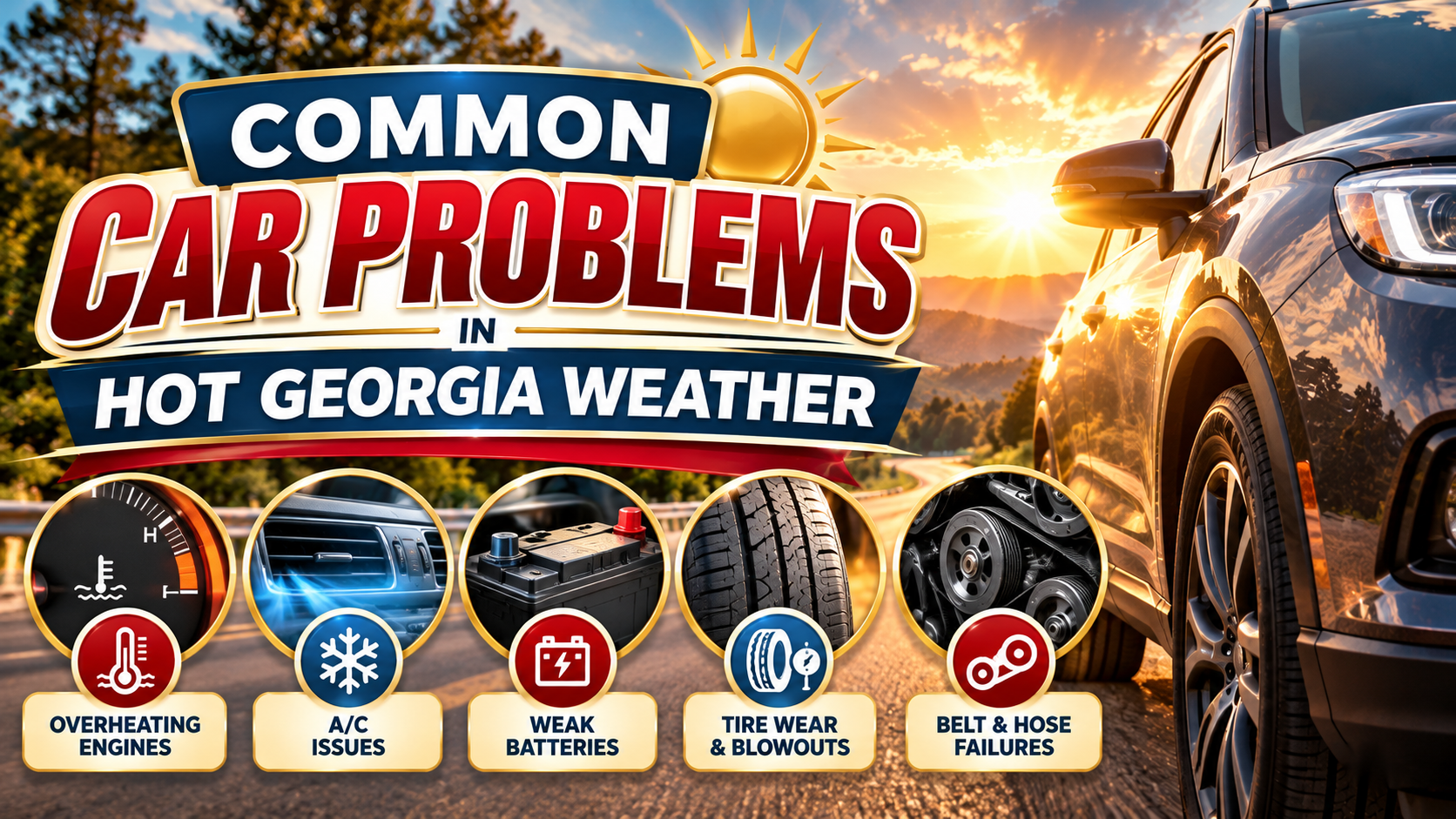
- Engine overheating
- Weak or failing batteries
- Low coolant levels
- Air conditioning problems
- Tire pressure fluctuations
- Tire blowouts associated with damage or underinflation
- Worn belts and hoses
- Fluid leaks
- Reduced engine performance
- Interior and exterior sun damage
The good news is that many heat-related problems can be identified through regular inspections and preventive maintenance.
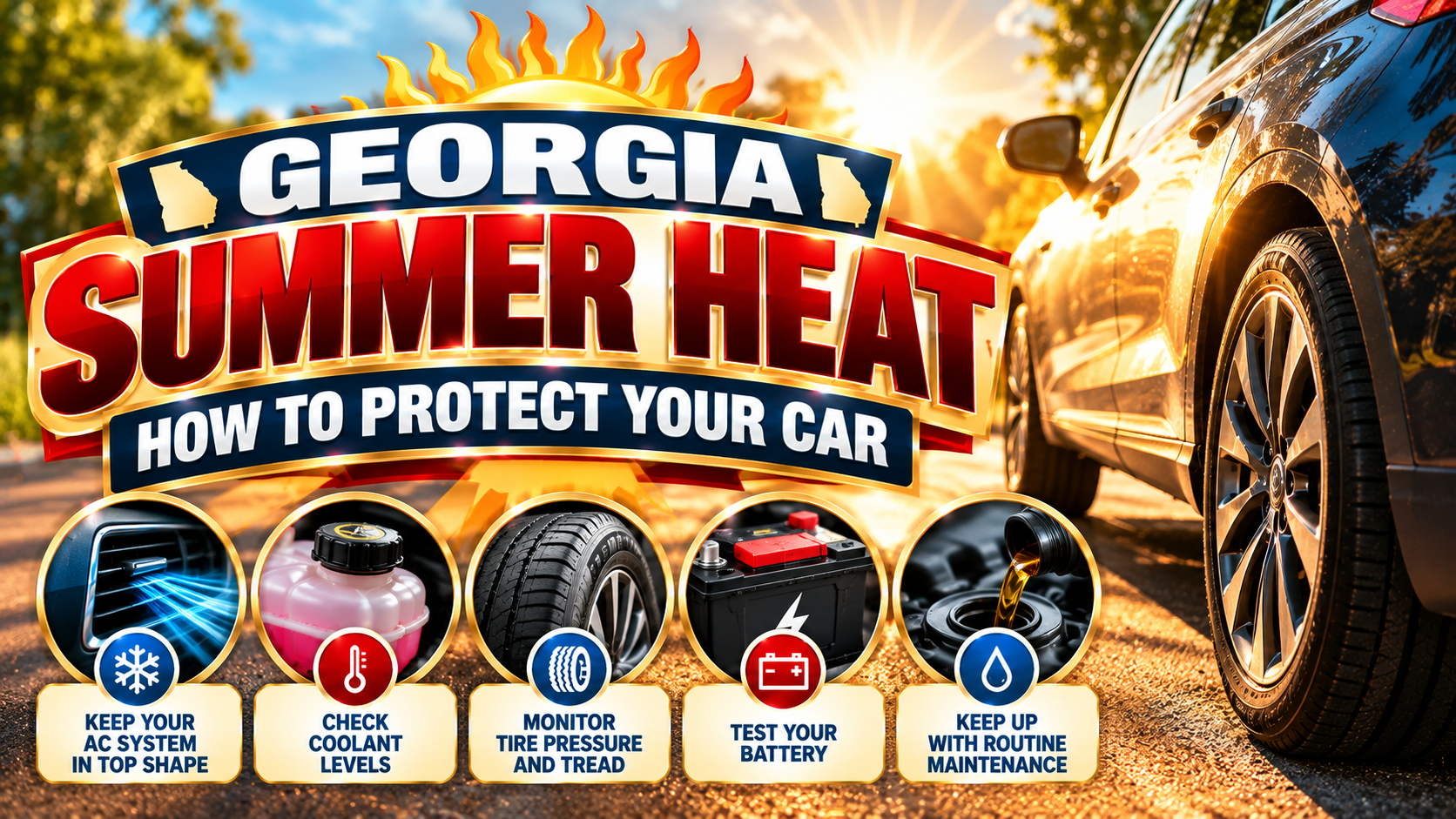
1. Keep Your Engine Cooling System in Good Condition
Your vehicle’s cooling system is especially important during Georgia’s hot summer months.
The cooling system circulates coolant through the engine to help regulate operating temperature and prevent overheating.
When cooling system components fail or coolant levels become too low, engine temperatures can rise beyond safe operating limits.
Important Cooling System Components
- Radiator
- Water pump
- Thermostat
- Radiator hoses
- Cooling fans
- Coolant reservoir
- Radiator cap or pressure cap
- Engine coolant
Signs Your Cooling System Needs Attention
- Temperature gauge reading higher than normal
- Engine overheating warning light
- Coolant leaking beneath the vehicle
- Sweet-smelling odors
- Steam coming from under the hood
- Coolant level dropping repeatedly
- Cooling fans not operating correctly
How to Protect Your Engine
Check your coolant level according to your owner’s manual, and have the cooling system inspected if you notice leaks or temperature problems.
Follow the manufacturer’s coolant replacement schedule and use the specified coolant formulation.
Important: Never remove a radiator cap or coolant pressure cap while the engine is hot. Pressurized coolant can cause serious burns.
2. Test Your Car Battery Before the Hottest Weather Arrives
Many drivers associate dead batteries with winter, but summer heat can also shorten battery life.
High temperatures accelerate certain chemical reactions inside automotive batteries, contributing to internal deterioration over time.
In some battery designs, excessive heat can also increase water loss.
Signs Your Battery May Be Weak
- Slow engine cranking
- Clicking when starting
- Frequent jump-starts
- Dim headlights
- Corroded battery terminals
- Electrical accessories behaving unusually
- Difficulty starting after the vehicle sits
Why Summer Battery Testing Matters
A battery may continue functioning even as its internal condition deteriorates.
Professional battery testing can help identify declining performance before a complete failure occurs.
Summer Battery Maintenance Tips
- Have older batteries tested.
- Inspect battery terminals for corrosion.
- Check battery connections.
- Address slow starting promptly.
- Have the charging system inspected if problems are suspected.
Professional Tip: If your battery is approaching the typical three-to-five-year service-life range, consider testing it before peak summer temperatures.
3. Check Your Tires and Tire Pressure
Hot pavement, long highway trips, and incorrect tire pressure can create serious tire problems during summer.
Tire pressure changes with temperature, and tires naturally heat up while driving.
Underinflated tires can experience excessive flexing and heat buildup, increasing the risk of tire damage or failure.
Summer Tire Maintenance Checklist
- Check tire pressure when tires are cold.
- Inspect tread depth.
- Look for cracks or sidewall damage.
- Check for bulges.
- Watch for uneven tire wear.
- Rotate tires according to manufacturer recommendations.
- Inspect the spare tire, if equipped.
What Tire Pressure Should You Use?
Always follow the vehicle manufacturer’s recommended cold tire pressure, usually found on the driver’s door placard or in the owner’s manual.
Do not inflate tires to the maximum pressure printed on the tire sidewall unless specifically directed by the vehicle manufacturer.
Can Hot Weather Cause Tire Blowouts?
Heat alone does not mean a properly maintained tire will fail.
However, underinflation, overloading, tire damage, aging, and sustained high-speed driving can contribute to excessive heat buildup and increase the risk of tire failure.
Regular inspections are especially important before summer road trips.
4. Make Sure Your Car’s Air Conditioning Works Properly
A functioning air conditioning system is more than a convenience during Georgia summers.
When outdoor temperatures climb, a vehicle’s interior can become extremely hot, making reliable cabin cooling important for comfort and safe travel.
Signs Your Car’s AC Needs Attention
- Air blowing warm instead of cold
- Weak airflow
- Unusual noises when the AC operates
- Musty odors
- Cooling performance that changes unexpectedly
- AC working while driving but not while idling
Common Causes of Car AC Problems
- Refrigerant leaks
- Compressor problems
- Cooling fan issues
- Electrical faults
- Clogged cabin air filter
- Airflow restrictions
- Other HVAC component failures
How to Protect Your AC System
Have cooling performance checked if you notice changes.
Avoid assuming that adding refrigerant will fix every AC problem. Low refrigerant generally indicates a leak or another issue that should be investigated.
A professional diagnostic evaluation can help determine the appropriate repair.
5. Stay Current with Oil Changes
Engine oil helps lubricate moving engine components, reduce friction, and carry away some of the heat generated during operation.
Summer driving can involve heavy traffic, long trips, extended idling, and other conditions that place additional demands on the engine.
Why Oil Maintenance Matters
Proper engine lubrication helps:
- Reduce friction
- Protect internal engine components
- Limit excessive wear
- Support normal engine operation
- Reduce sludge formation when maintenance is performed correctly
Summer Oil Change Tips
- Check the engine oil level regularly.
- Follow your manufacturer’s oil change schedule.
- Use the specified oil viscosity and performance standard.
- Address oil leaks.
- Review severe-service maintenance recommendations if applicable.
Important: Do not automatically switch to thicker oil because the weather is hot. Use the oil specification recommended for your vehicle.
6. Inspect Belts and Hoses
Engine belts and hoses are exposed to heat during normal operation.
Over time, rubber and other materials can deteriorate because of age, heat exposure, and wear.
A damaged belt or hose can cause an unexpected breakdown.
Signs of Belt Problems
- Squealing noises
- Visible fraying
- Cracks or missing belt material
- Unusual accessory operation
- Charging system problems
Signs of Hose Problems
- Coolant leaks
- Swollen hoses
- Cracks
- Deteriorated connections
- Visible damage
Have worn or damaged components inspected and replaced when necessary.
7. Watch for Engine Overheating
Engine overheating is one of the more serious problems drivers can experience during hot weather.
Although modern cooling systems are designed to regulate engine temperature across a wide range of conditions, component failures or coolant problems can cause overheating.
Common Causes of Engine Overheating
- Low coolant
- Coolant leaks
- Thermostat failure
- Water pump problems
- Radiator problems
- Cooling fan malfunction
- Blocked coolant passages
- Other engine or cooling system faults
Warning Signs of Overheating
- Temperature gauge climbing into the hot range
- Engine temperature warning light
- Steam from the engine compartment
- Unusual odors
- Reduced engine performance
What Should You Do If Your Car Overheats?
- Turn off the air conditioning if it is safe to do so.
- Pull over in a safe location as soon as possible.
- Shut off the engine.
- Allow the engine to cool.
- Do not open the pressurized cooling system while hot.
- Arrange professional assistance if overheating occurred.
Safety Warning: Continuing to drive an overheating vehicle can cause severe engine damage. If the temperature warning indicates overheating, stop driving as soon as it is safe.
8. Check Your Brakes Before Summer Road Trips
Summer often means more travel, including vacations, weekend trips, and longer highway drives.
Reliable brakes are essential for maintaining control during traffic, unexpected stops, and changing road conditions.
Signs Your Brakes Need Inspection
- Squealing
- Grinding
- Brake pedal vibration
- Soft or spongy pedal
- Pulling while braking
- Increased stopping distance
- Brake warning lights
Why Summer Driving Can Affect Brakes
Heavy traffic, frequent stops, mountain roads, and towing can increase braking demands.
Excessive brake heat can reduce performance under certain conditions.
Have your brakes inspected if you notice unusual symptoms, and follow your vehicle’s maintenance recommendations.
9. Protect Your Vehicle’s Interior from Sun Damage
Georgia sunshine can cause interior surfaces to become extremely hot.
Prolonged UV exposure and high temperatures can contribute to fading, cracking, and deterioration of certain interior materials.
Ways to Reduce Interior Heat and Sun Exposure
- Park in shaded areas when practical.
- Use a windshield sunshade.
- Keep interior surfaces clean.
- Use manufacturer-approved interior protectants.
- Consider professionally installed window tint that complies with Georgia law.
- Avoid leaving heat-sensitive items inside the vehicle.
Never Leave Children or Pets in a Parked Vehicle
A parked vehicle’s interior can heat up rapidly, even when outdoor temperatures seem moderate.
Never leave children, pets, or vulnerable individuals unattended inside a parked vehicle, even briefly or with windows partially open.
10. Protect Your Vehicle’s Exterior Finish
Intense sunlight and environmental contaminants can affect your vehicle’s paint and exterior surfaces.
Regular cleaning and appropriate paint protection can help maintain the finish.
Summer Exterior Care Tips
- Wash your vehicle regularly.
- Remove bird droppings and insect residue promptly.
- Use automotive cleaning products appropriate for the finish.
- Apply suitable paint protection when needed.
- Park in shaded areas when practical.
Avoid washing a vehicle on extremely hot surfaces when possible, as cleaning products and water may dry too quickly and leave residue.
11. Monitor Your Vehicle’s Fluid Levels
Several fluids play important roles in vehicle operation.
Summer is a good time to review maintenance needs and inspect for leaks.
Important Vehicle Fluids
Engine Oil: Lubricates internal engine components.
Engine Coolant: Helps regulate engine temperature.
Brake Fluid: Transfers hydraulic pressure through the braking system.
Transmission Fluid: Supports transmission operation where applicable.
Power Steering Fluid: Used in certain hydraulic steering systems.
Windshield Washer Fluid: Helps maintain visibility.
Not every vehicle uses the same fluid systems, and some components are not designed for routine owner-level fluid checks.
Follow the manufacturer’s instructions and have suspected leaks inspected.
12. Check Your Windshield Wipers and Visibility
Georgia summers often bring heavy rain and thunderstorms.
Worn windshield wipers can reduce visibility during sudden downpours.
Signs Your Wipers Need Replacement
- Streaking
- Skipping
- Squeaking
- Torn rubber
- Incomplete windshield coverage
Check windshield washer fluid and make sure exterior lights operate correctly.
Good visibility is especially important during afternoon storms and nighttime driving.
13. Avoid Overloading Your Vehicle
Summer road trips sometimes involve luggage, passengers, coolers, and recreational equipment.
Excessive vehicle weight can place additional demands on tires, brakes, suspension, and drivetrain components.
Before Loading Your Vehicle
- Check the vehicle’s payload capacity.
- Review tire pressure requirements.
- Distribute cargo appropriately.
- Secure loose items.
- Follow towing limits if applicable.
Do not exceed manufacturer-specified weight ratings.
14. Prepare for Summer Roadside Emergencies
Even well-maintained vehicles can experience unexpected problems.
Keeping basic supplies in your vehicle can help you respond to roadside situations.
Recommended Summer Emergency Kit
- Bottled water
- First aid kit
- Flashlight
- Phone charger
- Reflective warning triangles
- Jumper cables or an appropriate jump starter
- Tire inflator, if suitable
- Roadside assistance information
- Basic emergency supplies
Keep heat-sensitive supplies stored according to their manufacturers’ instructions, and inspect emergency items regularly.
If your vehicle breaks down in extreme heat, prioritize getting occupants to a safe, cooler location when possible.
15. Schedule a Summer Vehicle Inspection
One of the most effective ways to prepare your car for Georgia summer heat is to schedule preventive maintenance before problems develop.
Depending on the service requested, a summer inspection may include:
- Battery testing
- Cooling system inspection
- Coolant condition
- Tire pressure and tread inspection
- Brake inspection
- Engine oil and fluid checks
- Belt and hose inspection
- Air conditioning performance evaluation
- Exterior lighting inspection
- Visible leak inspection
Identifying worn components or developing problems before a long trip can help reduce the risk of unexpected breakdowns.
Georgia Summer Car Maintenance Checklist
Use this checklist to help prepare your vehicle for hot-weather driving.
Cooling System
-
Check coolant level when the engine is cool.
-
Inspect for coolant leaks.
-
Review coolant maintenance schedule.
-
Address unusual engine temperatures.
-
Have cooling system concerns diagnosed.
Battery and Electrical System
-
Test an aging battery.
-
Inspect battery terminals.
-
Check for slow starting.
-
Address charging system warning lights.
Tires and Brakes
-
Check cold tire pressure.
-
Inspect tread depth.
-
Look for tire damage.
-
Review tire rotation schedule.
-
Inspect brakes if symptoms are present.
Engine and Air Conditioning
-
Check engine oil level.
-
Review oil change schedule.
-
Test air conditioning performance.
-
Inspect belts and hoses.
-
Address unusual noises or fluid leaks.
Visibility and Emergency Preparedness
-
Inspect windshield wipers.
-
Fill washer fluid.
-
Test exterior lights.
-
Pack roadside emergency supplies.
-
Check weather and traffic conditions before long trips.
Why Does My Car Overheat More Easily in Summer?
High outdoor temperatures can reduce the margin available for a cooling system that is already struggling.
If your radiator, cooling fan, thermostat, water pump, or other components are not operating properly, hot weather and heavy traffic may make the problem more noticeable.
However, a properly functioning cooling system should be capable of regulating engine temperature under normal summer driving conditions.
If your vehicle repeatedly overheats, professional diagnosis is necessary.
Why Does My Car Battery Die in Summer?
Summer heat can accelerate battery deterioration.
Over time, internal battery components degrade, reducing the battery’s ability to store energy and provide starting power.
Frequent short trips, charging system problems, and battery age can contribute to failure.
A battery may appear to function normally until it can no longer supply enough power to start the engine.
Professional testing can help assess battery condition before complete failure.
Why Does My Car’s AC Stop Cooling in Hot Weather?
An air conditioning system may struggle during extreme heat for several reasons.
Possible causes include:
- Refrigerant leaks
- Compressor problems
- Cooling fan malfunctions
- Electrical issues
- Airflow restrictions
- Other HVAC faults
If your AC performs poorly while idling but improves when driving, cooling fan operation or condenser airflow may be worth investigating.
A professional inspection can help identify the cause.
Is It Safe to Drive in Extreme Georgia Heat?
Driving during hot weather is generally manageable when your vehicle is properly maintained and operating normally.
However, extreme heat can increase the consequences of existing mechanical problems.
Before traveling, make sure your vehicle has:
- Properly inflated tires
- Adequate coolant protection
- A functioning cooling system
- A reliable battery
- Working air conditioning and ventilation
- Proper fluid levels
- Dependable brakes
Pay attention to dashboard warnings and unusual symptoms.
If your vehicle begins overheating or develops a serious mechanical problem, stop driving safely and seek assistance.
Why Summer Vehicle Maintenance Matters for Watkinsville, GA Drivers
Drivers throughout Watkinsville, Oconee County, Bishop, Bogart, and surrounding Northeast Georgia communities experience long periods of hot, humid weather.
Stop-and-Go Traffic
Extended idling and low-speed driving can place additional demands on cooling systems and air conditioning.
Highway Travel
Long trips can expose tire, cooling system, and mechanical problems.
Georgia Summer Thunderstorms
Heavy rain makes tire condition, braking performance, windshield wipers, and lighting especially important.
High Pavement Temperatures
Hot road surfaces combined with underinflated or damaged tires can increase the risk of tire problems.
Daily Commuting
Repeated short trips and frequent engine starts can contribute to battery and charging demands.
Regular maintenance helps drivers prepare for these conditions and maintain dependable transportation.
Professional Summer Car Maintenance in Watkinsville, GA
At Car Craft of Watkinsville, we understand how Georgia’s summer temperatures can affect vehicle performance.
Our automotive maintenance and repair services help drivers identify potential problems involving cooling systems, batteries, tires, brakes, and other important components.
Whether your vehicle needs an oil change, battery test, cooling system inspection, or air conditioning repair, professional service can help you prepare for the demands of hot-weather driving.
Trust Car Craft of Watkinsville for Summer Auto Maintenance
At Car Craft of Watkinsville, we’re proud to serve drivers throughout Watkinsville, Oconee County, and surrounding Northeast Georgia communities.
Our family-owned automotive repair shop is committed to honest recommendations, upfront estimates, clear communication, and quality workmanship.
Our experienced, ASE-certified technicians provide automotive maintenance and repair services, including:
- Cooling System Repair
- Coolant Flush Services
- Car Battery Testing & Replacement
- Car AC Repair
- Oil Change Services
- Brake Repair
- Tire Rotation & Balancing
- Wheel Alignment
- Diagnostic Services
- Vehicle Safety Inspections
We believe preventive maintenance and accurate diagnosis are important parts of keeping vehicles reliable.
Is Your Vehicle Ready for Georgia Summer Heat?
Don’t wait until your engine overheats, your battery fails, or your air conditioning stops working on a hot afternoon.
Taking care of your vehicle before peak summer temperatures can help reduce the risk of breakdowns and unnecessary repairs.
Contact Car Craft of Watkinsville today to schedule summer vehicle maintenance or a professional inspection in Watkinsville, GA.
Let our experienced automotive team help keep your vehicle running reliably through the hottest months of the year.