
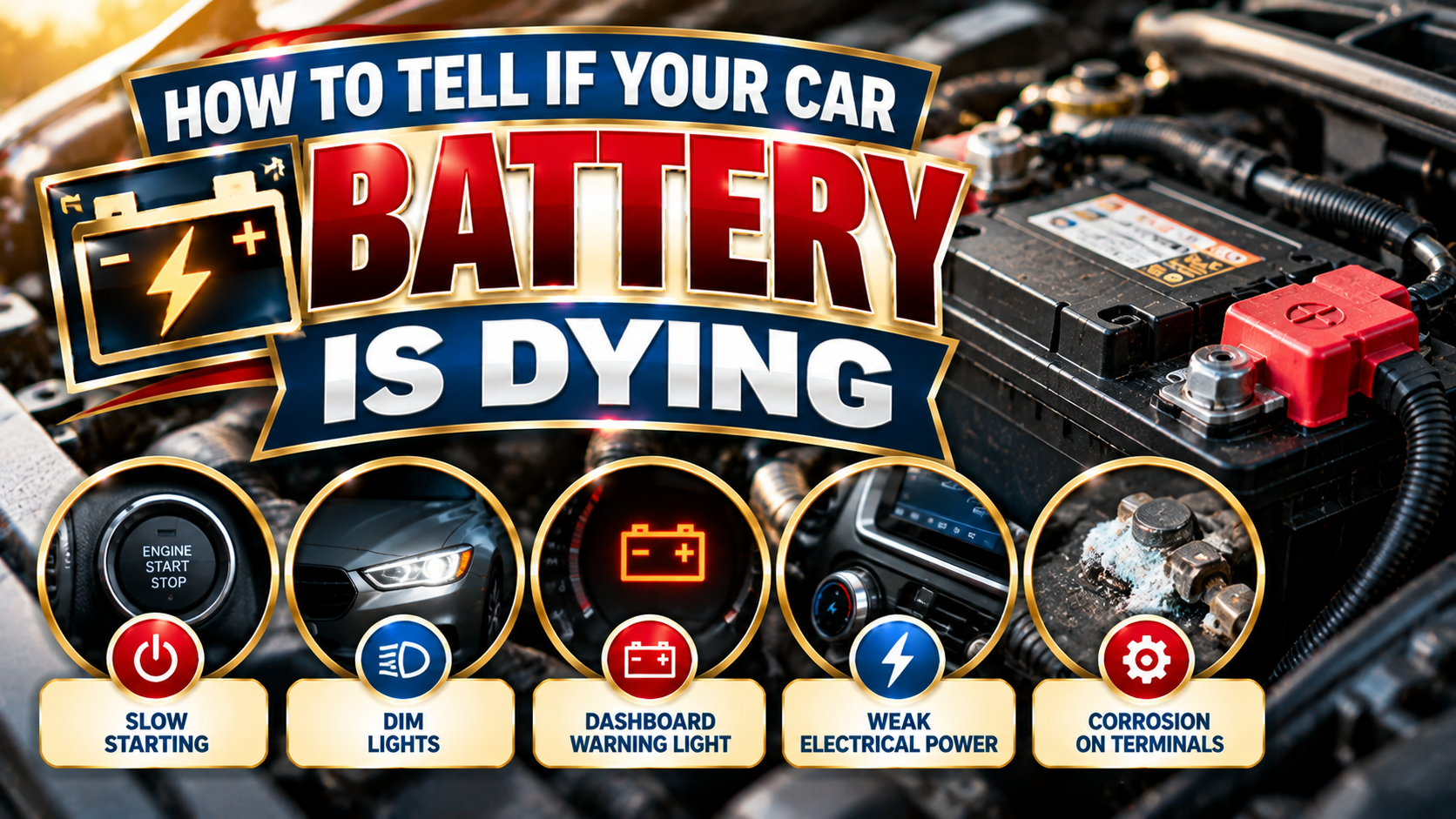
How to Tell if Your Car Battery Is Dying: 10 Warning Signs You Shouldn’t Ignore
Learn the Signs of a Weak Car Battery and When to Schedule Battery Testing in Watkinsville, GA
Few things are more frustrating than getting into your vehicle, turning the key or pressing the start button, and discovering that your car won’t start. A dead battery can leave you stranded at home, at work, or in a parking lot when you least expect it.
Fortunately, many car batteries show warning signs before they fail completely.
Your vehicle’s battery provides the electrical power needed to start the engine and helps support the vehicle’s electrical systems. Over time, batteries naturally lose their ability to hold a charge and deliver sufficient starting power.
Georgia’s hot summers, frequent short trips, and everyday driving demands can also contribute to battery wear.
At Car Craft of Watkinsville, we understand how important reliable transportation is for drivers throughout Watkinsville, Oconee County, and surrounding Northeast Georgia communities.
In this guide, we’ll explain how to tell if your car battery is dying, the most common warning signs, how long batteries typically last, and when to schedule professional battery testing or replacement.
What Does Your Car Battery Do?
Your vehicle’s battery plays an essential role in starting the engine and supporting electrical operation.
When you start your vehicle, the battery supplies the electrical power needed to operate the starter motor and other systems involved in engine startup.
Once the engine is running, the alternator or charging system typically supplies electrical power and recharges the battery.
Your Car Battery Helps Power:
- Engine starting
- Vehicle computers
- Interior and exterior lights
- Electronic locks
- Dashboard systems
- Audio and infotainment systems
- Other electrical accessories
Modern vehicles often contain numerous electronic components that depend on stable electrical power.
When a battery becomes weak, starting performance and certain electrical functions may be affected.
1. Your Engine Cranks Slowly
One of the most common signs of a weak battery is slow engine cranking.
When you turn the key or press the start button, the engine may turn over more slowly than normal.
What Slow Cranking Sounds Like
Instead of the engine starting quickly, you may hear a sluggish cranking sound.
The engine may take longer than usual to start, especially after the vehicle has been parked overnight.
Why It Happens
A weak battery may struggle to deliver the electrical current needed by the starter motor.
However, slow cranking can also result from starter problems, poor electrical connections, or other mechanical issues.
What to Do: If your engine begins cranking slowly, schedule battery and starting system testing before the problem worsens.
2. You Hear Clicking When Trying to Start Your Car
If your vehicle makes a clicking sound when you attempt to start it, the battery may not have enough power to operate the starter properly.
Common Clicking Symptoms
- Rapid clicking when turning the key
- A single click without engine cranking
- Dashboard lights illuminating but the engine not starting
- Intermittent starting problems
Does Clicking Always Mean a Dead Battery?
No.
Clicking may also indicate:
- Loose battery connections
- Corroded terminals
- Starter motor problems
- Starter relay issues
- Electrical wiring problems
A professional battery and starting system test can help determine the cause.
3. Your Headlights Appear Dim
Your headlights may provide clues about your vehicle’s electrical system.
If your headlights appear unusually dim when the engine is off or during startup, the battery may be weak.
Warning Signs to Watch For
- Headlights dimming significantly during startup
- Interior lights appearing weaker than normal
- Lights flickering unexpectedly
- Electrical accessories behaving inconsistently
Keep in mind that some light dimming during engine cranking can be normal.
If headlights remain dim while the engine is running, the charging system or another electrical component may be involved.
Professional Tip: Battery testing and charging system testing are often performed together because similar symptoms can have different causes.
4. Your Battery Warning Light Comes On
Many vehicles have a battery-shaped warning light on the dashboard.
Although this symbol looks like a battery, it often indicates a problem with the charging system rather than the battery alone.
Possible Causes of a Battery Warning Light
- Alternator failure
- Charging system malfunction
- Damaged drive belt
- Electrical connection problems
- Battery-related issues
What Should You Do?
If the battery warning light illuminates while driving, the charging system may not be maintaining proper electrical power.
Turn off unnecessary electrical accessories, move to a safe location, and arrange professional assistance.
Do not assume replacing the battery will solve the problem.
5. Your Car Needs Frequent Jump-Starts
If your vehicle repeatedly needs a jump-start, something is wrong with the battery or electrical system.
A healthy, properly charged battery should generally start the vehicle without outside assistance under normal conditions.
Common Reasons for Frequent Jump-Starts
- Aging battery
- Battery unable to hold a charge
- Charging system problems
- Parasitic electrical drain
- Loose or corroded connections
- Vehicle sitting unused for extended periods
Why Repeated Jump-Starts Are a Warning Sign
Jump-starting may temporarily get the engine running, but it does not correct the underlying problem.
If your vehicle repeatedly fails to start, schedule professional testing.
6. Your Battery Is Several Years Old
Car batteries have a limited service life.
Many conventional 12-volt automotive batteries last approximately three to five years, although actual lifespan varies significantly.
Battery life depends on:
- Climate
- Driving habits
- Battery type
- Vehicle electrical demands
- Charging system condition
- Maintenance
- Frequency of use
Why Battery Age Matters
As batteries age, their ability to store energy and provide starting power can decline.
A battery may work normally one day and struggle to start the vehicle the next.
If your battery is approaching the typical service-life range, periodic testing can help evaluate its condition.
Important: Battery age alone does not mean replacement is automatically necessary. Testing provides better information about battery health.
7. You Notice Corrosion Around the Battery Terminals
Corrosion around battery terminals can interfere with electrical connections.
It may appear as white, blue, or greenish buildup around the terminals or cable connections.
Possible Signs of Terminal Problems
- Visible corrosion
- Loose battery connections
- Intermittent starting
- Electrical problems
- Poor charging performance
Corrosion does not necessarily mean the battery itself has failed.
However, poor connections can produce symptoms similar to those of a weak battery.
A technician can inspect the terminals, clean connections when appropriate, and test the battery.
Safety Reminder: Automotive batteries contain hazardous materials and can produce flammable gases. Avoid touching corrosion with bare hands or attempting repairs without appropriate precautions.
8. Your Electrical Accessories Behave Strangely
A weak battery or electrical system problem can sometimes cause unusual electronic behavior.
Examples Include
- Power windows operating slowly
- Interior lights flickering
- Electronic locks acting inconsistently
- Infotainment systems restarting
- Dashboard displays behaving unexpectedly
- Start-stop systems becoming unavailable
These symptoms are not exclusive to battery problems.
Alternator issues, wiring faults, control modules, or other electrical problems may produce similar behavior.
Professional diagnostic testing can help identify the source.
9. Your Car Struggles to Start After Sitting Overnight
If your vehicle starts normally after driving but struggles after sitting overnight, the battery may not be holding a charge.
However, the problem could also involve an electrical component drawing power while the vehicle is turned off.
This is known as a parasitic electrical drain.
Possible Causes
- Weak battery
- Interior light remaining on
- Faulty electrical module
- Aftermarket electronic accessories
- Charging system problems
- Unwanted electrical current draw
A technician may perform battery testing and electrical drain testing to determine the cause.
10. Your Battery Case Appears Swollen or Damaged
Visible battery damage is a serious warning sign.
A battery case may become swollen or distorted because of excessive heat, overcharging, internal failure, or other problems.
Signs of Battery Damage
- Swollen battery case
- Cracks
- Leaking fluid
- Unusual chemical odors
- Visible deformation
- Excessive heat
Important: Do not attempt to charge, jump-start, or handle a visibly swollen, cracked, or leaking battery. Have it evaluated by a qualified professional using appropriate safety precautions.
Quick Reference: 10 Signs Your Car Battery May Be Dying
| Warning Sign | Possible Cause |
|---|---|
| Slow engine cranking | Weak battery or starting system problem |
| Clicking when starting | Low voltage, connections, or starter issue |
| Dim headlights | Battery or charging system concern |
| Battery warning light | Charging system malfunction |
| Frequent jump-starts | Weak battery, electrical drain, or charging problem |
| Older battery | Age-related deterioration |
| Corroded terminals | Poor electrical connections |
| Unusual electronic behavior | Voltage or electrical system problem |
| Hard starting after sitting | Weak battery or parasitic drain |
| Swollen or damaged case | Battery damage or charging fault |
Because several electrical problems produce similar symptoms, professional testing is important before replacing the battery.
How Long Does a Car Battery Last in Georgia?
Many automotive batteries last approximately three to five years, but Georgia’s hot climate can shorten battery life.
High temperatures accelerate certain chemical reactions inside batteries, contributing to deterioration over time.
Why Georgia Heat Affects Batteries
Heat can increase internal battery degradation and contribute to water loss in some battery designs.
Even when a battery continues to work during the summer, accumulated wear may become noticeable later when starting demands increase.
Other Factors That Affect Battery Life
- Frequent short trips
- Extended vehicle storage
- Electrical accessories
- Charging system problems
- Battery quality
- Vehicle electrical demands
If your battery is several years old, testing before peak summer temperatures or a long trip can be a practical preventive step.
Is It the Battery, Alternator, or Starter?
Battery problems can be confused with alternator or starter problems because all three components are involved in vehicle starting and electrical operation.
Battery Problems
A weak battery may cause slow cranking, clicking, or difficulty starting after the vehicle has been parked.
Alternator Problems
A malfunctioning alternator may prevent the battery from recharging properly while the engine is running.
Possible symptoms include a charging system warning light, dimming lights, or the vehicle losing electrical power.
Starter Problems
A failing starter may prevent the engine from cranking even when the battery is properly charged.
Possible symptoms include clicking, intermittent starting, or no engine cranking.
How Technicians Tell the Difference
Professional testing may include:
- Battery state-of-charge testing
- Battery health or conductance testing
- Starting system testing
- Charging voltage evaluation
- Electrical connection inspection
- Parasitic draw testing when necessary
Accurate diagnosis helps avoid replacing a battery when the actual problem involves another component.
Can a Bad Battery Cause the Check Engine Light to Come On?
In some vehicles, low voltage or unstable electrical power can contribute to diagnostic trouble codes and warning lights.
However, a check engine light can have many unrelated causes.
If your vehicle displays multiple warning lights or experiences unusual electrical behavior, a technician can evaluate battery voltage, charging performance, and stored diagnostic information.
Do not assume the battery is responsible for every dashboard warning.
How Is a Car Battery Tested?
Professional battery testing helps determine whether a battery can provide sufficient power for normal vehicle operation.
Step 1: Visual Inspection
The technician checks the battery case, terminals, cables, and mounting hardware.
Step 2: Battery Voltage and State-of-Charge Evaluation
Battery voltage and other measurements help assess the battery’s charge condition.
Step 3: Battery Health Testing
A battery tester may evaluate the battery’s ability to deliver starting current.
Step 4: Charging System Inspection
The technician may check alternator output and related charging system performance.
Step 5: Starting System Evaluation
If necessary, the starter and electrical connections may be tested.
Step 6: Repair or Replacement Recommendation
The technician explains the findings and whether charging, connection repairs, additional diagnostics, or battery replacement is appropriate.
When Should You Replace Your Car Battery?
Battery replacement may be recommended when testing confirms that the battery can no longer provide adequate performance.
Other reasons for replacement may include:
- Internal battery failure
- Inability to hold a charge
- Significant physical damage
- Repeated starting failure caused by the battery
- Battery performance below the vehicle’s requirements
Replacing a battery simply because it is a certain age is not always necessary.
However, waiting until a severely weakened battery fails completely can leave you stranded.
How Much Does Car Battery Replacement Cost?
Battery replacement costs vary based on the vehicle and battery specifications.
Factors That Affect Battery Replacement Costs
- Battery group size
- Required cold cranking amps
- Battery technology
- Vehicle make and model
- Installation requirements
- Battery registration or programming, if required
- Warranty coverage
Some modern vehicles require AGM or other specialized batteries.
Certain vehicles also require electronic battery registration or system initialization after replacement.
Using the correct battery specification is essential for reliable operation.
How to Help Your Car Battery Last Longer
Although batteries eventually wear out, good maintenance habits can help reduce unnecessary stress.
Drive Your Vehicle Regularly
Frequent very short trips may not allow the charging system enough time to replace the energy used during startup.
Avoid Leaving Accessories On
Turn off lights and unnecessary accessories when the engine is not running.
Keep Battery Connections in Good Condition
Have corroded or loose terminals inspected and serviced.
Address Charging System Problems
A malfunctioning alternator can damage a battery or leave it undercharged.
Test Older Batteries
Periodic testing can help identify declining performance.
Use a Suitable Battery Maintainer for Stored Vehicles
If your vehicle sits unused for extended periods, an appropriate battery maintainer may help preserve battery charge.
Always follow the vehicle and equipment manufacturers’ instructions.
Why Battery Maintenance Matters for Watkinsville, GA Drivers
Drivers throughout Watkinsville, Oconee County, Bishop, Bogart, and surrounding Northeast Georgia communities depend on reliable transportation for work, school, family activities, and daily errands.
Georgia’s climate and driving conditions can place additional demands on automotive batteries.
Hot Summer Weather
High temperatures can accelerate battery deterioration.
Frequent Short Trips
Repeated starts and limited driving time may contribute to insufficient battery charging.
Long Periods of Inactivity
Vehicles that sit unused may experience gradual battery discharge.
High-Mileage Vehicles
Older vehicles may develop electrical connection, charging system, or starting system problems.
Routine battery testing and timely repairs can help reduce the risk of unexpected starting failures.
Professional Car Battery Testing in Watkinsville, GA
If your vehicle is slow to start, frequently needs a jump-start, or displays unusual electrical symptoms, professional testing can help determine the cause.
At Car Craft of Watkinsville, we provide automotive battery testing and replacement services to help drivers maintain dependable vehicles.
A battery inspection can help determine whether your vehicle needs a new battery, charging system service, connection repairs, or additional diagnostic testing.
Trust Car Craft of Watkinsville for Battery Testing and Replacement
At Car Craft of Watkinsville, we understand how inconvenient a dead battery can be.
Our family-owned automotive repair shop is committed to helping drivers throughout Watkinsville, Oconee County, and surrounding Northeast Georgia communities maintain safe, reliable vehicles.
Our experienced, ASE-certified technicians provide automotive maintenance and repair services, including:
- Car Battery Testing & Replacement
- Starter Repair & Replacement
- Diagnostic Services
- Oil Change Services
- Engine Repair
- Cooling System Repair
- Vehicle Safety Inspections
We believe in honest recommendations, upfront estimates, clear communication, and quality workmanship.
Our goal is to help you understand your vehicle’s electrical problems and make informed repair decisions without unnecessary parts replacement.
Is Your Car Battery Showing Warning Signs?
Don’t wait until your vehicle refuses to start.
Slow cranking, repeated jump-starts, dim lights, and unusual electrical problems may indicate that your battery or charging system needs attention.
Contact Car Craft of Watkinsville today to schedule professional car battery testing or replacement in Watkinsville, GA.
Let our experienced automotive team help keep your vehicle starting reliably.