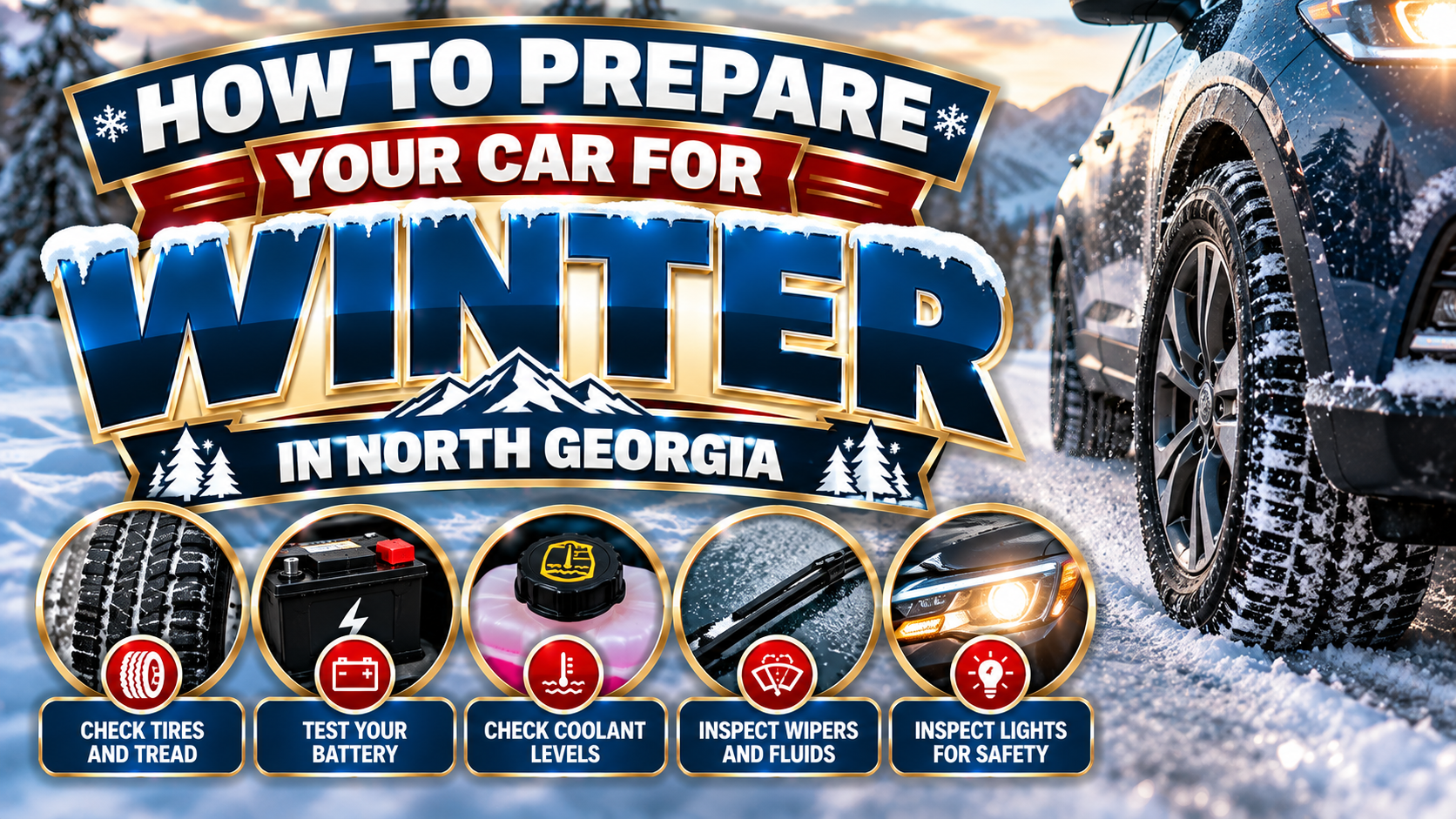
How to Prepare Your Car for Winter in North Georgia: Essential Cold-Weather Maintenance Tips
Keep Your Vehicle Safe, Reliable, and Winter-Ready with Preventive Auto Maintenance in Watkinsville, GA
Winter in North Georgia can be unpredictable. One day, temperatures may feel mild and comfortable. The next, drivers could wake up to freezing temperatures, frost-covered windshields, icy roads, or the possibility of snow.
Although Northeast Georgia typically experiences milder winters than many northern states, cold weather can still create challenges for your vehicle.
Freezing temperatures can expose weak batteries, affect tire pressure, reduce visibility, and place additional demands on your engine and heating system. Even occasional winter storms can make driving hazardous, especially on bridges, overpasses, and untreated roads.
For drivers throughout Watkinsville, Oconee County, Bishop, Bogart, and surrounding Northeast Georgia communities, preparing your vehicle before temperatures drop is an important part of staying safe and avoiding unexpected breakdowns.
At Car Craft of Watkinsville, we believe preventive maintenance is one of the best ways to help keep your vehicle dependable throughout the year.
In this guide, we’ll explain how to prepare your car for winter in North Georgia, what maintenance services deserve attention, and how to protect your vehicle during cold-weather driving.
1. Test Your Car Battery Before Cold Weather Arrives
Your vehicle’s battery is one of the first components to check before winter.
Cold temperatures reduce a battery’s ability to deliver starting power. At the same time, starting a cold engine can require more effort.
A battery that performed adequately during warmer weather may struggle when temperatures fall.
Signs Your Battery May Be Weak
- Slow engine cranking
- Clicking when starting
- Dim headlights
- Frequent jump-starts
- Corroded battery terminals
- Electrical problems
- Difficulty starting after sitting overnight
Why Georgia Winters Can Expose Battery Problems
Hot Georgia summers can accelerate battery deterioration.
When winter arrives, the reduced starting performance associated with cold temperatures may reveal a battery that has already weakened.
Winter Battery Maintenance Tips
- Have older batteries professionally tested.
- Inspect battery terminals for corrosion.
- Check battery connections.
- Address slow starting promptly.
- Have the charging system evaluated if necessary.
Professional Tip: If your battery is several years old or has shown signs of weakness, schedule testing before the first freezing morning.
2. Check Your Tires and Tire Pressure
Proper tire maintenance is essential for winter driving.
As temperatures drop, tire pressure generally decreases.
A common rule of thumb is that tire pressure changes by approximately one PSI for every 10°F change in temperature, although actual changes vary.
Underinflated tires can affect handling, tire wear, and fuel efficiency.
What to Check Before Winter
- Tire pressure
- Tread depth
- Uneven tire wear
- Sidewall damage
- Tire age
- Overall tire condition
- Spare tire pressure, if equipped
Use the Correct Tire Pressure
Check your tires when they are cold and inflate them according to the vehicle manufacturer’s recommended pressure.
This information is usually found on the driver’s door placard or in the owner’s manual.
Do not use the maximum pressure printed on the tire sidewall as your normal inflation target.
Are All-Season Tires Good Enough for North Georgia Winters?
Many drivers in the Watkinsville area use all-season tires year-round.
However, all-season tires vary in cold-weather performance and may provide limited traction on snow or ice.
If you frequently travel into the North Georgia mountains or areas with winter weather, consider whether tires with stronger winter traction characteristics would be appropriate.
Safety Reminder: Even winter-rated tires cannot eliminate the hazards of icy roads.
3. Inspect Your Brakes
Your brakes are essential in every season, but reliable braking becomes particularly important when roads are wet, slippery, or icy.
Before winter arrives, pay attention to changes in braking performance.
Common Signs of Brake Problems
- Squealing or grinding noises
- Brake pedal vibration
- Soft or spongy brake pedal
- Vehicle pulling when braking
- Longer stopping distances
- Brake warning lights
A professional brake inspection can help identify worn brake pads, damaged rotors, hydraulic system problems, and other concerns.
Why Winter Brake Maintenance Matters
Rain, frost, and ice reduce available tire traction.
Even a properly functioning braking system cannot overcome the reduced grip of an icy road.
Maintaining your brakes and tires helps ensure your vehicle is in suitable mechanical condition when road conditions become challenging.
4. Check Your Antifreeze and Cooling System
Your vehicle’s cooling system does more than prevent overheating during summer.
Engine coolant also provides freeze protection during cold weather.
Using the correct coolant mixture and maintaining the cooling system helps protect the engine and related components.
Important Cooling System Components
- Radiator
- Water pump
- Thermostat
- Radiator hoses
- Coolant reservoir
- Heater core
- Cooling fans
Why Coolant Condition Matters in Winter
If the coolant mixture does not provide adequate freeze protection, freezing temperatures can damage cooling system components and potentially the engine.
A technician can test coolant freeze protection and evaluate the condition of the cooling system.
Signs Your Cooling System Needs Attention
- Low coolant level
- Visible coolant leaks
- Overheating
- Temperature gauge fluctuations
- Poor heater performance
- Sweet-smelling odors
Important: Never remove a radiator or coolant pressure cap while the engine is hot.
Follow your vehicle manufacturer’s coolant specifications rather than adding an arbitrary antifreeze mixture.
5. Make Sure Your Heater and Defroster Work Properly
A functioning heater is important for comfort, but your windshield defroster is also essential for visibility.
Cold temperatures and moisture can cause windows to fog or frost over.
Your vehicle’s heating, ventilation, and air conditioning system helps manage cabin temperature and windshield moisture.
Test These Systems Before Winter
- Cabin heater
- Front windshield defroster
- Rear window defogger
- Blower motor
- Airflow controls
- Temperature controls
Signs of Heater or Defroster Problems
- Heater blowing cold air
- Weak airflow
- Windshield fogging that does not clear
- Unusual HVAC noises
- Sweet odors inside the cabin
- Damp carpet associated with a possible heater core leak
If your heater or defroster is not operating correctly, have it inspected before cold weather arrives.
6. Replace Worn Windshield Wipers
Winter driving often involves rain, frost, road spray, and reduced visibility.
Worn windshield wipers can make these conditions more difficult.
Signs You Need New Wiper Blades
- Streaking
- Skipping across the windshield
- Squeaking
- Torn or cracked rubber
- Areas of the windshield that remain wet
Winter Windshield Wiper Tips
- Replace worn blades before winter.
- Keep the windshield clean.
- Use washer fluid appropriate for expected temperatures.
- Remove ice before operating the wipers.
- Avoid running frozen wipers across the windshield.
Never pour hot water onto a frozen windshield because rapid temperature changes may damage the glass.
Use an appropriate ice scraper and the vehicle’s defroster instead.
7. Check Your Engine Oil
Engine oil must circulate properly to lubricate internal engine components during cold starts.
Oil viscosity affects how easily oil flows at different temperatures.
Modern engines require specific oil grades and performance standards.
Why Oil Matters During Winter
Cold temperatures can make oil more resistant to flow, particularly when an inappropriate viscosity is used.
Using the manufacturer-recommended oil helps support proper lubrication during startup.
Winter Oil Maintenance Tips
- Check your oil level.
- Review your oil change schedule.
- Use the manufacturer-approved viscosity.
- Address oil leaks.
- Follow the correct maintenance interval.
Professional Tip: Do not automatically switch to thinner oil for winter. Use the oil specification approved for your vehicle and expected operating conditions.
8. Inspect Belts and Hoses
Belts and hoses are important components of your engine and cooling system.
Age, heat exposure, and normal wear can cause them to deteriorate.
Warning Signs to Watch For
- Cracked or frayed belts
- Squealing noises
- Coolant leaks
- Swollen hoses
- Damaged hose connections
- Visible deterioration
A failed belt or coolant hose can cause an unexpected breakdown regardless of the season.
A professional inspection can help identify components that need replacement.
9. Test Your Headlights and Exterior Lights
Winter brings shorter daylight hours, making proper vehicle lighting especially important.
Before the season begins, check:
- Low-beam headlights
- High-beam headlights
- Brake lights
- Turn signals
- Tail lights
- Hazard lights
- Reverse lights
- License plate lights
Clean cloudy or dirty headlight lenses and address malfunctioning lights.
Proper lighting improves visibility and helps other drivers see your vehicle.
10. Inspect Your Exhaust System
A damaged exhaust system can allow dangerous gases to enter the passenger compartment.
This is especially concerning during winter, when drivers often keep windows closed and may idle their vehicles while warming up.
Signs of Exhaust System Problems
- Unusually loud exhaust noise
- Rattling underneath the vehicle
- Exhaust odors inside the cabin
- Visible exhaust damage
- Check engine light
Carbon Monoxide Safety
Carbon monoxide is a dangerous gas that cannot be reliably detected by smell.
Never warm up a vehicle inside a closed garage, even if the garage door is open.
If you suspect exhaust gases are entering the cabin, stop driving when safe and arrange professional inspection.
11. Check Your Steering and Suspension
Winter road conditions can make steering and suspension problems more noticeable.
Your vehicle’s steering and suspension systems help maintain stability and predictable handling.
Signs of Problems
- Vehicle pulling to one side
- Steering wheel vibration
- Excessive bouncing
- Clunking over bumps
- Uneven tire wear
- Loose steering
- Unusual handling
Potholes and rough pavement can also affect alignment and suspension components.
If your vehicle handles differently than normal, have it inspected.
12. Prepare a Winter Emergency Kit
Even in North Georgia, unexpected winter weather can cause travel delays and hazardous road conditions.
Keeping basic emergency supplies in your vehicle can help you stay safer if you become stranded.
Recommended Winter Emergency Kit
- Warm clothing
- Extra gloves
- Blankets for emergency warmth
- Flashlight
- Phone charger
- First aid kit
- Bottled water
- Nonperishable snacks
- Reflective warning triangles
- Ice scraper
- Jumper cables or suitable jump starter
- Roadside assistance information
If you’re traveling into mountainous areas, consider additional supplies appropriate for colder conditions.
13. Keep Your Fuel Tank Adequately Filled
During winter travel, keeping an adequate amount of fuel in your vehicle can help you prepare for unexpected delays.
If roads become congested or a winter storm causes traffic problems, additional fuel may be helpful.
Winter Fuel Tips
- Avoid routinely driving with a nearly empty tank.
- Plan fuel stops before long trips.
- Monitor fuel levels during severe weather.
- Keep emergency supplies available.
For electric vehicles, monitor battery charge and consider how cold temperatures may affect driving range and charging needs.
14. Check Your Spare Tire and Roadside Equipment
A flat tire can happen at any time of year.
Before winter arrives, inspect your vehicle’s emergency tire equipment.
What to Check
- Spare tire condition, if equipped
- Spare tire pressure
- Jack
- Lug wrench
- Wheel lock key
- Tire repair kit, if provided
- Portable tire inflator, if appropriate
Some newer vehicles do not include a spare tire.
Know what equipment your vehicle has and understand your roadside assistance options.
15. Schedule a Professional Winter Vehicle Inspection
A professional vehicle inspection can help identify maintenance needs before cold weather creates additional challenges.
Depending on the inspection requested, a technician may evaluate:
- Battery condition
- Charging system
- Tires and tire pressure
- Brake components
- Engine oil
- Coolant freeze protection
- Heating and defrosting systems
- Belts and hoses
- Exterior lights
- Windshield wipers
- Visible fluid leaks
- Steering and suspension components
Addressing problems before temperatures drop can help reduce the risk of unexpected breakdowns.
Complete Winter Car Maintenance Checklist for North Georgia
Use this checklist to prepare your vehicle before winter weather arrives.
Battery and Electrical System
-
Test battery condition.
-
Inspect battery terminals.
-
Check charging system performance if needed.
-
Test headlights and exterior lights.
-
Address electrical warning lights.
Tires and Brakes
-
Check cold tire pressure.
-
Inspect tire tread depth.
-
Look for tire damage.
-
Check for uneven tire wear.
-
Inspect brake performance.
Engine and Cooling System
-
Check engine oil level.
-
Review oil change schedule.
-
Test coolant freeze protection.
-
Inspect cooling system hoses.
-
Check for visible leaks.
Heating and Visibility
-
Test cabin heater.
-
Check front defroster.
-
Test rear window defogger.
-
Inspect windshield wipers.
-
Fill washer fluid with a suitable winter formulation.
Emergency Preparation
-
Pack winter emergency supplies.
-
Charge your phone.
-
Check spare tire or repair equipment.
-
Review roadside assistance coverage.
-
Monitor weather forecasts before traveling.
Does North Georgia Really Get Cold Enough to Affect Your Car?
Yes.
Although North Georgia typically experiences milder winters than northern states, freezing temperatures can still affect vehicle components.
Common Cold-Weather Vehicle Problems
Weak Batteries: Cold weather reduces available starting power.
Low Tire Pressure: Tire pressure decreases as temperatures fall.
Frozen Windshields: Frost and ice can reduce visibility.
Cooling System Problems: Inadequate antifreeze protection can cause damage during freezing conditions.
Reduced Traction: Frost, snow, and ice can make roads slippery.
Heater Problems: A malfunctioning heater or defroster can affect comfort and visibility.
Even occasional freezing temperatures are enough to make winter preparation worthwhile.
What Should You Do If You Encounter Ice on Georgia Roads?
Ice can be especially dangerous because it may be difficult to see.
Bridges, overpasses, shaded areas, and untreated roads can become slippery before surrounding pavement.
Winter Driving Safety Tips
- Reduce your speed.
- Increase following distance.
- Avoid sudden steering movements.
- Brake gently.
- Avoid cruise control on slippery roads.
- Check road conditions before leaving.
- Delay unnecessary travel during hazardous weather.
If your vehicle begins sliding, avoid abrupt control inputs and follow appropriate skid-recovery guidance for your vehicle.
Important: All-wheel drive and four-wheel drive may help with traction during acceleration, but they do not eliminate the risk of sliding or reduce the stopping distance required on ice.
Should You Warm Up Your Car Before Driving in Winter?
Most modern vehicles do not require extended idling before driving in cold weather.
After starting the engine, allow it to stabilize briefly and then drive gently while it reaches normal operating temperature, following your owner’s manual.
Avoid aggressive acceleration immediately after a cold start.
If your windshield is covered in frost or fog, allow enough time to restore clear visibility before driving.
Never leave a running vehicle unattended or idle it in an enclosed space.
How Early Should You Prepare Your Car for Winter?
For drivers in Watkinsville and surrounding Northeast Georgia communities, scheduling winter maintenance during the fall is a practical approach.
Preparing before the first significant cold spell gives you time to address any battery, tire, cooling system, or heating concerns.
If you frequently travel into the North Georgia mountains, consider preparing earlier because colder temperatures and winter precipitation may occur there sooner.
Why Winter Vehicle Maintenance Matters for Watkinsville, GA Drivers
Drivers throughout Watkinsville, Oconee County, Bishop, Bogart, and surrounding Northeast Georgia communities experience changing seasonal conditions.
Although major snowstorms are relatively uncommon in the Watkinsville area, freezing mornings, heavy rain, frost, and occasional winter precipitation can create driving challenges.
Daily Commuting
Cold starts and changing temperatures can expose battery and tire problems.
Rural Roads
Shaded pavement and untreated roads may remain icy longer than expected.
Highway Travel
Reliable tires, brakes, lights, and defrosters are important during winter driving.
Trips to the North Georgia Mountains
Mountain roads may experience colder temperatures, snow, and ice more frequently than the Watkinsville area.
Preparing your vehicle helps you respond more confidently to changing weather conditions.
Professional Winter Car Maintenance in Watkinsville, GA
At Car Craft of Watkinsville, we understand how important reliable transportation is throughout every season.
Our automotive maintenance and repair services help drivers identify potential problems before cold weather creates additional demands on their vehicles.
Whether your vehicle needs battery testing, coolant service, brake repair, an oil change, or a safety inspection, staying ahead of maintenance can help reduce unexpected winter breakdowns.
Trust Car Craft of Watkinsville for Winter Vehicle Maintenance
At Car Craft of Watkinsville, we’re proud to serve drivers throughout Watkinsville, Oconee County, and surrounding Northeast Georgia communities.
Our family-owned automotive repair shop is committed to providing honest recommendations, clear communication, and quality workmanship.
Our experienced, ASE-certified technicians provide automotive maintenance and repair services, including:
- Car Battery Testing & Replacement
- Cooling System Repair
- Coolant Flush Services
- Oil Change Services
- Brake Repair
- Tire Rotation & Balancing
- Wheel Alignment
- Diagnostic Services
- Vehicle Safety Inspections
We believe customers should understand their vehicle’s maintenance needs before authorizing repairs.
Is Your Vehicle Ready for North Georgia Winter Weather?
Don’t wait until a freezing morning leaves you with a dead battery or another unexpected vehicle problem.
Checking your tires, brakes, battery, coolant, heater, and other essential systems before winter can help keep your vehicle dependable.
Contact Car Craft of Watkinsville today to schedule winter vehicle maintenance or a safety inspection in Watkinsville, GA.
Let our experienced automotive team help you prepare for the colder months ahead.