Common Car Problems in Hot Georgia Weather: What Every Driver Should Know
Protect Your Vehicle from Georgia’s Summer Heat with Expert Auto Care in Watkinsville, GA
Georgia summers are known for their intense heat, high humidity, and long stretches of hot weather. While these conditions can make outdoor activities uncomfortable, they can also take a serious toll on your vehicle.
From overheating engines and failing batteries to air conditioning problems and tire damage, hot weather can place additional stress on many important automotive components. Without proper maintenance, minor issues can quickly turn into expensive repairs or unexpected roadside breakdowns.
For drivers in Watkinsville, Oconee County, and surrounding Northeast Georgia communities, understanding how summer temperatures affect your vehicle is an important part of staying safe and avoiding unnecessary repair costs.
At Car Craft of Watkinsville, we believe preventive maintenance is one of the best ways to protect your vehicle throughout Georgia’s hottest months.
In this guide, we’ll explore the most common car problems caused or worsened by hot Georgia weather, the warning signs to watch for, and practical steps you can take to keep your vehicle running reliably.
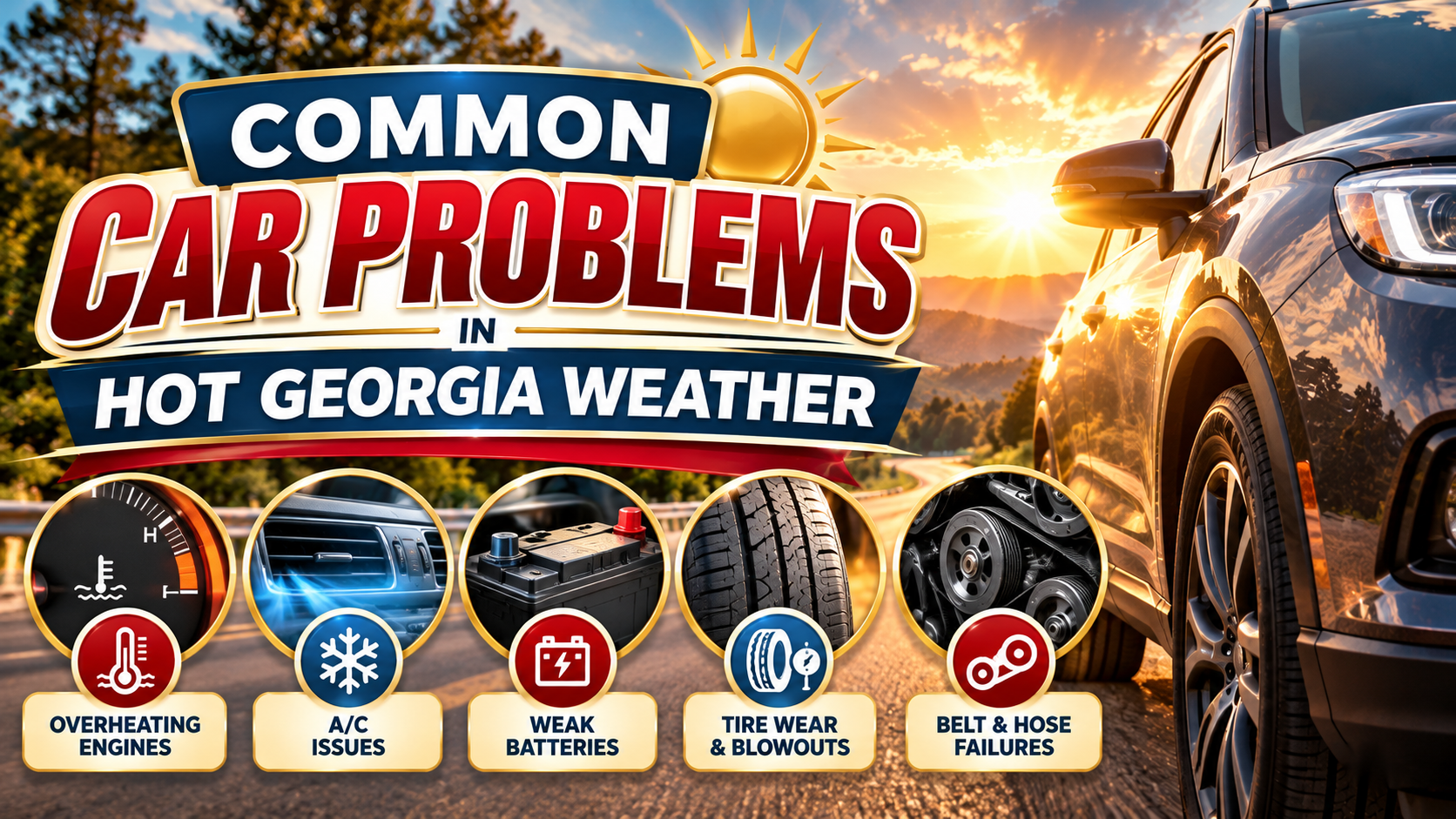
1. Engine Overheating
One of the most serious automotive problems during hot Georgia weather is engine overheating.
Your vehicle’s cooling system is designed to maintain a safe operating temperature. However, extreme heat, heavy traffic, and existing cooling system problems can make it more difficult for the engine to stay within its normal temperature range.
Common Causes of Engine Overheating:
- Low coolant levels
- Radiator leaks or blockages
- Failing water pumps
- Malfunctioning thermostats
- Damaged radiator hoses
- Cooling fan problems
- Faulty radiator caps
- Air trapped in the cooling system
Warning Signs of an Overheating Engine:
- Temperature gauge rising above normal
- Engine overheating warning light
- Steam coming from under the hood
- Sweet-smelling coolant odors
- Visible coolant leaks
- Reduced engine performance
How to Prevent Engine Overheating
Regular cooling system maintenance is essential, especially before summer temperatures reach their highest levels.
Have your coolant levels, radiator, hoses, thermostat, and cooling fans inspected as part of routine vehicle maintenance.
If your engine begins overheating, safely pull over and turn off the engine. Do not continue driving an overheating vehicle, as severe engine damage may result.
Important: Never remove the radiator cap while the engine is hot. Pressurized coolant can cause serious burns.
2. Dead or Weak Car Batteries
Many drivers associate dead batteries with cold winter mornings, but extreme summer heat can be equally damaging.
High temperatures accelerate chemical reactions inside automotive batteries and can increase internal deterioration and fluid loss in certain battery designs.
Over time, this can shorten battery life and lead to unexpected starting problems.
Signs Your Battery May Be Failing:
- Slow engine cranking
- Difficulty starting your vehicle
- Clicking noises when turning the key
- Dim headlights
- Electrical accessories operating inconsistently
- Visible corrosion around battery terminals
- Battery warning lights
How to Protect Your Battery During Georgia Summers
Have your battery tested periodically, particularly if it is several years old.
A professional battery inspection can help determine whether the battery is maintaining an adequate charge and delivering sufficient starting power.
Keeping battery terminals clean and ensuring the charging system operates properly can also help reduce unexpected failures.
Professional Tip: If your battery is showing signs of weakness, schedule testing before taking a long summer road trip.
3. Air Conditioning System Failure
A properly functioning air conditioning system is more than a convenience during Georgia’s hot and humid summers.
When temperatures rise, your vehicle’s AC system works harder to maintain a comfortable interior temperature.
Existing problems involving refrigerant leaks, compressors, condenser fans, or other components may become more noticeable during extremely hot weather.
Common Car AC Problems Include:
- Weak airflow from vents
- Air conditioning blowing warm air
- Refrigerant leaks
- Malfunctioning AC compressors
- Condenser or cooling fan problems
- Electrical issues
- Clogged cabin air filters
Signs Your Vehicle Needs AC Repair
If your air conditioner takes an unusually long time to cool the cabin, produces inconsistent temperatures, or stops blowing cold air, it may need professional attention.
Unusual noises when the air conditioner is running can also indicate a developing mechanical problem.
How to Keep Your AC Working Properly
Have your air conditioning system inspected when performance changes.
Replace the cabin air filter according to manufacturer recommendations and keep the area around the condenser free of excessive debris.
At Car Craft of Watkinsville, automotive air conditioning diagnostics and repair services can help drivers stay comfortable during Georgia’s summer heat.
4. Tire Pressure Problems and Tire Blowouts
Hot weather can affect tire pressure and contribute to tire-related problems.
As tires warm during driving, internal air pressure naturally increases. This makes proper cold tire inflation pressure especially important.
Underinflated tires can generate excessive heat as they flex, increasing the risk of tire damage and failure.
Common Summer Tire Problems:
- Underinflated tires
- Excessively worn tread
- Sidewall damage
- Uneven tire wear
- Aging or deteriorated tires
- Increased risk of tire failure
How to Protect Your Tires in Hot Weather
Check tire pressure at least once a month and before long trips.
Always use the recommended cold tire pressure listed on the vehicle’s tire information placard, typically located inside the driver’s door.
Do not use the maximum pressure printed on the tire sidewall as your routine inflation target.
Summer Tire Maintenance Checklist:
- Check tire pressure when tires are cold.
- Inspect tread depth.
- Look for sidewall cracks or bulges.
- Rotate tires as recommended.
- Check for uneven wear.
- Have alignment or suspension problems inspected.
Never release air from a properly inflated hot tire simply because its pressure has increased during normal driving.
5. Cooling System Leaks and Radiator Problems
Georgia’s summer heat can expose weaknesses in an aging cooling system.
Radiators, hoses, seals, and connections deteriorate over time, and the increased demands of hot-weather driving may make existing problems more noticeable.
Warning Signs of Cooling System Problems:
- Coolant puddles beneath the vehicle
- Sweet odors near the engine
- Frequent coolant loss
- Temperature gauge fluctuations
- Visible cracks in radiator hoses
- Engine overheating
Preventing Cooling System Failures
Have your cooling system inspected regularly, especially if your vehicle has high mileage.
Coolant replacement should follow the manufacturer’s recommended service schedule.
Using the correct coolant specification is important because different vehicles require different formulations.
If your vehicle frequently needs additional coolant, have the system inspected for leaks rather than repeatedly topping it off.
6. Engine Oil Problems During Extreme Heat
Engine oil protects moving engine components by reducing friction, controlling wear, and helping manage heat.
High engine operating temperatures and demanding driving conditions can place additional stress on engine oil.
Stop-and-go traffic, towing, extended idling, and frequent short trips may also affect maintenance requirements.
Signs Your Engine Oil Needs Attention:
- Low oil level
- Oil pressure warning light
- Visible oil leaks
- Unusual engine noises
- Oil consumption between services
- Overdue oil changes
How to Protect Your Engine
Follow your vehicle manufacturer’s recommended oil change intervals and oil specifications.
Some driving conditions qualify as severe service and may require more frequent maintenance.
Check your engine oil level regularly, particularly before long trips.
Professional Tip: Using the correct oil viscosity and specification is more important than switching to a thicker oil simply because Georgia summers are hot.
7. Transmission Overheating and Shifting Problems
Your vehicle’s transmission can also experience additional stress during hot-weather driving.
Heavy traffic, towing, steep grades, and demanding driving conditions can increase transmission operating temperatures.
When combined with low fluid levels, existing wear, or cooling system problems, excessive heat can contribute to transmission damage.
Warning Signs of Transmission Problems:
- Delayed shifting
- Rough or harsh gear changes
- Transmission slipping
- Unusual noises
- Burning odors
- Transmission temperature warnings
- Fluid leaks
Preventing Transmission Problems
Follow your manufacturer’s recommended transmission maintenance schedule.
If you frequently tow trailers or drive under severe operating conditions, review the applicable maintenance recommendations in your owner’s manual.
Have shifting problems or fluid leaks diagnosed promptly.
Avoid towing loads beyond your vehicle’s rated capacity.
8. Brake System Problems
Hot weather alone does not typically cause brake failure, but demanding driving conditions can increase braking system temperatures.
Repeated hard braking, heavy loads, and prolonged downhill driving can contribute to excessive brake heat.
Existing problems involving worn pads, damaged rotors, or sticking calipers may make overheating more likely.
Signs Your Brakes Need Attention:
- Squealing or grinding noises
- Vibrations during braking
- Burning odors after braking
- Reduced stopping performance
- Soft or unusual brake pedal feel
- Vehicle pulling during braking
Protecting Your Brakes
Have your braking system inspected during routine maintenance.
Replace worn brake components when necessary and follow manufacturer recommendations for brake fluid service.
If you notice reduced braking performance, stop driving when it is safe and arrange a professional inspection.
9. Belts and Hoses Deteriorating
Your vehicle’s belts and hoses are exposed to heat, vibration, and normal aging.
Over time, rubber and other materials can deteriorate, increasing the possibility of leaks or component failures.
A failed serpentine belt may affect systems such as the alternator, water pump on some vehicles, and air conditioning compressor.
Signs of Worn Belts and Hoses:
- Cracked or damaged belts
- Frayed belt edges
- Squealing noises
- Swollen radiator hoses
- Coolant leaks
- Visible hose deterioration
- Unexpected charging system warnings
Preventing Belt and Hose Failures
Schedule regular inspections and replace components according to manufacturer recommendations or when their condition indicates replacement is necessary.
Because some modern belts may not display obvious cracks before reaching the end of their service life, a professional inspection can be especially helpful.
10. Fuel System and Evaporative Emissions Problems
High temperatures can increase fuel vapor pressure and place additional demands on a vehicle’s evaporative emissions control system.
Problems with fuel tank pressure management, vapor control valves, or related components may trigger a check engine light.
Possible Warning Signs Include:
- Illuminated check engine light
- Fuel odors
- Difficulty starting after refueling
- Rough idling
- Reduced engine performance
How to Reduce Fuel System Problems
Make sure your fuel cap is properly secured if your vehicle uses one.
Avoid repeatedly topping off the fuel tank after the pump automatically stops, as this can damage evaporative emissions components.
If you notice persistent fuel odors, have the vehicle inspected promptly.
Fuel leaks and strong gasoline odors should never be ignored because of the potential fire hazard.
11. Windshield Wiper and Rubber Seal Damage
Prolonged sun exposure and high temperatures can contribute to deterioration of windshield wiper blades and certain rubber seals.
Damaged wipers may not become noticeable until a sudden Georgia summer thunderstorm.
Signs of Wiper or Seal Problems:
- Streaking windshield wipers
- Cracked wiper rubber
- Chattering or skipping blades
- Poor visibility during rain
- Water leaks around doors or windows
- Deteriorated weatherstripping
Preventing Weather-Related Damage
Inspect your windshield wipers regularly and replace them when performance declines.
Check door and window seals for visible damage.
Maintaining clear visibility is particularly important during the heavy rainstorms that can accompany Georgia summer weather.
12. Dashboard, Interior, and Electronic Component Damage
Vehicles parked in direct sunlight can develop extremely high interior temperatures.
Prolonged heat and ultraviolet exposure may contribute to deterioration of certain interior materials and electronic components.
Common Heat-Related Interior Concerns:
- Faded upholstery
- Cracked dashboard materials
- Deteriorated trim
- Damaged adhesive materials
- Overheated portable electronic devices
- Heat-related electronic malfunctions
How to Protect Your Vehicle’s Interior
Whenever possible, park in shaded or covered areas.
Use an appropriate windshield sunshade and consider window tinting that complies with Georgia law.
Avoid leaving temperature-sensitive electronics inside a parked vehicle.
Important Safety Reminder: Never leave children or pets unattended in a parked vehicle, even for a short time. Interior temperatures can rise rapidly and become life-threatening.
Quick Reference: Common Summer Car Problems and Warning Signs
| Common Problem | Warning Signs | Recommended Action |
|---|---|---|
| Engine Overheating | Rising temperature gauge, steam | Stop safely and arrange an inspection |
| Weak Battery | Slow starting, clicking | Battery and charging system test |
| AC Problems | Warm air, weak airflow | AC system diagnosis |
| Tire Problems | Low pressure, uneven wear | Tire inspection and pressure check |
| Coolant Leaks | Coolant loss, puddles | Cooling system inspection |
| Engine Oil Issues | Low oil, warning light | Check oil level and service needs |
| Transmission Problems | Slipping, harsh shifting | Transmission diagnosis |
| Brake Problems | Grinding, vibrations | Brake system inspection |
| Worn Belts & Hoses | Cracks, leaks, squealing | Inspect and replace as needed |
| Fuel System Problems | Fuel odors, check engine light | Professional diagnostic testing |
| Wiper Damage | Streaking, poor visibility | Replace worn wiper blades |
| Interior Heat Damage | Fading, cracking | Shade and UV protection |
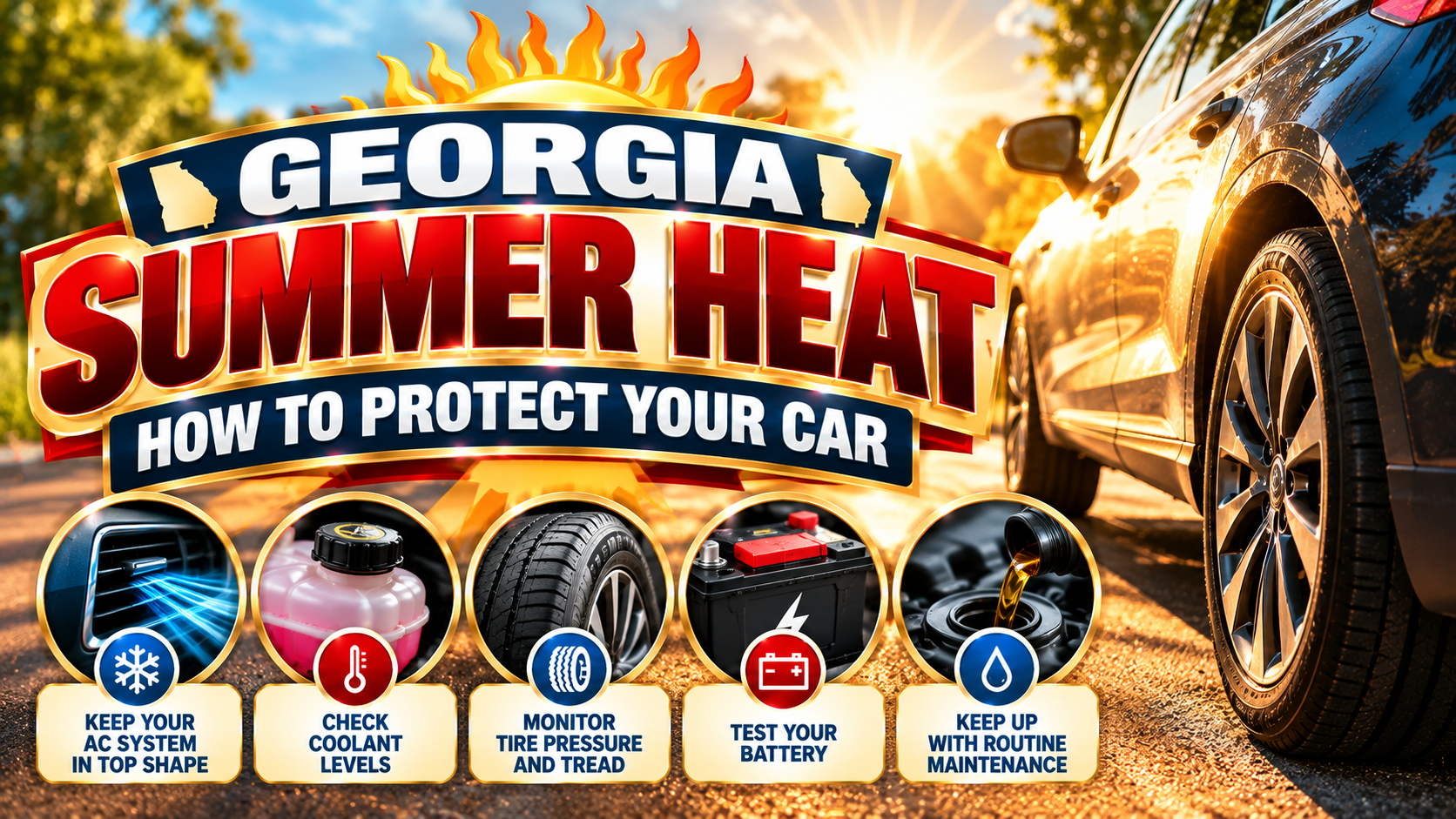
Summer Vehicle Maintenance Checklist for Georgia Drivers
Before temperatures climb, take a few minutes to review these important maintenance items.
-
Check engine coolant level and condition.
-
Inspect radiator hoses and cooling system components.
-
Test the battery and charging system.
-
Verify that the air conditioning system works properly.
-
Check tire pressure and tread depth.
-
Inspect engine oil level and maintenance history.
-
Check for visible fluid leaks.
-
Inspect belts and hoses.
-
Test windshield wipers and washer fluid.
-
Inspect brakes for wear or unusual symptoms.
-
Check dashboard warning lights.
-
Schedule a professional vehicle inspection when needed.
Taking care of these items before the hottest part of the year can help reduce the likelihood of unexpected mechanical problems.
Why Georgia’s Summer Weather Is Hard on Vehicles
Drivers in Watkinsville, Oconee County, and surrounding Northeast Georgia communities face several seasonal conditions that can affect vehicle performance.
High Temperatures
Hot weather increases demands on cooling systems, batteries, tires, and air conditioning components.
Heavy Summer Traffic
Stop-and-go traffic can reduce airflow through the radiator and increase the demands placed on certain vehicle systems.
High Humidity
Humidity can contribute to uncomfortable cabin conditions and make an efficient air conditioning system especially valuable.
Sudden Summer Thunderstorms
Heavy rainfall can reduce visibility and traction, making properly maintained tires, windshield wipers, and brakes essential.
Long-Distance Summer Travel
Road trips place additional demands on tires, cooling systems, and other components, particularly when vehicles carry passengers and luggage.
Understanding these conditions can help you prepare your vehicle for reliable summer driving.
How Often Should You Have Your Car Inspected During Summer?
Your vehicle’s maintenance needs depend on its age, mileage, condition, and driving habits.
For many drivers, having important systems checked before the hottest months is a practical preventive maintenance strategy.
High-mileage vehicles, older vehicles, and cars with a history of cooling system or air conditioning problems may benefit from additional attention.
A professional technician can help identify developing problems and recommend maintenance based on your vehicle’s actual condition.
Keep Your Vehicle Running Strong with Car Craft of Watkinsville
Georgia’s summer heat can be demanding on your vehicle, but proper maintenance can help reduce the risk of unexpected breakdowns and costly repairs.
At Car Craft of Watkinsville, we’re committed to helping local drivers keep their vehicles safe, dependable, and performing at their best.
Our family-owned automotive repair shop provides professional automotive maintenance and repair services for drivers throughout Watkinsville, Oconee County, and nearby communities.
Whether your vehicle needs cooling system repairs, air conditioning service, battery testing, brake repairs, engine diagnostics, or routine maintenance, our experienced technicians are here to help.
We believe in honest recommendations, clear communication, and quality workmanship so you can make informed decisions about your vehicle.
Schedule Your Summer Auto Maintenance in Watkinsville, GA
Don’t wait for an overheating engine, dead battery, or failing air conditioner to interrupt your summer plans.
Preventive maintenance can help identify potential problems before they leave you stranded on a hot Georgia afternoon.
Contact Car Craft of Watkinsville today to schedule your next automotive maintenance or repair appointment.
Keep your vehicle running strong and enjoy greater peace of mind on the road throughout Georgia’s hottest months.