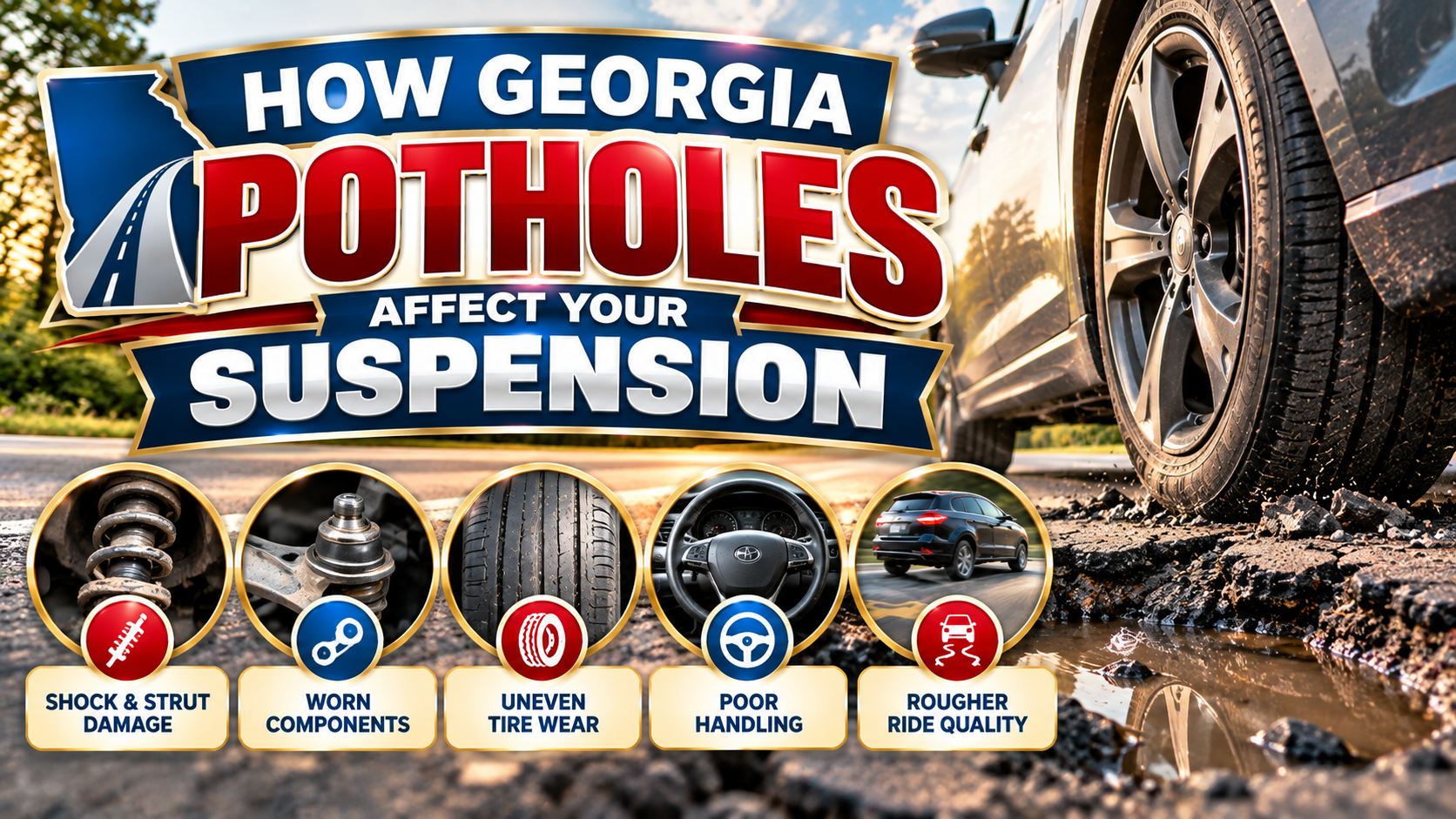
How Georgia Potholes Affect Your Suspension: Signs of Damage and How to Protect Your Vehicle
Learn How Potholes Can Damage Your Tires, Wheels, Steering, and Suspension with Car Care Tips from Car Craft of Watkinsville, GA
Georgia roads can be tough on vehicles, especially when potholes develop after heavy rainfall, fluctuating temperatures, and ongoing traffic. Whether you’re commuting through Watkinsville, traveling around Oconee County, or driving through nearby Northeast Georgia communities, hitting a pothole can cause more damage than you might realize.
Even a single hard impact can affect your vehicle’s tires, wheels, suspension, steering components, and wheel alignment. While some pothole damage is immediately noticeable, other problems may develop gradually or remain hidden until a professional inspection reveals them.
Your vehicle’s suspension system is designed to absorb road imperfections and maintain stability. However, severe pothole impacts can place significant stress on components that are essential for safe handling and comfortable driving.
At Car Craft of Watkinsville, we understand the importance of keeping your vehicle safe, dependable, and properly maintained.
In this guide, we’ll explain how Georgia potholes affect your suspension, the warning signs of pothole damage, what to do after hitting a pothole, and how to protect your vehicle from expensive repairs.
Why Are Potholes So Hard on Your Vehicle?
Potholes form when pavement deteriorates under the combined effects of moisture, temperature changes, traffic loads, and weakened road surfaces.
Water can enter cracks in pavement, weakening the materials beneath the road. As vehicles repeatedly travel over these weakened areas, the pavement can break apart and create potholes.
Georgia’s heavy rainstorms, changing weather conditions, and regular traffic can contribute to road deterioration.
When your vehicle strikes a pothole, the impact forces are transferred through the tire and wheel into the suspension and steering systems.
The severity of the damage depends on several factors:
- Pothole depth and size
- Vehicle speed
- Tire pressure
- Tire sidewall height
- Vehicle weight
- Suspension design
- Existing component wear
- Angle of impact
A shallow pothole may cause little or no damage, while a deep pothole struck at higher speed can damage multiple components.
1. Potholes Can Knock Your Wheels Out of Alignment
One of the most common concerns after a hard pothole impact is wheel alignment.
Wheel alignment refers to the angles at which your wheels are positioned relative to the vehicle and road.
These angles are important for predictable steering, stable handling, and even tire wear.
A severe pothole impact can damage or shift suspension and steering components, potentially changing wheel alignment settings.
Signs Your Wheel Alignment May Be Off
- Vehicle pulling to one side
- Crooked steering wheel when driving straight
- Uneven tire wear
- Steering that feels different than normal
- Reduced directional stability
Why Proper Alignment Matters
Driving with incorrect wheel alignment can contribute to premature tire wear and affect vehicle handling.
If your steering wheel is no longer centered or your vehicle begins pulling after hitting a pothole, schedule a professional inspection.
Professional Tip: A wheel alignment can correct certain wheel-angle problems, but damaged or worn suspension components must be repaired before an accurate alignment can be completed.
2. Potholes Can Damage Your Shocks and Struts
Your shocks and struts help control suspension movement and keep your vehicle stable over uneven roads.
When you hit a pothole, the suspension compresses rapidly to absorb the impact.
A severe impact can place substantial stress on shocks, struts, mounts, and related components.
Signs of Possible Shock or Strut Damage
- Excessive bouncing
- Rougher ride quality
- Clunking over bumps
- Reduced stability
- Unusual suspension noises
- Visible damage or significant fluid leakage
Not every pothole impact damages the shocks or struts. However, repeated hard impacts and existing suspension wear can increase the likelihood of problems.
If your vehicle begins riding differently after striking a pothole, a suspension inspection can help determine the cause.
3. Potholes Can Damage Control Arms and Bushings
Control arms connect important suspension components and help guide wheel movement.
Many control arms contain bushings that allow controlled movement while reducing vibration.
A strong pothole impact can damage control arms, bushings, or their mounting points.
Warning Signs of Control Arm Problems
- Clunking noises
- Steering instability
- Uneven tire wear
- Vehicle pulling
- Changes in wheel alignment
- Excessive movement in suspension components
Damaged control arms can affect wheel positioning and vehicle handling.
Because control arms play an important structural role, suspected damage should be inspected promptly.
4. Potholes Can Damage Ball Joints
Ball joints allow certain suspension and steering components to move while maintaining a secure connection.
A severe pothole impact can damage an already weakened ball joint or related suspension component.
Signs of Ball Joint Problems
- Clunking or popping noises
- Loose steering
- Uneven tire wear
- Steering wandering
- Excessive suspension movement
Severely worn or damaged ball joints can create serious safety concerns.
If your vehicle develops significant steering instability or loud suspension noises after a pothole impact, avoid unnecessary driving and arrange a professional inspection.
5. Potholes Can Damage Tie Rods and Steering Components
Tie rods connect the steering system to the wheels and help control their direction.
A hard pothole impact can damage tie rods or related steering components.
Common Warning Signs
- Loose steering
- Steering wheel vibration
- Vehicle pulling to one side
- Unusual noises when turning
- Changes in steering response
- Uneven tire wear
Steering components are critical to vehicle control.
If your steering feels loose, unpredictable, or noticeably different after hitting a pothole, have the vehicle inspected before continuing normal driving.
6. Potholes Can Bend or Crack Wheels
Your wheels absorb significant force when your vehicle strikes a pothole.
A deep impact can bend or crack a wheel, particularly when the tire does not provide enough cushioning.
Signs of Wheel Damage
- Steering wheel vibration
- Air pressure loss
- Visible bends
- Cracks in the wheel
- Unusual wheel movement
- Difficulty maintaining proper tire pressure
Wheel damage can occur on both steel and alloy wheels.
Some damage may be visible, while other problems require closer inspection.
A cracked or severely damaged wheel should not be ignored because it may compromise tire sealing or structural integrity.
7. Potholes Can Cause Tire Damage
Tires are often the first components to absorb pothole impacts.
A severe impact can damage the tire’s sidewall, internal structure, or tread.
Common Types of Pothole Tire Damage
- Sidewall bulges
- Cuts or punctures
- Internal tire damage
- Sudden air loss
- Slow air leaks
- Tread damage
Why Tire Sidewall Bulges Are Dangerous
A bulge in the tire sidewall may indicate damage to the tire’s internal reinforcing structure.
This can weaken the tire and increase the risk of failure.
Important: A tire with a sidewall bulge should be evaluated immediately and generally requires replacement. Do not continue driving on a tire with visible structural damage.
8. Potholes Can Damage Wheel Bearings
Wheel bearings allow your wheels to rotate smoothly while supporting vehicle loads.
Severe impacts can damage wheel bearings or contribute to wear in already compromised components.
Signs of Possible Wheel Bearing Problems
- Humming or grinding noises
- Noise that changes with vehicle speed
- Unusual wheel vibration
- Excessive wheel play
- Changes in handling
These symptoms can also indicate tire or other mechanical problems.
Professional diagnosis is necessary to determine whether the wheel bearing is damaged.
9. Potholes Can Affect Suspension Springs
Suspension springs support vehicle weight and allow the wheels to move over uneven surfaces.
A strong impact may damage a weakened spring or related mounting component.
Warning Signs of Spring Problems
- Vehicle sitting unevenly
- Unusual suspension noises
- Reduced ride height
- Harsh impacts over bumps
- Visible spring damage
A broken spring can affect suspension operation and may damage nearby components.
If one corner of your vehicle suddenly sits lower after hitting a pothole, arrange an inspection.
10. Potholes Can Damage Undercarriage Components
Deep potholes can also cause the underside of a vehicle to strike the pavement.
This may damage components beyond the suspension system.
Potentially Affected Components
- Exhaust pipes
- Mufflers
- Underbody shields
- Oil pans
- Fluid lines
- Mounting brackets
- Other low-mounted components
Warning Signs of Undercarriage Damage
- New fluid leaks
- Scraping or rattling noises
- Unusual exhaust sounds
- Visible hanging components
- Dashboard warning lights
If you notice a fluid leak after hitting a pothole, have the vehicle inspected promptly.
An oil leak or damaged fluid line can create a serious mechanical or safety concern.
Common Signs of Pothole Damage
Some pothole damage becomes obvious immediately, while other symptoms may appear over time.
| Warning Sign | Possible Problem |
|---|---|
| Vehicle pulls to one side | Wheel alignment or steering damage |
| Steering wheel is crooked | Alignment or suspension changes |
| Excessive bouncing | Shock, strut, or suspension problems |
| Clunking over bumps | Control arm, ball joint, or mount damage |
| Steering wheel vibration | Wheel, tire, or steering damage |
| Tire loses air | Tire or wheel damage |
| Uneven tire wear | Alignment or suspension problems |
| Humming or grinding | Wheel bearing or tire problems |
| Vehicle sits unevenly | Spring or suspension damage |
| Fluid leaking beneath vehicle | Undercarriage or mechanical damage |
These symptoms can have multiple causes, so a professional inspection is important before replacing components.
What Should You Do After Hitting a Pothole?
If you hit a deep pothole, taking a few precautions can help identify possible damage before it becomes more serious.
Step 1: Pay Attention to How Your Vehicle Drives
Notice whether the vehicle pulls, vibrates, bounces excessively, or makes new noises.
Step 2: Find a Safe Place to Stop
If the impact was severe or the vehicle feels different, pull over safely away from traffic.
Step 3: Inspect Your Tires
Look for visible cuts, bulges, flat tires, or unusual damage.
Do not continue driving on a tire with a sidewall bulge or serious structural damage.
Step 4: Check Your Wheels
Look for visible bends or cracks.
Some wheel damage may not be obvious without a professional inspection.
Step 5: Check for Fluid Leaks
Look beneath the vehicle for fresh fluid.
If you suspect an oil leak, brake fluid leak, or another serious problem, arrange professional assistance.
Step 6: Monitor Steering and Handling
If your steering wheel is crooked, the vehicle pulls, or handling becomes unstable, schedule an inspection.
Step 7: Have Your Suspension Inspected
A qualified technician can evaluate the tires, wheels, steering components, suspension system, and alignment.
Safety Reminder: If the vehicle is difficult to steer, has a severely damaged tire, or appears unsafe to drive, arrange towing rather than continuing your trip.
Can One Pothole Really Damage Your Suspension?
Yes. A single severe pothole impact can damage suspension or steering components.
However, not every pothole causes damage.
The risk depends on the impact force, vehicle design, tire condition, and existing component wear.
Repeated pothole impacts can also contribute to gradual wear.
If your vehicle drives normally after a minor impact, immediate repairs may not be necessary. However, a significant impact followed by unusual symptoms deserves professional attention.
Can Potholes Cause Wheel Alignment Problems?
Yes. A severe pothole impact can damage or shift steering and suspension components, affecting wheel alignment.
Common symptoms include pulling, an off-center steering wheel, and uneven tire wear.
If your vehicle develops these symptoms after striking a pothole, have the steering and suspension inspected.
An alignment may be recommended after any damaged components are repaired.
Can Pothole Damage Cause Uneven Tire Wear?
Yes. Pothole-related alignment or suspension problems can contribute to uneven tire wear.
For example, damaged steering components may change wheel angles and cause certain areas of the tire tread to wear faster.
However, uneven tire wear can also result from improper tire pressure, tire imbalance, or existing suspension wear.
Correcting the underlying problem is essential to preventing continued tire damage.
How Much Does Pothole Damage Cost to Repair?
Repair costs depend on the severity of the impact, the vehicle, and the components affected.
A pothole impact might require only an inspection or wheel alignment.
More severe damage could require replacement of tires, wheels, steering components, or suspension parts.
| Type of Damage | Possible Repair |
|---|---|
| Wheel alignment issue | Alignment after inspection |
| Damaged tire | Tire replacement |
| Bent or cracked wheel | Wheel repair or replacement when appropriate |
| Worn or damaged strut | Strut replacement |
| Damaged control arm | Control arm replacement |
| Damaged tie rod | Steering component replacement |
| Broken suspension spring | Spring replacement |
| Damaged wheel bearing | Wheel bearing replacement |
| Undercarriage damage | Repair of affected components |
A professional inspection and written estimate are the best ways to determine what your vehicle actually needs.
Does Car Insurance Cover Pothole Damage?
Pothole damage may be covered under the collision portion of an auto insurance policy, depending on the circumstances and policy terms.
Coverage may be subject to a deductible.
Before filing a claim, consider:
- The extent of the damage
- Your collision coverage
- Your deductible
- Estimated repair costs
- Your insurer’s claim requirements
Coverage decisions depend on your specific insurance policy.
How to Protect Your Vehicle from Georgia Potholes
While you cannot prevent every pothole impact, good driving habits and regular maintenance can help reduce the risk of damage.
Maintain Proper Tire Pressure
Underinflated tires may be more vulnerable to certain types of impact damage.
Check tire pressure monthly and before long trips.
Use the recommended cold tire pressure listed on your vehicle’s tire information placard.
Reduce Speed on Rough Roads
Lower speeds can reduce the severity of some pothole impacts.
Always slow down safely and avoid sudden braking or steering that could create additional hazards.
Maintain a Safe Following Distance
Leaving enough space between vehicles gives you more time to notice road hazards.
Avoid Standing Water When Possible
Puddles may conceal deep potholes.
Avoid driving through standing water when it is safe to do so.
Don’t Overload Your Vehicle
Excessive weight can increase stress on tires and suspension components.
Follow your vehicle’s payload and towing limits.
Schedule Regular Suspension Inspections
Routine inspections can help identify worn or damaged components before they affect handling or tire wear.
Address Steering and Alignment Problems Promptly
If your vehicle pulls, vibrates, or wears tires unevenly, have the problem evaluated before additional damage occurs.
Why Pothole Damage Matters for Watkinsville and Oconee County Drivers
Drivers throughout Watkinsville, Bishop, Bogart, and surrounding Oconee County communities encounter a variety of road conditions.
Local streets, rural roads, busy intersections, and highways can all develop pavement damage.
Georgia’s seasonal rainfall and road wear can contribute to pothole formation.
For drivers who rely on their vehicles for work, school, family transportation, and daily errands, suspension damage can affect safety and reliability.
Regular vehicle inspections and prompt attention to pothole-related symptoms can help prevent minor problems from becoming more expensive repairs.
Professional Suspension and Wheel Alignment Inspections in Watkinsville, GA
If your vehicle begins pulling, vibrating, bouncing, or making unusual noises after hitting a pothole, a professional inspection can help identify the cause.
An inspection may include:
- Tire condition
- Wheel damage
- Wheel alignment measurements
- Shocks and struts
- Control arms and bushings
- Ball joints
- Tie rods
- Suspension springs
- Wheel bearings
- Visible undercarriage damage
The goal is to identify damaged components accurately and recommend only the repairs your vehicle needs.
Trust Car Craft of Watkinsville for Honest Automotive Service
At Car Craft of Watkinsville, we understand that unexpected vehicle problems can be frustrating.
Our family-owned automotive repair shop is committed to helping drivers throughout Watkinsville, Oconee County, and surrounding Northeast Georgia communities maintain safe and dependable vehicles.
Our experienced, ASE-certified technicians provide automotive inspection, maintenance, diagnostic, and repair services, including wheel alignment, tire rotation and balancing, and vehicle safety inspections.
We believe in honest recommendations, upfront estimates, clear communication, and quality workmanship.
Whether your vehicle is pulling to one side, experiencing uneven tire wear, or riding differently after hitting a pothole, our team can help evaluate the problem and discuss appropriate repair options.
Hit a Pothole? Don’t Ignore the Warning Signs.
Even a single pothole impact can affect your vehicle’s tires, wheels, steering, or suspension.
If you notice unusual vibrations, clunking noises, pulling, or changes in ride quality, have your vehicle inspected before the problem worsens.
Contact Car Craft of Watkinsville today to schedule a vehicle inspection or wheel alignment evaluation.
Let our experienced automotive team help keep your vehicle safe, stable, and dependable on Georgia roads.