How Often Should You Service Your Vehicle? A Complete Car Maintenance Guide
Learn When to Schedule Oil Changes, Tire Rotations, Brake Inspections, and Preventive Auto Maintenance in Watkinsville, GA
Keeping your vehicle properly maintained is one of the best ways to improve reliability, protect your investment, and reduce the risk of unexpected breakdowns. But one of the most common questions drivers ask is: How often should you service your vehicle?
Should you schedule maintenance every 3,000 miles, 5,000 miles, or 10,000 miles? Do newer vehicles require less maintenance? And how do you know which services your car actually needs?
The answer depends on several factors, including your vehicle’s make and model, mileage, age, driving habits, and manufacturer-recommended maintenance schedule.
At Car Craft of Watkinsville, we believe understanding your vehicle’s maintenance needs helps you make informed decisions and avoid unnecessary repairs.
Whether you’re commuting through Watkinsville, traveling around Oconee County, or taking longer trips throughout Northeast Georgia, regular automotive maintenance can help keep your vehicle running safely and efficiently.
In this guide, we’ll explain how often your vehicle should be serviced, which maintenance tasks are most important, and how to create a practical service schedule.
How Often Should You Service Your Car?
For many vehicles, a maintenance visit or inspection every 5,000 to 10,000 miles or approximately every 6 to 12 months can be a useful planning guideline.
However, this is not a universal service interval.
Some vehicles require certain maintenance services more frequently, while others have longer manufacturer-approved intervals.
The best approach is to follow your vehicle manufacturer’s maintenance schedule and adjust for applicable severe-driving conditions.
Factors That Affect Vehicle Maintenance Frequency
- Vehicle make and model
- Vehicle age
- Current mileage
- Engine and transmission design
- Driving conditions
- Climate
- Towing or hauling
- Stop-and-go traffic
- Frequent short trips
- Manufacturer maintenance requirements
Important: Your owner’s manual and manufacturer maintenance information should take priority over general mileage recommendations.
Why Regular Vehicle Maintenance Matters
Routine maintenance is about more than changing your oil.
Your vehicle contains numerous mechanical, electrical, and hydraulic systems that work together to provide dependable transportation.
Over time, fluids deteriorate, filters become dirty, friction materials wear down, and mechanical components experience normal wear.
Regular inspections and scheduled service help identify these changes.
Benefits of Routine Car Maintenance
Improved Reliability: Regular service can help reduce the likelihood of preventable mechanical problems.
Longer Vehicle Life: Proper maintenance can help protect important engine, transmission, and other components.
Better Safety: Brake, tire, steering, and suspension inspections can identify potential safety concerns.
Reduced Repair Costs: Addressing developing problems early may prevent more extensive damage.
Improved Performance: Properly maintained systems help your vehicle operate as designed.
Better Resale Value: Maintenance records can demonstrate that a vehicle has received appropriate care.
No maintenance schedule can guarantee a vehicle will never break down, but following recommended service intervals can reduce avoidable risks.
1. How Often Should You Change Your Engine Oil?
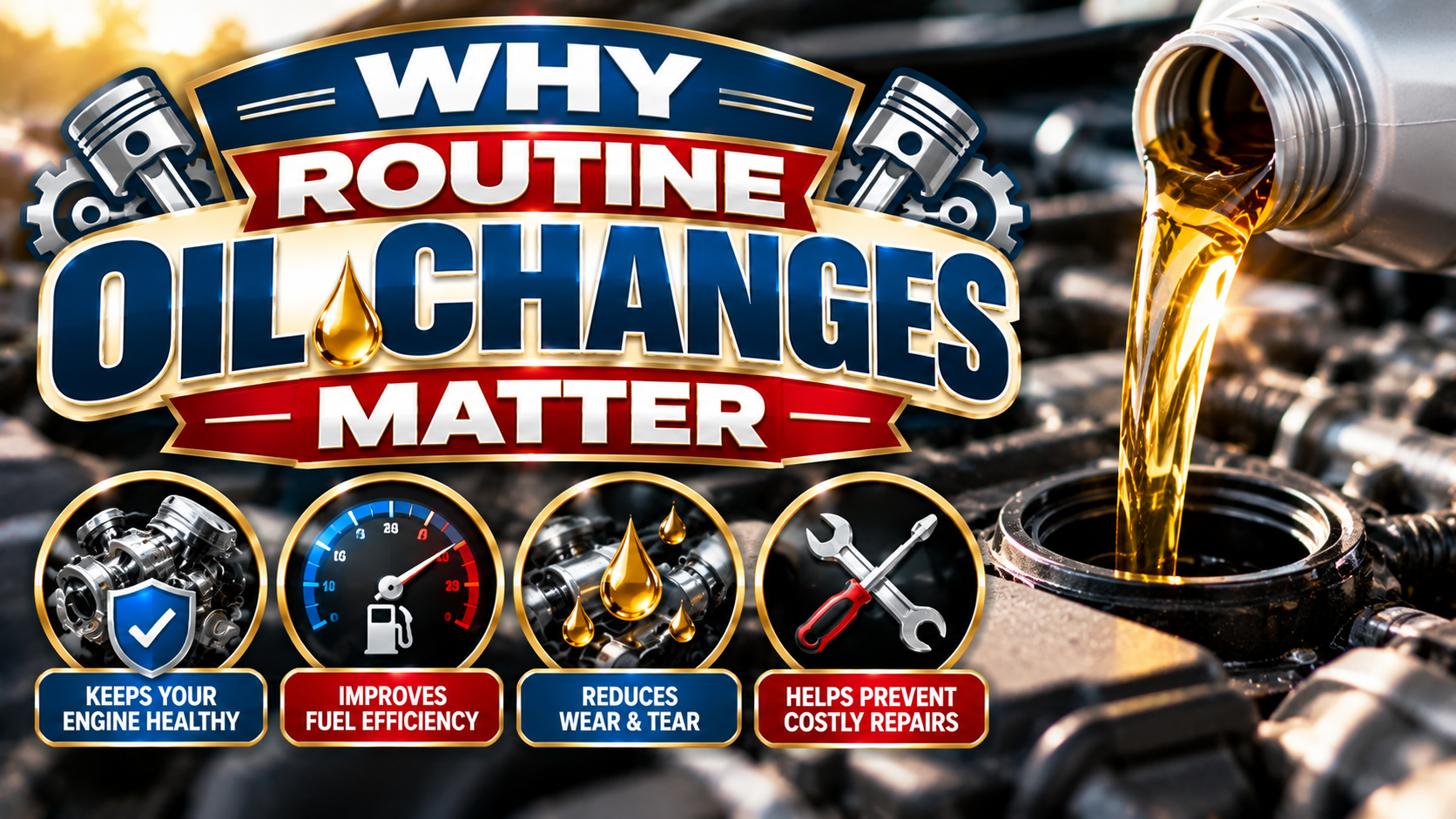
Engine oil is one of the most important fluids in your vehicle.
It lubricates internal engine components, reduces friction, helps manage heat, and carries contaminants toward the oil filter.
Over time, oil can degrade and become contaminated.
Typical Oil Change Intervals
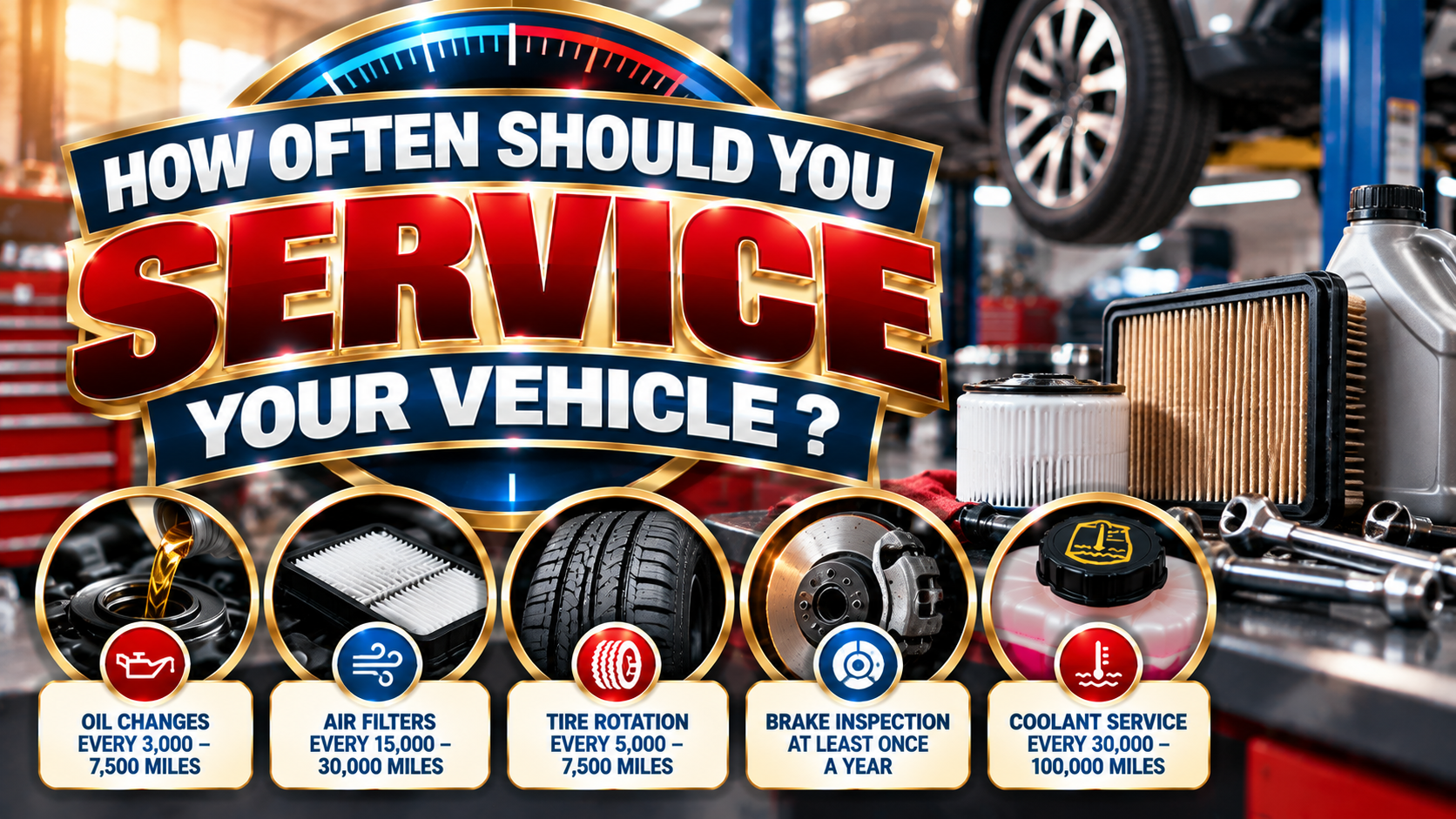
Many modern vehicles using manufacturer-approved synthetic oil have oil change intervals in the approximate range of 5,000 to 10,000 miles, although some require shorter or longer intervals.
Oil change frequency depends on:
- Engine design
- Oil specification
- Driving conditions
- Vehicle age
- Manufacturer requirements
- Oil life monitoring systems
Does Every Car Need an Oil Change Every 3,000 Miles?
No.
The traditional 3,000-mile oil change recommendation is not necessary for every modern vehicle.
However, some vehicles and driving conditions may require shorter intervals.
Always follow the manufacturer’s recommendations.
Signs Your Vehicle May Need Oil Service
- Oil change reminder
- Low oil level
- Oil leaks
- Unusual engine noises
- Overdue maintenance
A low oil pressure warning requires immediate attention and should not be treated as a routine oil change reminder.
2. How Often Should You Rotate Your Tires?
Tire rotation helps distribute wear among tires that may experience different loads and driving forces.
Many manufacturers recommend tire rotation approximately every 5,000 to 8,000 miles, but the correct interval varies.
Why Tire Rotation Matters
- Helps promote more even tread wear
- May extend usable tire life
- Provides an opportunity to inspect tire condition
- Helps identify abnormal wear patterns
Signs Your Tires Need Attention
- Uneven tread wear
- Unusual vibration
- Tire pressure warnings
- Visible tire damage
- Steering or handling changes
Not every vehicle uses the same tire rotation pattern. Some tire designs, staggered wheel setups, and drivetrain configurations have special requirements.
3. How Often Should Your Brakes Be Inspected?
Brake components wear at different rates depending on driving habits and vehicle conditions.
Rather than replacing brakes at a fixed mileage, technicians evaluate component condition and remaining service life.
Having brakes inspected during regular maintenance visits is a practical preventive approach.
Common Signs Your Brakes Need Service
- Squealing
- Grinding
- Brake pedal vibration
- Soft or spongy pedal
- Vehicle pulling when braking
- Longer stopping distances
- Brake warning lights
How Long Do Brake Pads Last?
Many passenger vehicle brake pads may last approximately 25,000 to 70,000 miles, but actual lifespan can vary substantially.
Driving in heavy traffic, towing, and frequent hard braking can accelerate wear.
Safety Reminder: If braking performance is reduced or the brake pedal behaves abnormally, stop driving when safe and arrange professional assistance.
4. How Often Should You Replace Your Car Battery?
Car batteries gradually lose their ability to store energy and deliver starting power.
Many conventional 12-volt automotive batteries last approximately three to five years, although climate, usage, and battery design can affect lifespan.
Signs Your Battery May Be Weak
- Slow engine cranking
- Clicking when starting
- Frequent jump-starts
- Dim lights
- Electrical problems
- Corroded battery terminals
Why Battery Testing Matters in Georgia
Georgia’s summer heat can accelerate internal battery deterioration.
A battery weakened by hot weather may struggle when colder temperatures arrive.
If your battery is several years old, periodic testing can help evaluate its condition.
Battery replacement should generally be based on testing, condition, and vehicle requirements rather than age alone.
5. How Often Should You Replace Engine Air Filters?
Your engine air filter helps prevent dirt and debris from entering the engine’s air intake system.
As the filter collects contaminants, airflow may become restricted.
Typical Replacement Timing
Some manufacturers recommend engine air filter replacement around 15,000 to 30,000 miles, while others specify inspection intervals or different replacement schedules.
Driving on dusty roads or in dirty environments may require more frequent inspection.
Signs an Air Filter Needs Attention
- Visible heavy contamination
- Restricted airflow
- Reduced performance in certain conditions
- Manufacturer-specified replacement interval reached
A technician can inspect the filter and determine whether replacement is appropriate.
6. How Often Should You Replace Cabin Air Filters?
The cabin air filter helps remove certain airborne particles from the air entering the passenger compartment.
A dirty filter may restrict airflow through the heating and air conditioning system.
Common Replacement Intervals
Many vehicles recommend cabin air filter replacement around 15,000 to 30,000 miles or approximately every one to two years, but intervals vary.
Signs Your Cabin Air Filter May Need Replacement
- Weak airflow from vents
- Musty odors
- Excessive debris in the filter
- Reduced HVAC airflow
Georgia’s seasonal pollen can contribute to cabin filter contamination, making periodic inspection useful.
7. How Often Should You Service Your Cooling System?
Your vehicle’s cooling system helps regulate engine temperature and prevent overheating.
Cooling system maintenance is especially important during hot Georgia summers.
Cooling System Maintenance May Include
- Checking coolant level
- Inspecting hoses
- Checking for leaks
- Evaluating radiator condition
- Testing coolant protection
- Replacing coolant at the recommended interval
How Often Should Coolant Be Replaced?
Coolant replacement intervals vary significantly by vehicle and coolant formulation.
Some manufacturers specify approximately five years or 100,000 miles for certain coolant systems, while others require different intervals.
Always use the manufacturer-approved coolant and follow the correct service schedule.
Warning Signs of Cooling System Problems
- Engine overheating
- Coolant leaks
- Low coolant level
- Temperature gauge fluctuations
- Sweet-smelling odors
Important: Never open a pressurized cooling system while the engine is hot.
8. How Often Should You Service Your Transmission?
Your transmission transfers engine power to the wheels and helps your vehicle operate across different speeds and driving conditions.
Transmission maintenance depends heavily on the transmission design.
Transmission Types Include
- Conventional automatic
- Manual
- Continuously variable transmission (CVT)
- Dual-clutch transmission
Each design may have different fluid specifications and maintenance requirements.
Transmission Service Intervals
Some manufacturers recommend transmission fluid service at specific mileage intervals, while others use longer schedules or condition-based recommendations.
Certain severe-driving conditions may require more frequent service.
Signs of Transmission Problems
- Delayed engagement
- Unusual shifting
- Slipping
- Shuddering
- Fluid leaks
- Transmission warning lights
Use the correct transmission fluid and follow manufacturer-approved service procedures.
9. How Often Should You Replace Spark Plugs?
Spark plugs ignite the air-fuel mixture in gasoline engines.
Over time, spark plug electrodes wear, potentially affecting ignition performance.
Typical Spark Plug Replacement Intervals
Depending on the engine and spark plug design, manufacturer recommendations may range from approximately 30,000 to 100,000 miles or more.
Signs of Worn Spark Plugs
- Engine misfires
- Rough idling
- Hard starting
- Reduced performance
- Check engine light
These symptoms can also result from other problems, so diagnosis is important before replacing parts.
Diesel engines generally do not use spark plugs for normal combustion.
10. How Often Should You Check Wheel Alignment?
Wheel alignment helps maintain proper steering and suspension geometry.
Unlike oil changes, alignment is not necessarily required at a fixed mileage interval.
Schedule an Alignment Inspection If:
- Your vehicle pulls to one side.
- Your steering wheel is off-center.
- Your tires wear unevenly.
- You hit a significant pothole or curb.
- Steering or suspension components have been replaced.
- Vehicle handling changes.
Correct alignment helps protect tires and maintain predictable handling.
11. How Often Should You Balance Your Tires?
Tire balancing corrects uneven weight distribution in tire and wheel assemblies.
Balancing is commonly performed when tires are installed or remounted.
Signs Your Tires May Need Balancing
- Steering wheel vibration at certain speeds
- Seat or floor vibration
- Vibration after tire installation
- Missing wheel weights
Tire balancing and wheel alignment are different services.
A technician can help determine which service is appropriate.
12. How Often Should You Inspect Belts and Hoses?
Engine belts and hoses can deteriorate over time because of heat, age, and normal wear.
A damaged belt or hose can cause an unexpected breakdown.
Warning Signs
- Cracked or frayed belts
- Squealing noises
- Coolant leaks
- Swollen hoses
- Visible deterioration
- Unusual accessory operation
Inspection during routine service can help identify components that need replacement.
Follow manufacturer recommendations for timing belts, accessory belts, and related components.
13. How Often Should You Replace Brake Fluid?
Brake fluid transfers hydraulic pressure through the braking system.
Over time, certain brake fluids absorb moisture, which can affect performance and contribute to internal corrosion.
Brake Fluid Service Intervals
Some vehicle manufacturers recommend brake fluid replacement approximately every two to three years, while others specify different intervals or inspection procedures.
The correct schedule depends on the vehicle.
Signs of Brake Hydraulic Problems
- Soft brake pedal
- Fluid leaks
- Low brake fluid
- Brake warning light
- Reduced braking performance
Brake fluid service should follow the manufacturer’s specifications.
14. How Often Should You Inspect Steering and Suspension Components?
Your steering and suspension systems help maintain vehicle control, ride comfort, and tire contact with the road.
These components can wear gradually.
Common Warning Signs
- Excessive bouncing
- Clunking over bumps
- Uneven tire wear
- Loose steering
- Vehicle wandering
- Unusual vibration
- Changes in handling
Regular inspections can help identify worn shocks, struts, bushings, ball joints, and other components.
15. How Often Should You Schedule a Vehicle Safety Inspection?
A vehicle safety inspection can help identify concerns involving important operating systems.
Depending on the inspection requested, a technician may evaluate:
- Tires
- Brakes
- Steering
- Suspension
- Exterior lights
- Windshield wipers
- Fluid leaks
- Battery condition
- Belts and hoses
A safety inspection may be especially helpful before a long road trip, after purchasing a used vehicle, or when unusual symptoms appear.
General Vehicle Maintenance Schedule at a Glance
The following table provides broad planning guidelines, not a replacement for your vehicle’s manufacturer-recommended schedule.
| Maintenance Service | General Guideline |
|---|---|
| Engine oil and filter | Often 5,000–10,000 miles; follow manufacturer |
| Tire rotation | Often 5,000–8,000 miles |
| Tire pressure | Check approximately monthly and before long trips |
| Brake inspection | During regular maintenance and when symptoms occur |
| Battery testing | Periodically, especially as battery ages |
| Engine air filter | Inspect and replace per manufacturer; often 15,000–30,000 miles |
| Cabin air filter | Often 15,000–30,000 miles or 1–2 years |
| Coolant service | Vehicle- and coolant-specific schedule |
| Transmission fluid | Vehicle- and transmission-specific schedule |
| Spark plugs | Often 30,000–100,000+ miles depending on design |
| Wheel alignment | When symptoms, impacts, or repairs indicate |
| Tire balancing | At tire installation or when imbalance is suspected |
| Brake fluid | Often 2–3 years on vehicles specifying time-based replacement |
| Belts and hoses | Inspect during regular service; replace as required |
| Safety inspection | Periodically and before major trips |
Remember: Manufacturer recommendations always take priority over these general estimates.
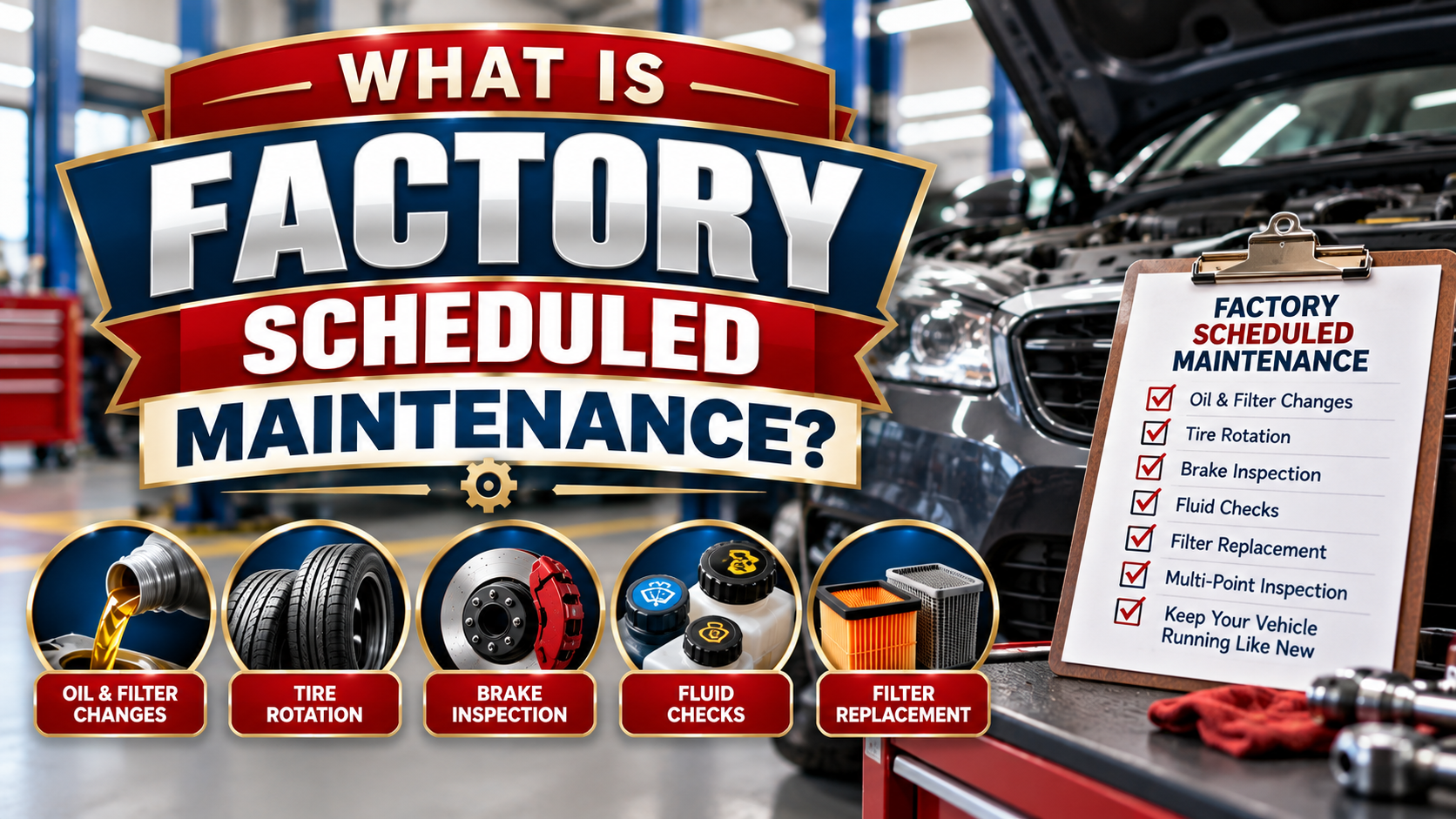
What Is Factory Scheduled Maintenance?
Factory scheduled maintenance refers to the maintenance services recommended by your vehicle manufacturer at specific mileage or time intervals.
These recommendations are developed around the vehicle’s design, components, fluids, and operating requirements.
Factory Maintenance May Include
- Oil changes
- Filter replacement
- Fluid inspections
- Spark plug replacement
- Brake inspections
- Tire maintenance
- Cooling system service
- Transmission maintenance
- Timing belt replacement, if applicable
Following factory maintenance recommendations helps ensure your vehicle receives appropriate service.
Does Your Car Need More Frequent Service in Georgia?
Some Georgia driving conditions may qualify as severe service under certain manufacturer maintenance schedules.
Common Conditions That May Affect Maintenance Needs
Stop-and-Go Traffic: Frequent braking, acceleration, and idling may increase wear on certain components.
Short Trips: Repeated short drives may prevent the engine from reaching normal operating temperature for long enough to manage moisture and contaminants effectively.
Hot Weather: High temperatures can accelerate battery deterioration and expose cooling system weaknesses.
Dusty Roads: Dust and debris may increase air filter contamination.
Towing or Heavy Loads: Additional loads can place greater demands on the engine, transmission, brakes, and cooling system.
Review your owner’s manual to determine whether your driving habits qualify for a severe-service maintenance schedule.
How Do You Know If Your Car Is Overdue for Maintenance?
Your vehicle may need attention if:
- The maintenance reminder is illuminated.
- You have exceeded a manufacturer-recommended service interval.
- Your tires show uneven wear.
- Your brakes make unusual noises.
- Your engine runs differently than normal.
- Fluid levels are low.
- You notice leaks.
- Your vehicle is difficult to start.
- Warning lights appear.
Not all maintenance needs produce noticeable symptoms.
That’s why following a regular service schedule is important.
What Happens If You Skip Routine Vehicle Maintenance?
Skipping maintenance can allow normal wear or developing problems to go unnoticed.
Potential consequences include:
- Increased engine wear
- Reduced reliability
- Premature tire wear
- Brake problems
- Cooling system failures
- Battery failure
- More extensive repairs
- Reduced vehicle lifespan
Not every missed service results in immediate damage, but repeatedly ignoring maintenance recommendations can increase the risk of preventable problems.
How to Create a Vehicle Maintenance Schedule
Creating a maintenance schedule does not have to be complicated.
Step 1: Review Your Owner’s Manual
Identify the manufacturer-recommended maintenance intervals for your specific vehicle.
Step 2: Record Your Current Mileage
Keep track of mileage and service dates.
Step 3: Review Your Driving Habits
Determine whether your vehicle operates under normal or severe-service conditions.
Step 4: Keep Maintenance Records
Save invoices and document completed services.
Step 5: Schedule Routine Inspections
Have important systems inspected during regular maintenance appointments.
Step 6: Address Warning Signs Promptly
Do not wait for the next scheduled appointment if your vehicle develops a safety concern or mechanical problem.
Is Preventive Maintenance Worth the Cost?
Preventive maintenance requires an investment, but it can help reduce the likelihood of certain expensive repairs.
For example:
- Maintaining engine oil helps protect internal engine components.
- Cooling system maintenance helps reduce overheating risks.
- Tire rotations can help promote more even tire wear.
- Brake inspections can identify worn components.
- Battery testing can help reduce unexpected no-start situations.
The goal is not to replace parts unnecessarily.
It’s to perform the services your vehicle needs at the appropriate time.
Why Routine Vehicle Maintenance Matters for Watkinsville, GA Drivers
Drivers throughout Watkinsville, Oconee County, Bishop, Bogart, and surrounding Northeast Georgia communities depend on their vehicles for work, school, family responsibilities, and everyday transportation.
Daily Commuting
Frequent starts, stops, and changing traffic conditions can affect maintenance needs.
Georgia Summer Heat
High temperatures can accelerate battery wear and place additional demands on cooling systems.
Rural Roads and Potholes
Uneven pavement and road impacts can affect tires, wheel alignment, and suspension components.
Highway Travel
Long-distance driving makes dependable tires, brakes, fluids, and engine performance especially important.
High-Mileage Vehicles
Older vehicles may benefit from closer monitoring of wear-related components and fluid leaks.
Following an appropriate maintenance schedule helps support dependable transportation throughout the year.
Professional Vehicle Maintenance in Watkinsville, GA
At Car Craft of Watkinsville, we understand that every vehicle has different maintenance requirements.
Our automotive maintenance and repair services help drivers stay current with important service needs and identify developing problems.
Whether your vehicle needs an oil change, tire rotation, brake inspection, battery test, or cooling system service, regular maintenance can help protect your investment.
Trust Car Craft of Watkinsville for Honest Preventive Maintenance
At Car Craft of Watkinsville, we’re proud to serve drivers throughout Watkinsville, Oconee County, and surrounding Northeast Georgia communities.
Our family-owned automotive repair shop is committed to honest recommendations, upfront estimates, clear communication, and quality workmanship.
Our experienced, ASE-certified technicians provide automotive maintenance and repair services, including:
- Oil Change Services
- Tire Rotation & Balancing
- Brake Repair
- Car Battery Testing & Replacement
- Cooling System Repair
- Coolant Flush Services
- Wheel Alignment
- Diagnostic Services
- Engine Repair
- Starter Repair & Replacement
- Vehicle Safety Inspections
We believe vehicle maintenance should be based on manufacturer recommendations, actual vehicle condition, and the driver’s needs.
Is Your Vehicle Due for Service?
Don’t wait until a dashboard warning light or unexpected breakdown reminds you that maintenance is overdue.
Keeping up with recommended service intervals can help improve reliability, protect important components, and reduce the risk of avoidable repairs.
Contact Car Craft of Watkinsville today to schedule routine vehicle maintenance or a professional inspection in Watkinsville, GA.
Let our experienced automotive team help keep your vehicle running safely and reliably.