What Is Factory Scheduled Maintenance? A Complete Guide for Watkinsville, GA Drivers
Keep Your Vehicle Running Reliably with Manufacturer-Recommended Maintenance
Keeping your vehicle in excellent condition requires more than fixing problems when something breaks. One of the most effective ways to protect your investment, maintain vehicle performance, and reduce the risk of unexpected repairs is to follow your vehicle manufacturer’s recommended maintenance schedule.
This is known as factory scheduled maintenance, and it plays an important role in keeping cars, trucks, and SUVs safe, reliable, and operating efficiently throughout their lifespan.
Whether you drive a newer vehicle or one with more than 100,000 miles, understanding factory scheduled maintenance can help you make informed decisions about your vehicle’s care.
At Car Craft of Watkinsville, we believe preventive automotive maintenance is essential for long-term vehicle reliability. Our experienced technicians help drivers throughout Watkinsville, Oconee County, and surrounding Northeast Georgia communities understand their maintenance needs and keep their vehicles performing at their best.
In this guide, we’ll explain what factory scheduled maintenance includes, why it matters, how often services are needed, and how following the recommended schedule can help you avoid costly repairs.
What Is Factory Scheduled Maintenance?
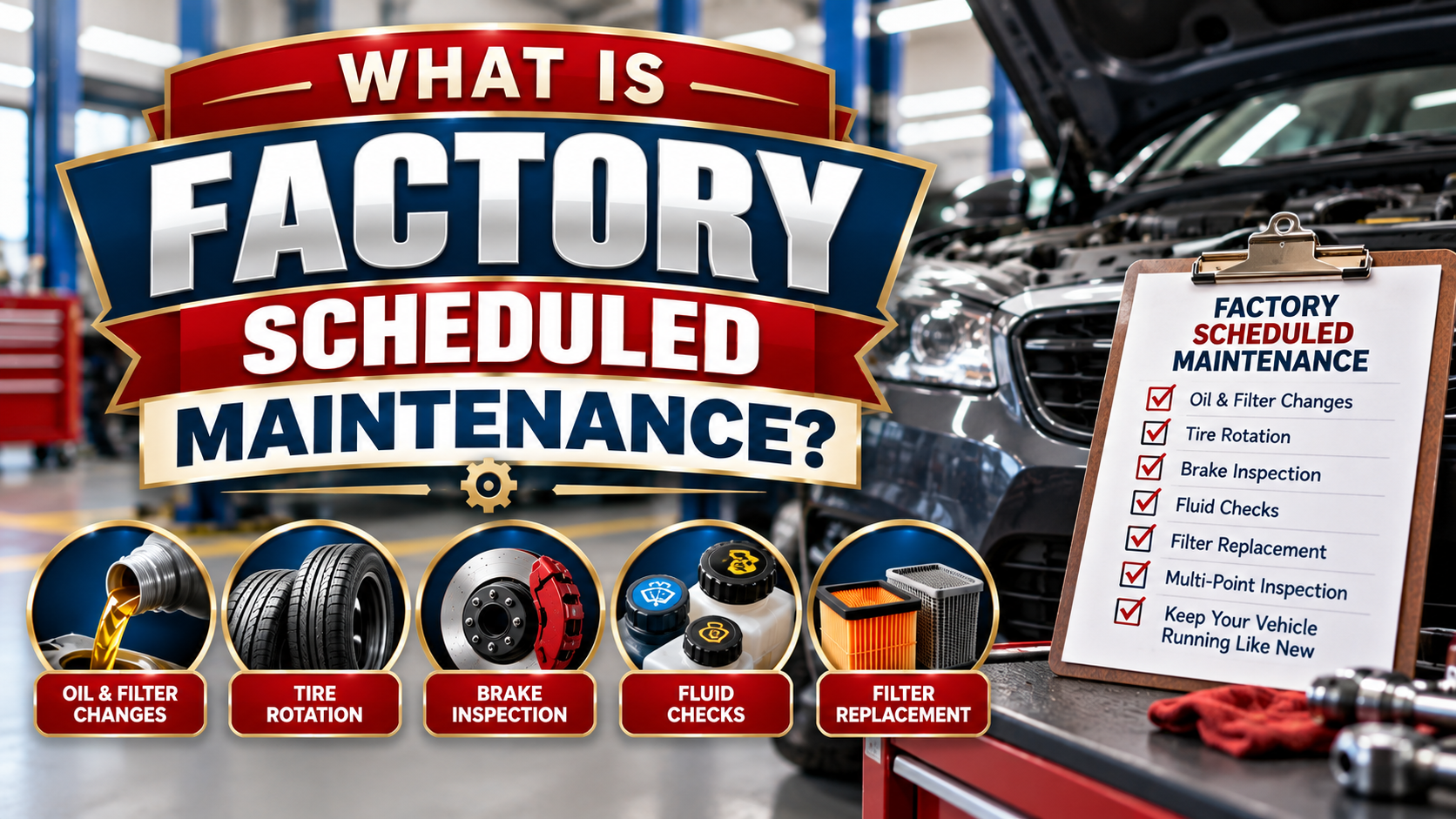
Factory scheduled maintenance refers to the inspections, services, and component replacements recommended by your vehicle’s manufacturer at specific mileage intervals, time intervals, or operating conditions.
Automakers develop maintenance schedules based on vehicle engineering, component requirements, testing, and expected operating conditions.
These recommendations are designed to help maintain vehicle performance, reliability, safety, and longevity.
Factory scheduled maintenance may include:
- Engine oil and filter changes
- Tire rotations
- Brake inspections
- Engine air filter replacement
- Cabin air filter replacement
- Transmission fluid service
- Coolant replacement
- Spark plug replacement
- Timing belt replacement, if equipped
- Brake fluid replacement
- Steering and suspension inspections
- Battery and charging system inspections
- Other manufacturer-specific services
The exact maintenance requirements depend on your vehicle’s make, model, year, engine, mileage, and driving conditions.
Important: Factory scheduled maintenance is not the same as repairing a broken component. It focuses on maintaining your vehicle according to the manufacturer’s recommendations and identifying potential problems before they become more serious.
Why Is Factory Scheduled Maintenance Important?
Following your manufacturer’s maintenance schedule provides several important benefits.
1. Helps Extend the Life of Your Vehicle
Regular maintenance helps reduce premature wear on important mechanical components.
Services such as oil changes, fluid replacement, and inspections can help protect your engine, transmission, cooling system, and other essential systems.
With proper maintenance, many vehicles can continue providing dependable transportation well beyond 100,000 miles.
2. Helps Prevent Expensive Repairs
Certain mechanical failures develop gradually.
For example, neglected coolant maintenance may contribute to corrosion or cooling system problems, while inadequate engine lubrication can cause serious internal damage.
Following recommended maintenance intervals can help reduce the likelihood of some costly repairs.
3. Supports Vehicle Safety
Factory scheduled maintenance often includes inspections of safety-related components such as brakes, tires, steering, and suspension systems.
Identifying worn or damaged components early can help maintain safe vehicle operation.
4. Helps Maintain Vehicle Performance
Properly maintained engines, transmissions, and other systems are more likely to operate as designed.
Replacing worn spark plugs, maintaining correct fluid levels, and addressing developing problems can help preserve drivability and performance.
5. May Help Protect Warranty Coverage
Following the manufacturer’s maintenance requirements and keeping accurate service records can help support warranty claims.
In the United States, vehicle owners generally are not required to use a dealership for routine maintenance simply to preserve warranty coverage.
However, maintenance must be performed correctly, and damage caused by improper maintenance or unsuitable parts may not be covered.
6. Helps Maintain Resale Value
A documented maintenance history can make a used vehicle more attractive to potential buyers.
Service records demonstrate that the owner has taken steps to maintain the vehicle properly.
What Services Are Included in Factory Scheduled Maintenance?
Factory scheduled maintenance is not a single service. It is a series of maintenance procedures performed at intervals recommended by the manufacturer.
Here are some of the most common services.
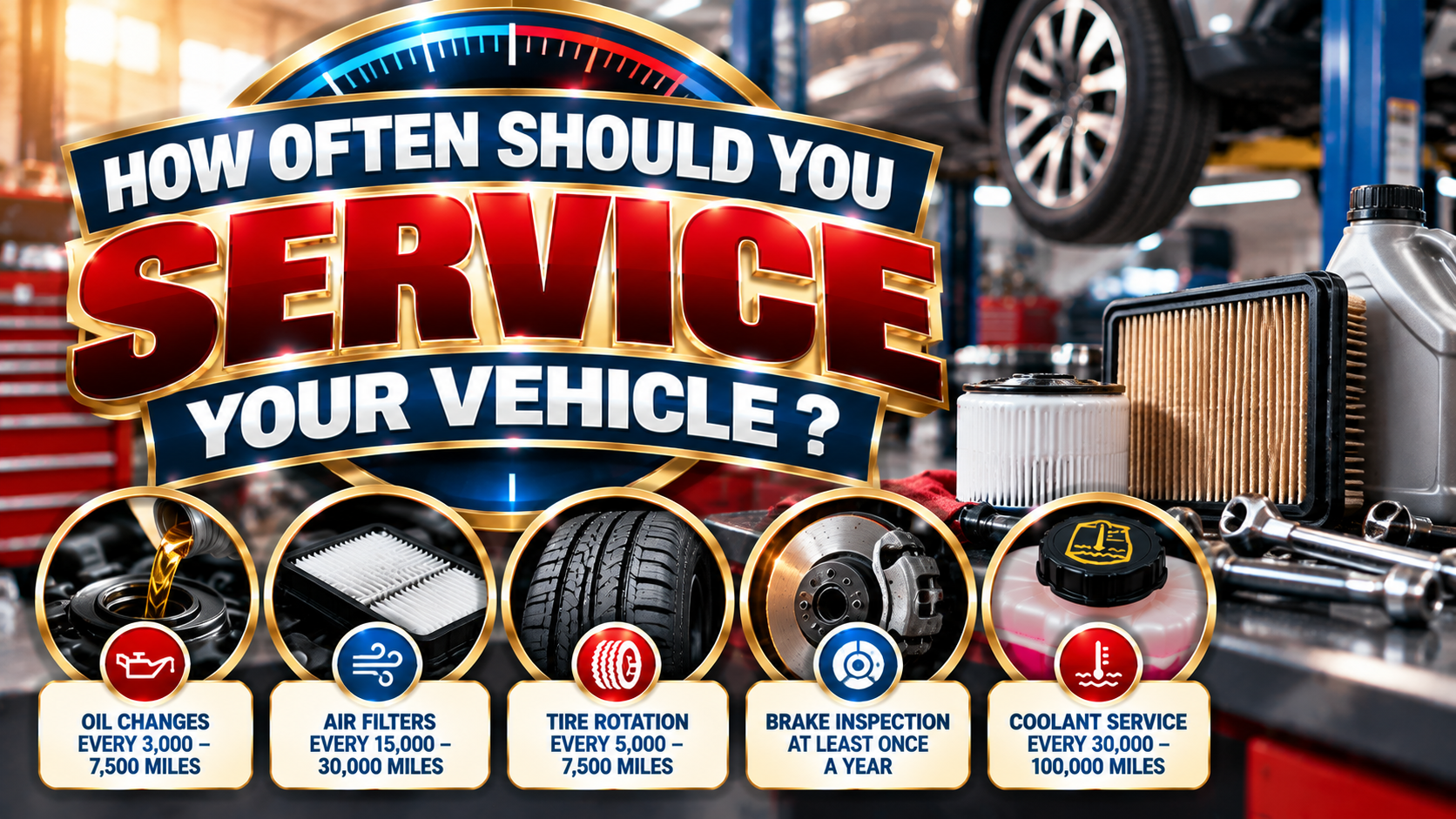
Engine Oil and Filter Changes
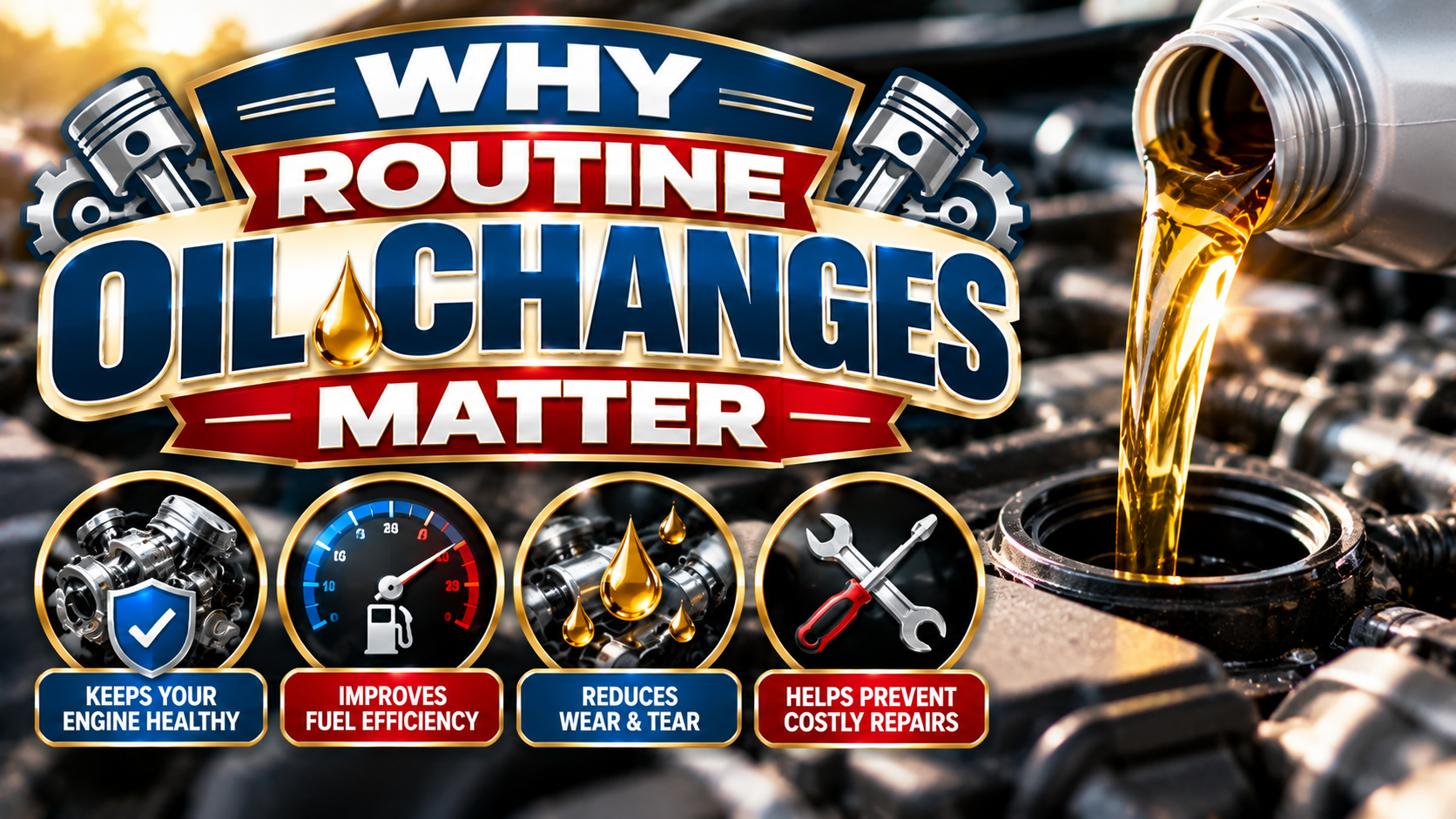
Engine oil lubricates moving parts, reduces friction, and helps protect internal engine components.
Over time, oil can become contaminated and lose some of its protective properties.
Regular oil and filter changes help maintain proper lubrication and reduce engine wear.
Maintenance Tip: Always use engine oil that meets your manufacturer’s required viscosity and specifications.
Tire Rotation and Inspection
Tire rotations help promote more even tire wear when performed according to the vehicle manufacturer’s recommendations.
During tire service, technicians may also inspect:
- Tire tread depth
- Tire pressure
- Uneven wear patterns
- Sidewall damage
- Wheel condition
Proper tire maintenance supports traction, handling, and tire longevity.
Brake System Inspection
Your braking system is essential for safe vehicle operation.
Factory scheduled maintenance may include inspections of brake pads, rotors, calipers, brake lines, and other components.
Brake fluid replacement may also be recommended at specific intervals.
Engine Air Filter Replacement
The engine air filter helps prevent dust and debris from entering the engine’s intake system.
A restricted or damaged air filter can affect engine operation.
Replacement intervals depend on manufacturer recommendations and driving conditions.
Cabin Air Filter Replacement
The cabin air filter helps remove certain airborne particles from air entering the passenger compartment.
A dirty cabin filter may restrict airflow through the heating and air conditioning system.
Transmission Fluid Service
Transmission fluid helps lubricate, cool, and support the operation of transmission components.
Some vehicles require fluid replacement at specific intervals, while others have different service procedures.
Always follow the manufacturer’s transmission maintenance recommendations.
Cooling System Maintenance
Your cooling system regulates engine temperature and helps prevent overheating.
Factory maintenance may include coolant replacement, system inspections, and checks for leaks or deteriorating components.
This service is especially important for vehicles operating in Georgia’s hot summer weather.
Spark Plug Replacement
Spark plugs ignite the air-fuel mixture inside gasoline engines.
Worn spark plugs may contribute to engine misfires, rough idling, reduced performance, and starting problems.
Replacement intervals vary depending on engine design and spark plug type.
Belt and Hose Inspection
Belts and hoses deteriorate over time due to heat, age, and normal operation.
Some vehicles also require timing belt replacement at specific mileage or time intervals.
Following these recommendations can help prevent unexpected breakdowns and potentially serious engine damage.
Factory Scheduled Maintenance by Mileage
Many manufacturers organize maintenance recommendations around mileage milestones.
However, modern vehicles may also use maintenance reminder systems that account for operating conditions.
The following table provides general examples of services that may be considered at common mileage intervals.
| Mileage | Common Maintenance Considerations |
|---|---|
| 5,000 Miles | Oil service if due, tire inspection or rotation, fluid checks |
| 10,000 Miles | Oil service if due, tire rotation, routine inspections |
| 15,000 Miles | Air filter inspection, brake inspection, general maintenance |
| 30,000 Miles | Filters, fluids, and manufacturer-specified inspections |
| 45,000 Miles | Routine maintenance and inspection of wear-related components |
| 60,000 Miles | Manufacturer-specified fluid services, spark plugs or belts if due |
| 75,000 Miles | Routine maintenance and additional wear-related inspections |
| 90,000 Miles | Major scheduled services when specified by the manufacturer |
| 100,000 Miles | Spark plugs, coolant, belts, or other services when due |
| 120,000+ Miles | Continued scheduled maintenance and age-related inspections |
Important: This table is illustrative, not a universal service schedule. Your vehicle may require certain services earlier, later, or not at all. Always refer to the manufacturer’s maintenance schedule for your specific vehicle.
What Is 30,000-Mile Factory Scheduled Maintenance?
A 30,000-mile service is often considered an important maintenance milestone.
Depending on your vehicle, recommended services may include:
- Engine oil and filter replacement
- Tire rotation
- Brake inspection
- Engine air filter inspection or replacement
- Cabin air filter inspection or replacement
- Fluid level and condition checks
- Steering and suspension inspection
- Belt and hose inspection
Some vehicles may require additional services, while others may need only routine maintenance.
A qualified technician can review your vehicle’s maintenance schedule to determine which services are due.
What Is 60,000-Mile Factory Scheduled Maintenance?
By 60,000 miles, certain vehicle components may require additional attention.
Manufacturer-recommended services could include:
- Oil and filter changes
- Brake system inspections
- Tire maintenance
- Transmission fluid service, if specified
- Coolant service, if due
- Spark plug replacement on certain engines
- Belt and hose inspections
- Steering and suspension inspections
The actual requirements vary significantly by manufacturer.
Professional Tip: Avoid purchasing a generic 60,000-mile maintenance package without first confirming which services your vehicle actually needs.
What Is 90,000-Mile Factory Scheduled Maintenance?
At 90,000 miles, many vehicles have experienced years of regular use.
Depending on the manufacturer’s recommendations, maintenance may include:
- Engine oil and filter service
- Brake inspection
- Tire inspection and rotation
- Fluid services when due
- Spark plug replacement
- Timing belt replacement, if applicable
- Cooling system inspection
- Suspension and steering inspection
A thorough inspection can also help identify age-related wear that may not be addressed by the standard maintenance schedule.
What Happens If You Skip Factory Scheduled Maintenance?
Skipping recommended maintenance does not guarantee that your vehicle will experience a breakdown, but it can increase the risk of certain mechanical problems.
Potential consequences include:
- Premature engine wear
- Transmission problems
- Cooling system deterioration
- Reduced fuel efficiency
- Increased component wear
- Unexpected breakdowns
- Higher repair costs
- Reduced vehicle reliability
For example, failing to replace a timing belt at the recommended interval can result in serious engine damage on certain vehicles.
Likewise, ignoring low engine oil levels can cause severe internal engine wear.
Preventive maintenance helps reduce avoidable risks and supports long-term vehicle reliability.
Can an Independent Auto Repair Shop Perform Factory Scheduled Maintenance?
Yes. You generally do not have to visit a dealership for factory scheduled maintenance.
Qualified independent automotive repair shops can perform many manufacturer-recommended maintenance services.
Under federal warranty protections, manufacturers generally cannot deny warranty coverage solely because routine maintenance was performed by an independent repair facility.
However, the work must be performed correctly, using appropriate parts, fluids, and procedures.
A manufacturer may deny coverage for damage caused by improper maintenance or unsuitable components.
When choosing an independent repair shop, look for:
- Experienced automotive technicians
- Familiarity with manufacturer maintenance requirements
- Appropriate diagnostic equipment
- Quality replacement parts and fluids
- Clear service recommendations
- Accurate maintenance records
- Transparent pricing
At Car Craft of Watkinsville, we believe drivers deserve honest maintenance recommendations based on their vehicle’s actual needs rather than unnecessary services.
Is Factory Scheduled Maintenance Different from Preventive Maintenance?
Factory scheduled maintenance and preventive maintenance are closely related, but they are not exactly the same.
Factory Scheduled Maintenance refers to services recommended by the vehicle manufacturer at specified intervals.
Preventive Maintenance is a broader approach to vehicle care that includes manufacturer-recommended services along with inspections and maintenance based on vehicle condition, age, and driving habits.
For example, replacing engine oil according to the manufacturer’s schedule is factory scheduled maintenance.
Having a worn radiator hose replaced before it fails is an example of condition-based preventive maintenance.
Both approaches help support vehicle safety, reliability, and longevity.
How Do I Know When My Vehicle Needs Factory Scheduled Maintenance?
There are several ways to determine which maintenance services are due.
Check Your Owner’s Manual
Your owner’s manual contains the manufacturer’s maintenance recommendations for your vehicle.
Review Your Vehicle’s Maintenance Reminder System
Many modern vehicles display maintenance reminders based on mileage, time, or operating conditions.
Review Your Service Records
Maintenance records help determine which services have already been completed and which may be approaching.
Ask a Qualified Automotive Technician
A technician can review your vehicle’s mileage, maintenance history, and manufacturer recommendations to help identify upcoming services.
If you’ve recently purchased a used vehicle without complete maintenance records, a professional inspection can help establish a practical maintenance plan.
Factory Scheduled Maintenance for High-Mileage Vehicles
Factory scheduled maintenance remains important after your vehicle reaches 100,000 miles.
In fact, aging components may require additional attention as mileage increases.
High-mileage maintenance may involve:
- Monitoring engine oil consumption
- Inspecting for fluid leaks
- Checking cooling system components
- Evaluating transmission operation
- Inspecting steering and suspension wear
- Testing the battery and charging system
- Monitoring brake and tire condition
- Replacing components according to manufacturer recommendations
A vehicle with 150,000 or 200,000 miles may still provide dependable transportation when properly maintained.
The key is to continue following the appropriate maintenance schedule while addressing age-related wear and developing problems.
Why Factory Scheduled Maintenance Matters for Watkinsville, GA Drivers
Drivers throughout Watkinsville, Oconee County, and Northeast Georgia rely on their vehicles for daily commuting, family transportation, errands, and longer highway trips.
Local driving conditions can influence maintenance needs.
Hot Georgia Summers
High temperatures increase demands on cooling systems, batteries, and air conditioning components.
Stop-and-Go Traffic
Frequent braking, acceleration, and idling may qualify as severe driving conditions for certain maintenance items.
Highway Commuting
Regular highway driving can accumulate mileage quickly, making scheduled maintenance especially important.
Seasonal Dust and Pollen
Dusty driving conditions may require more frequent air filter inspections.
Older Vehicles
As vehicles age, seals, hoses, suspension components, and other parts may require additional attention.
Following your manufacturer’s maintenance schedule while accounting for local driving conditions can help protect your vehicle over the long term.
How Much Does Factory Scheduled Maintenance Cost?
The cost of factory scheduled maintenance depends on several factors, including:
- Vehicle make and model
- Current mileage
- Manufacturer-required services
- Parts and fluid specifications
- Labor requirements
- Vehicle condition
- Whether additional repairs are needed
A basic maintenance visit may involve an oil change, tire rotation, and inspection.
A more extensive service may include fluid replacement, spark plugs, timing belt replacement, or other manufacturer-specified procedures.
Because every vehicle is different, the most accurate approach is to request an estimate based on your specific vehicle and the services that are due.
Helpful Tip: Ask your repair shop to explain which services are manufacturer-required, which are condition-based recommendations, and which can reasonably be scheduled later.
Trust Car Craft of Watkinsville for Factory Scheduled Maintenance
At Car Craft of Watkinsville, we understand that keeping your vehicle dependable starts with proper maintenance.
Our family-owned automotive repair shop is committed to helping drivers throughout Watkinsville, Oconee County, and surrounding communities make informed decisions about their vehicles.
Our experienced, ASE-certified technicians provide a variety of automotive maintenance and repair services, including:
- Oil Change Services
- Brake Repair
- Cooling System Repair
- Coolant Flush Services
- Battery Testing & Replacement
- Tire Rotation & Balancing
- Wheel Alignment
- Diagnostic Services
- Engine Repair
- Vehicle Safety Inspections
We believe in honest recommendations, upfront estimates, clear communication, and quality workmanship.
Our goal is to help you understand your vehicle’s maintenance needs and avoid unnecessary repairs or services.
Schedule Your Factory Scheduled Maintenance in Watkinsville, GA
Whether your vehicle is approaching 30,000, 60,000, 90,000, or more than 100,000 miles, staying current with recommended maintenance can help protect your investment.
Don’t wait for a warning light or unexpected breakdown before giving your vehicle the attention it needs.
Contact Car Craft of Watkinsville today to discuss your vehicle’s factory scheduled maintenance needs and schedule your next service appointment.
Let our experienced automotive team help keep your vehicle running safely and reliably for miles to come.