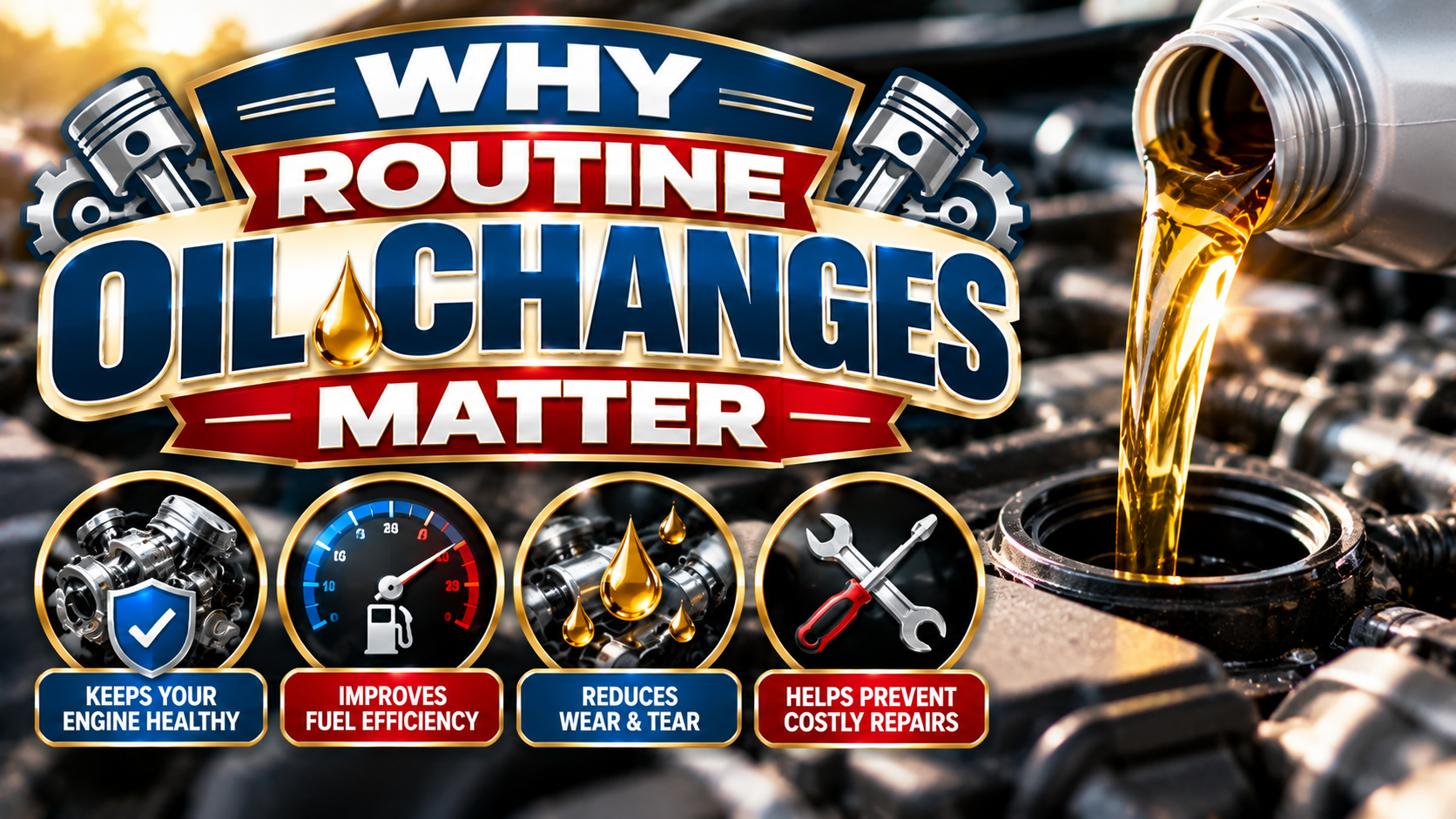
Why Routine Oil Changes Matter: Protect Your Engine and Extend the Life of Your Vehicle
Discover Why Regular Oil Changes Are Essential for Engine Performance, Reliability, and Long-Term Vehicle Maintenance in Watkinsville, GA
Your vehicle’s engine is one of its most important and expensive components. Keeping it properly lubricated is essential to maintaining reliable performance and preventing unnecessary wear.
One of the simplest and most effective ways to protect your engine is through routine oil changes.
Engine oil works continuously to lubricate moving parts, reduce friction, manage heat, and help keep internal engine components clean. Over time, however, oil can become contaminated and its protective properties can deteriorate.
Skipping oil changes or extending maintenance intervals beyond your vehicle manufacturer’s recommendations can increase engine wear and potentially lead to costly mechanical problems.
For drivers throughout Watkinsville, Oconee County, and surrounding Northeast Georgia communities, regular oil changes are an important part of keeping vehicles dependable for daily commutes, family transportation, and long-distance travel.
At Car Craft of Watkinsville, we believe preventive maintenance is one of the smartest investments you can make in your vehicle.
In this guide, we’ll explain why routine oil changes matter, how often your vehicle may need an oil change, signs your engine oil needs attention, and how proper maintenance can help extend the life of your vehicle.
What Does Engine Oil Actually Do?
Engine oil performs several essential functions that help protect your engine during normal operation.
Your engine contains numerous moving components that operate under high temperatures and significant mechanical stress.
Without proper lubrication, these parts can experience excessive friction, wear, and damage.
Engine Oil Helps:
- Lubricate moving engine components.
- Reduce friction and mechanical wear.
- Carry heat away from critical engine parts.
- Suspend contaminants until they are removed by filtration or oil replacement.
- Help prevent sludge and deposit formation.
- Protect metal surfaces against corrosion.
- Support proper operation of oil-controlled engine systems.
Modern engines often rely on precise oil specifications to operate components such as variable valve timing systems and hydraulic tensioners.
Using the correct engine oil and changing it at appropriate intervals helps these systems function as designed.
1. Routine Oil Changes Reduce Engine Wear
One of the primary reasons routine oil changes matter is engine protection.
Inside your engine, components such as pistons, bearings, camshafts, and crankshafts move rapidly while operating under substantial loads.
Engine oil forms a protective lubricating film between many of these moving surfaces.
When oil becomes severely degraded, contaminated, or insufficient, its ability to protect engine components may decline.
What Can Happen When Oil Changes Are Neglected?
- Increased internal friction
- Accelerated component wear
- Sludge accumulation
- Reduced lubrication effectiveness
- Damage to bearings and other components
- Potential engine failure in severe cases
Following your manufacturer’s oil change recommendations helps reduce unnecessary wear and supports long-term engine reliability.
2. Fresh Engine Oil Helps Maintain Proper Engine Performance
Your engine depends on clean oil with the correct viscosity and performance specifications.
As oil ages, exposure to heat, combustion byproducts, and contaminants can change its properties.
When engine oil no longer performs as intended, certain engine systems may become less effective.
Benefits of Proper Oil Maintenance
- Consistent lubrication
- Reliable operation of oil-controlled components
- Reduced friction
- Better protection during engine startup
- Improved long-term engine dependability
An oil change will not necessarily produce a noticeable increase in horsepower or fuel economy, particularly if the previous oil was still serviceable.
However, maintaining the correct oil helps the engine operate as designed.
3. Oil Changes Help Prevent Sludge Buildup
Engine sludge is a thick accumulation of degraded oil, contaminants, and deposits.
Sludge can form when oil deteriorates, especially under severe operating conditions or when maintenance is neglected.
Common Factors That Contribute to Sludge
- Excessively long oil change intervals
- Frequent short trips
- High engine temperatures
- Poor engine ventilation
- Contamination from fuel or coolant
- Mechanical problems affecting oil condition
Why Engine Sludge Is a Problem
Heavy sludge accumulation can restrict oil passages and interfere with lubrication.
In severe cases, restricted oil flow may damage internal engine components.
Routine oil changes using the correct oil specification help reduce the risk of sludge formation.
Professional Tip: If an engine already has significant sludge buildup, a standard oil change may not correct the underlying problem. Additional inspection or repair may be necessary.
4. Engine Oil Helps Manage Heat
Your vehicle’s cooling system is primarily responsible for regulating engine temperature, but engine oil also plays an important role in heat management.
As oil circulates through the engine, it absorbs and transfers heat away from certain internal components.
Oil also reduces friction, which helps limit unnecessary heat generation.
Why This Matters in Georgia
Hot summer temperatures can place additional demands on vehicle systems, particularly during:
- Heavy traffic
- Extended idling
- Towing
- Long highway trips
- Stop-and-go commuting
Using the correct engine oil and following appropriate maintenance intervals can help support reliable engine operation under these conditions.
However, an oil change does not replace proper cooling system maintenance.
5. Routine Oil Changes Help Remove Contaminants
During normal engine operation, small amounts of contaminants can enter or accumulate in engine oil.
These may include:
- Combustion byproducts
- Soot
- Moisture
- Fuel dilution
- Dirt
- Microscopic wear particles
The oil filter captures many particles, while the oil itself helps keep certain contaminants suspended.
Over time, both the oil and filter may become less effective.
Changing the oil and replacing the oil filter at the appropriate interval helps remove accumulated contaminants from the engine.
6. Oil Changes Can Help Extend Engine Life
A well-maintained engine generally has a better chance of delivering dependable service over many years and miles.
Routine oil changes are an important part of that maintenance.
However, oil changes alone cannot prevent every mechanical problem.
Engine longevity also depends on:
- Driving habits
- Cooling system condition
- Vehicle design
- Manufacturing quality
- Maintenance history
- Proper fluid levels
- Timely mechanical repairs
Following a complete preventive maintenance schedule gives your vehicle the best opportunity for long-term reliability.
7. Regular Oil Changes May Help Avoid Expensive Repairs
An oil change is typically far less involved than repairing or replacing major internal engine components.
Neglecting oil maintenance can contribute to problems involving:
- Engine bearings
- Camshafts
- Timing components
- Variable valve timing systems
- Turbochargers, if equipped
- Other oil-lubricated engine parts
Not every engine failure is caused by poor oil maintenance, but inadequate lubrication can lead to serious damage.
Maintaining your oil at the recommended interval is a practical way to reduce avoidable risks.
8. Oil Changes Help Protect High-Mileage Vehicles
Vehicles with higher mileage may require closer attention to oil consumption, leaks, and maintenance history.
As engines age, seals, gaskets, and internal components can experience wear.
High-Mileage Oil Maintenance Tips
- Check oil levels regularly.
- Watch for oil leaks.
- Follow manufacturer-recommended oil specifications.
- Monitor oil consumption.
- Address unusual engine noises.
- Maintain appropriate oil change intervals.
- Ask a technician whether a high-mileage oil formulation is suitable.
Some high-mileage oils contain additives designed to address certain conditions in older engines, but they are not a substitute for mechanical repairs.
Important: Do not automatically switch to thicker oil simply because your vehicle has high mileage. Use an oil viscosity approved by your vehicle manufacturer unless a qualified professional identifies a specific reason to do otherwise.
9. Regular Oil Changes Support Your Vehicle’s Maintenance History
Keeping records of routine maintenance can be valuable throughout your vehicle’s ownership.
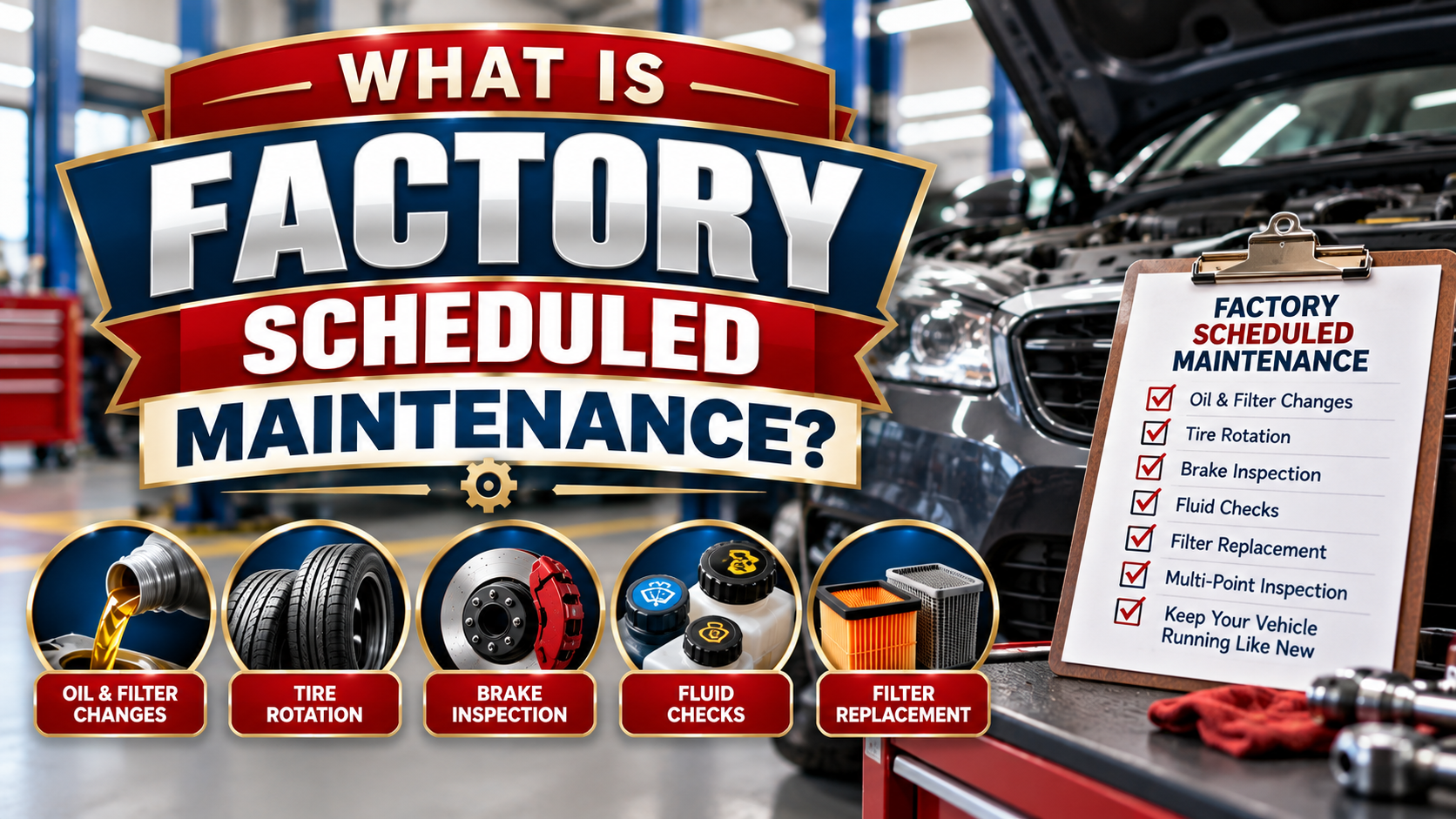
Oil change records help document that you have followed an important part of the manufacturer’s recommended maintenance schedule.
Benefits of Maintenance Records
- Track completed services.
- Identify upcoming maintenance needs.
- Help technicians understand vehicle history.
- Document maintenance for potential buyers.
- Support applicable warranty documentation requirements.
If you plan to sell or trade your vehicle, organized maintenance records may help demonstrate responsible ownership.
10. Oil Changes Create Opportunities to Identify Other Problems
An oil change appointment can also provide an opportunity to notice other vehicle maintenance concerns.
Depending on the service performed, a technician may identify:
- Visible fluid leaks
- Worn belts or hoses
- Tire wear concerns
- Low fluid levels
- Other visible maintenance issues
Not every oil change includes a comprehensive vehicle inspection, so ask your repair shop what is included.
Addressing developing problems early can help reduce the risk of unexpected breakdowns.
How Often Should You Change Your Engine Oil?
Oil change intervals vary depending on the vehicle, engine, oil specification, driving conditions, and manufacturer recommendations.
There is no single interval that applies to every car.
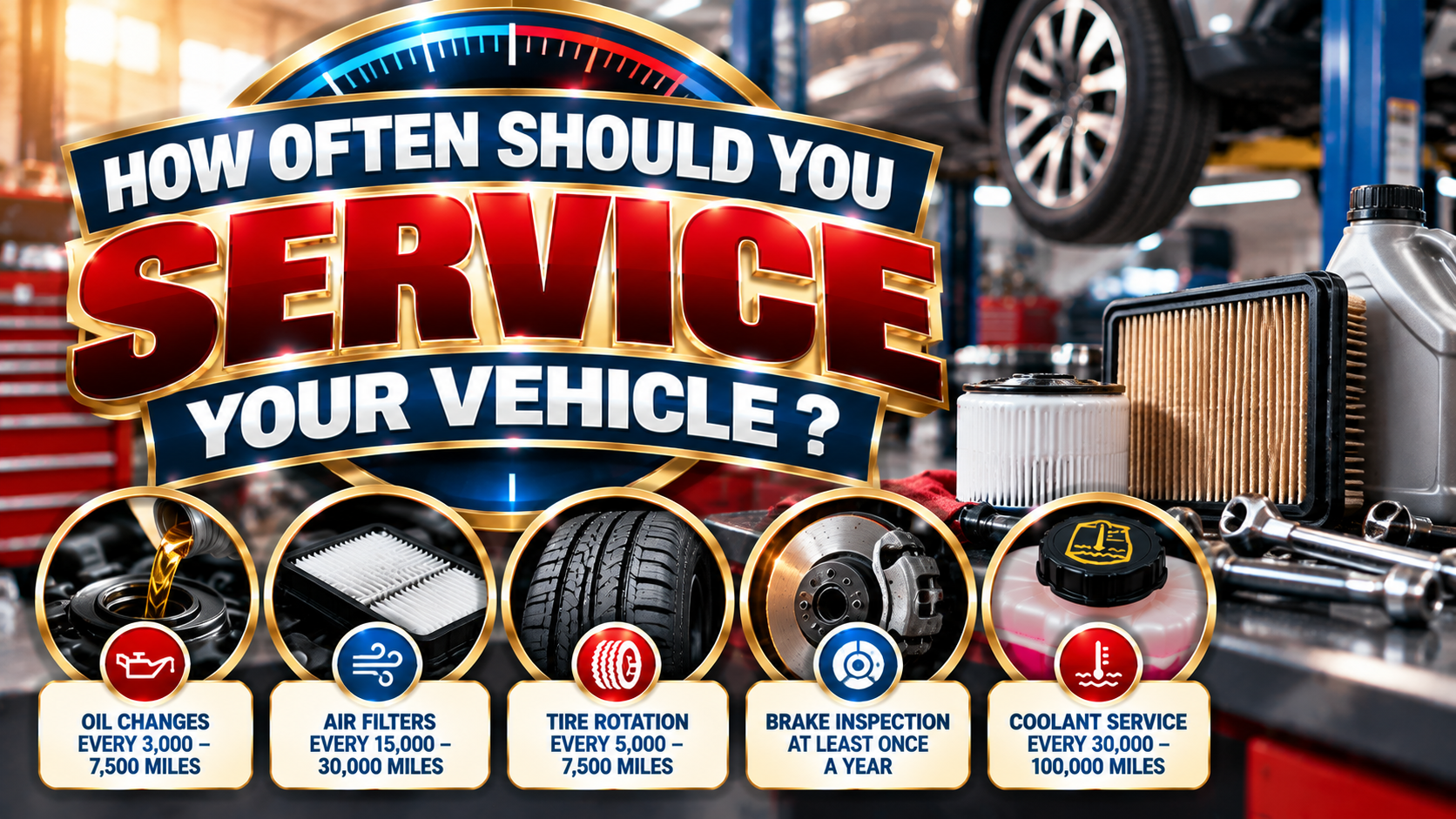
Many modern vehicles using approved synthetic oil have recommended intervals in the range of approximately 5,000 to 10,000 miles, although some manufacturers specify shorter or longer intervals.
Certain vehicles may require more frequent service, especially under severe operating conditions.
General Oil Change Considerations
| Driving or Vehicle Condition | Maintenance Consideration |
|---|---|
| Normal driving | Follow the manufacturer’s standard interval |
| Frequent short trips | Review severe-service recommendations |
| Extended idling | May require more frequent maintenance |
| Heavy towing | Follow severe-duty maintenance guidance |
| High-mileage vehicle | Monitor oil level and condition closely |
| Turbocharged engine | Use the exact manufacturer-approved oil |
| Low annual mileage | Follow the manufacturer’s time-based interval |
| Oil-life monitoring system | Follow the system and owner’s manual guidance |
The most reliable recommendation is to follow your vehicle’s owner’s manual and manufacturer-approved oil-life monitoring system.
Is the 3,000-Mile Oil Change Rule Still Necessary?
The traditional recommendation to change engine oil every 3,000 miles is not universally applicable to modern vehicles.
Advances in engine design, oil chemistry, and filtration have allowed many manufacturers to recommend longer intervals.
However, some older vehicles or engines operating under severe conditions may still require relatively short intervals.
Rather than relying on a universal mileage rule, follow the maintenance schedule developed for your specific vehicle.
Conventional Oil vs. Synthetic Oil: What’s the Difference?
Engine oils are available in different formulations, including conventional, synthetic blend, and full synthetic products.
The best choice depends on your vehicle’s requirements.
Conventional Motor Oil
Conventional oil is derived primarily from refined petroleum base oils.
It may be appropriate for certain engines when it meets the manufacturer’s required specifications.
Synthetic Blend Motor Oil
Synthetic blends combine different base oil types and are formulated to meet specific performance requirements.
Full Synthetic Motor Oil
Full synthetic oils are engineered to provide particular performance characteristics, which may include improved resistance to oxidation and better performance across a range of temperatures.
Many modern engines require oils that meet specific synthetic or manufacturer-defined standards.
Which Oil Is Best for Your Car?
Choose an oil that meets the viscosity grade and performance specifications listed in your owner’s manual.
An oil labeled “synthetic” is not automatically appropriate for every engine.
The correct specification matters more than the marketing label.
What Happens If You Go Too Long Without an Oil Change?
Driving far beyond the recommended oil change interval can increase the risk of oil degradation, contamination, and engine wear.
Possible consequences include:
- Increased engine deposits
- Reduced lubrication protection
- Sludge buildup
- Restricted oil flow
- Accelerated component wear
- Problems with oil-controlled engine systems
- Severe engine damage in extreme cases
The consequences depend on how far the interval was exceeded, the vehicle, operating conditions, and the oil’s condition.
If your vehicle is significantly overdue for an oil change, schedule service promptly.
Signs Your Car May Need an Oil Change
Your vehicle may provide several indications that oil maintenance is due.
Oil Change Reminder Light
Many vehicles display a maintenance reminder when an oil change is due.
Oil Level Is Low
A low oil level may indicate oil consumption or a leak.
Adding oil may be necessary, but it does not replace an overdue oil change.
Unusual Engine Noise
Ticking, knocking, or other unusual sounds may indicate lubrication or mechanical problems.
These symptoms require diagnosis and should not automatically be attributed to old oil.
Oil Leaks
Visible oil beneath your vehicle may indicate a leaking gasket, seal, filter, or another component.
Burning Oil Smell
A burning oil odor may indicate oil leaking onto hot engine components or another problem.
Dark Engine Oil
Oil naturally darkens during use, so color alone is not a reliable indicator that an oil change is needed.
Important: If your oil pressure warning light illuminates while driving, safely stop the vehicle and shut off the engine. Continuing to drive with low oil pressure can cause serious engine damage.
What’s Included in a Professional Oil Change?
A typical professional oil change includes several essential steps.
1. Draining the Old Engine Oil
Used oil is removed from the engine according to the vehicle’s service procedure.
2. Replacing the Oil Filter
The oil filter is replaced with a compatible filter designed for the vehicle.
3. Adding the Correct Engine Oil
The technician adds the manufacturer-approved oil type, viscosity, and quantity.
4. Checking the Oil Level
The oil level is verified using the manufacturer’s procedure.
5. Inspecting for Leaks
The technician checks for visible leaks around serviced components.
6. Resetting the Maintenance Reminder
When applicable, the oil-life or maintenance reminder is reset after service.
Additional inspections may be available depending on the shop and service package.
Why Routine Oil Changes Matter for Watkinsville, GA Drivers
Driving conditions throughout Watkinsville, Oconee County, Bishop, Bogart, and surrounding Northeast Georgia communities can vary considerably.
Some drivers spend most of their time commuting on highways, while others make frequent short trips, idle in traffic, or operate vehicles under demanding conditions.
Hot Georgia Summers
High temperatures can contribute to demanding engine operating conditions, especially when combined with heavy loads or extended idling.
Frequent Short Trips
Repeated short drives may prevent the engine from reaching full operating temperature long enough to reduce accumulated moisture and fuel dilution.
Stop-and-Go Traffic
Extended idling and frequent acceleration can influence engine operating conditions and maintenance needs.
High-Mileage Vehicles
Older vehicles may require closer monitoring of oil consumption, leaks, and overall engine condition.
Following the appropriate maintenance schedule for your driving habits can help protect your vehicle.
How to Check Your Engine Oil Between Oil Changes
Checking your oil level periodically is a good maintenance habit, especially for older or high-mileage vehicles.
Step 1: Park on Level Ground
Choose a safe, level location.
Step 2: Follow Your Owner’s Manual
Some vehicles require the engine to be off for a specified period before checking oil.
Other vehicles use electronic oil-level monitoring rather than a traditional dipstick.
Step 3: Check the Oil Level
If your vehicle has a dipstick, follow the manufacturer’s procedure to read the level.
Step 4: Add Oil Only If Needed
Use the correct oil specification and avoid overfilling.
Step 5: Investigate Repeated Oil Loss
If your engine frequently needs additional oil, have it inspected for leaks or excessive oil consumption.
Helpful Reminder: Checking your oil level is not the same as determining whether the oil is still suitable for continued use. Follow the recommended oil change interval even when the oil level appears normal.
Professional Oil Change Services in Watkinsville, GA
Routine oil changes are an important part of keeping your engine properly maintained.
At Car Craft of Watkinsville, we understand that drivers depend on their vehicles for work, family responsibilities, and everyday transportation.
Our automotive maintenance services help local drivers stay on top of important vehicle care.
Whether you drive a newer vehicle, an older car, a family SUV, or a high-mileage truck, following the appropriate oil maintenance schedule can help support long-term engine reliability.
Trust Car Craft of Watkinsville for Honest Oil Change Services
At Car Craft of Watkinsville, we’re proud to serve drivers throughout Watkinsville, Oconee County, and surrounding Northeast Georgia communities.
Our family-owned automotive repair shop is committed to providing honest recommendations, clear communication, and quality workmanship.
Our experienced, ASE-certified technicians offer automotive maintenance and repair services, including:
- Oil Change Services
- Engine Diagnostics
- Engine Repair
- Cooling System Repair
- Brake Repair
- Battery Testing & Replacement
- Tire Rotation & Balancing
- Vehicle Safety Inspections
We believe in helping customers understand their vehicle’s maintenance needs without recommending unnecessary services.
Is Your Vehicle Due for an Oil Change?
Don’t wait until neglected maintenance leads to engine problems.
Routine oil changes help protect internal engine components, reduce wear, and support dependable vehicle performance.
Contact Car Craft of Watkinsville today to schedule professional oil change services in Watkinsville, GA.
Let our experienced automotive team help keep your engine properly maintained for the miles ahead.