Used Car Buying Checklist for Watkinsville Drivers: What to Inspect Before You Buy
Your Complete Guide to Buying a Reliable Used Car in Watkinsville, GA
Buying a used car can be a smart financial decision, but choosing the wrong vehicle can lead to unexpected repair bills, reliability problems, and unnecessary stress. Whether you’re shopping for your first car, replacing a family vehicle, or purchasing a dependable truck or SUV, knowing what to inspect before making a purchase can save you time and money.
For drivers in Watkinsville, GA, and throughout Oconee County, purchasing a used vehicle requires more than finding an attractive price. A vehicle may look excellent on the outside while hiding mechanical problems, previous accident damage, neglected maintenance, or expensive repairs.
At Car Craft of Watkinsville, we believe informed vehicle owners make better purchasing decisions. A thorough inspection, careful test drive, and professional pre-purchase vehicle inspection can help you understand a used car’s condition before committing to the purchase.
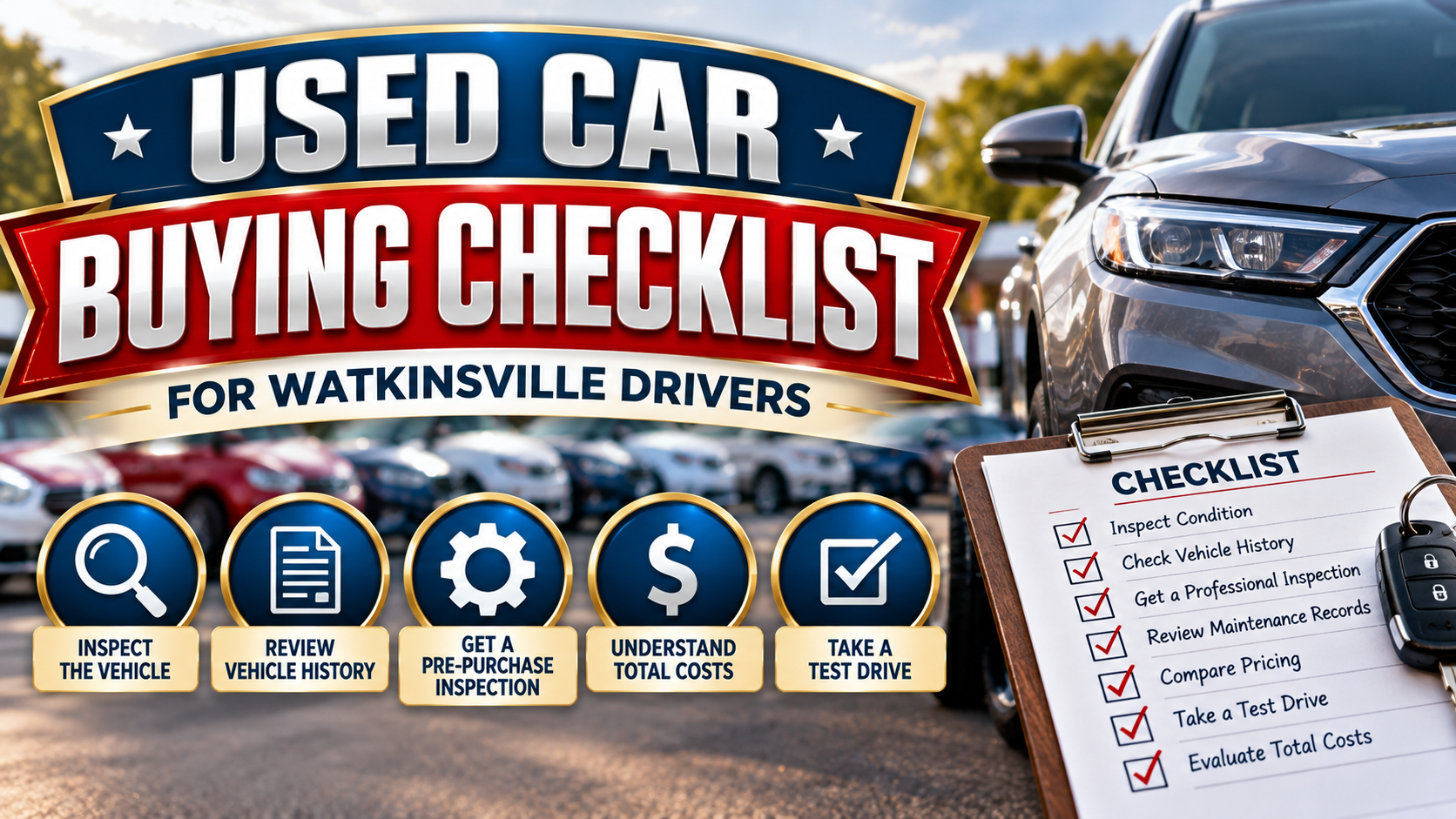
Use this comprehensive used car buying checklist to evaluate your next vehicle with confidence.
1. Research the Vehicle Before Visiting the Seller
Before scheduling a test drive, take time to research the vehicle’s make, model, year, mileage, and asking price.
Understanding the vehicle’s typical market value and known maintenance concerns can help you determine whether it’s worth considering.
What to Research:
- Average selling prices for similar vehicles.
- Common mechanical problems for the specific make and model.
- Manufacturer-recommended maintenance schedules.
- Expected fuel economy.
- Available safety features.
- Insurance costs.
- Reliability and owner satisfaction information.
- Whether the vehicle has outstanding safety recalls.
You can compare vehicle values using resources such as Kelley Blue Book, Edmunds, and other automotive pricing guides.
Helpful Tip: A vehicle priced significantly below comparable listings may deserve additional investigation. A low asking price does not always mean you’re getting a good deal.
2. Check the Vehicle Identification Number (VIN)
Every vehicle has a unique Vehicle Identification Number, commonly called a VIN.
Before purchasing a used car, verify that the VIN on the dashboard matches the vehicle’s registration, title, and other available documentation.
The VIN can help you research important information about the vehicle’s history.
Use the VIN to Investigate:
- Reported accidents.
- Previous ownership.
- Title history.
- Reported mileage inconsistencies.
- Certain insurance-related damage records.
- Manufacturer recalls.
- Available maintenance and repair records.
Vehicle history reports from services such as CARFAX or AutoCheck may provide valuable information.
However, these reports are not guaranteed to include every accident, repair, or mechanical problem.
Important: A clean vehicle history report does not replace a professional mechanical inspection.
3. Inspect the Exterior for Damage and Previous Repairs
A vehicle’s exterior condition can provide clues about how it has been maintained and whether it may have experienced previous damage.
Walk around the entire vehicle in good lighting and carefully inspect the body.
Exterior Inspection Checklist:
- Look for dents, scratches, and rust.
- Check for mismatched paint colors.
- Examine gaps between doors, fenders, hood, and trunk.
- Look for signs of previous body repairs.
- Inspect headlights and taillights for cracks or moisture.
- Check the windshield and windows for chips or damage.
- Examine the condition of exterior trim and seals.
- Look underneath the vehicle for visible damage or corrosion.
Uneven body panel gaps or mismatched paint may indicate previous repairs, although they do not automatically mean a vehicle has serious structural damage.
If you suspect significant accident damage, consider having the vehicle inspected by a qualified professional.
4. Examine the Tires and Wheels
Tires can reveal important information about a vehicle’s condition, alignment, and suspension system.
Uneven tire wear may indicate improper tire pressure, alignment problems, worn suspension components, or other mechanical concerns.
Tire Inspection Checklist:
- Check tread depth on all four tires.
- Look for uneven tread wear.
- Inspect sidewalls for cracks, bulges, or damage.
- Check tire manufacturing dates.
- Verify that tire sizes are appropriate for the vehicle.
- Look for damaged wheels or bent rims.
- Check the condition of the spare tire, if equipped.
Professional Tip: Tires that are excessively worn or damaged may need immediate replacement. Factor that expense into your purchasing decision.
5. Inspect the Engine Compartment
The engine is one of the most expensive components to repair or replace, making an under-the-hood inspection especially important.
Even if you aren’t mechanically experienced, certain warning signs may be visible.
Under-the-Hood Checklist:
- Look for visible oil or coolant leaks.
- Inspect accessible belts for damage.
- Check hoses for cracks, swelling, or deterioration.
- Look for excessive corrosion around battery terminals.
- Inspect fluid levels according to manufacturer instructions.
- Check for unusual odors.
- Look for evidence of neglected maintenance.
- Watch for damaged or disconnected wiring.
Do not open the cooling system while the engine is hot or touch moving engine components.
A clean engine compartment can be encouraging, but it does not guarantee that the engine is mechanically sound.
Likewise, a recently cleaned engine may make existing leaks harder to identify.
6. Check the Vehicle’s Fluids
Automotive fluids help protect essential mechanical components. Low, contaminated, or leaking fluids may indicate neglected maintenance or developing problems.
Important Fluids to Evaluate:
| Fluid | What to Check |
|---|---|
| Engine Oil | Proper level, leaks, and signs of contamination |
| Engine Coolant | Correct level when cool, visible leaks, and appropriate condition |
| Transmission Fluid | Level and condition where manufacturer inspection is permitted |
| Brake Fluid | Proper level and evidence of leaks or contamination |
| Power Steering Fluid | Level and leaks, if the vehicle uses hydraulic power steering |
| Windshield Washer Fluid | Proper operation of the washer system |
Fluid color alone does not always establish whether a fluid needs replacement.
A professional technician can help evaluate fluid condition using the manufacturer’s specifications and recommended procedures.
7. Look for Signs of Engine Problems
Before purchasing a used vehicle, pay close attention to how the engine starts, idles, and performs.
Whenever possible, ask to observe the vehicle starting after the engine has been sitting long enough to cool.
Potential Engine Warning Signs:
- Difficulty starting.
- Rough or unstable idling.
- Unusual knocking or ticking noises.
- Excessive exhaust smoke.
- Engine hesitation.
- Noticeable loss of power.
- Overheating.
- Illuminated warning lights.
Some engine noises are normal for particular vehicle designs, while others may indicate mechanical problems.
If you notice unusual sounds or performance concerns, have the vehicle professionally diagnosed before purchasing it.
8. Test the Transmission
Transmission repairs can be expensive, so checking transmission performance is an essential part of the used car buying process.
During your test drive, observe how the vehicle shifts and responds to acceleration.
Transmission Warning Signs:
- Delayed engagement when selecting Drive or Reverse.
- Harsh or unexpected shifting.
- Slipping during acceleration.
- Unusual transmission noises.
- Excessive vibration.
- Warning lights related to transmission operation.
Keep in mind that some transmissions, including continuously variable transmissions (CVTs), operate differently from traditional automatic transmissions.
A qualified technician can help determine whether the transmission is functioning as designed.
9. Evaluate the Braking System
A used vehicle’s brakes should operate smoothly and predictably.
During your test drive, pay attention to stopping performance and any unusual noises or vibrations.
Brake Inspection Checklist:
- Listen for squealing or grinding.
- Check for vibrations during braking.
- Notice whether the vehicle pulls to one side.
- Evaluate brake pedal feel.
- Watch for brake warning lights.
- Ask about recent brake maintenance.
Worn brake pads, damaged rotors, sticking calipers, or other braking system problems may require repairs.
Safety Tip: If the vehicle has noticeably poor braking performance, do not continue the test drive. Arrange a professional inspection.
10. Check the Steering and Suspension
Your vehicle’s steering and suspension systems affect handling, ride comfort, and driving safety.
During the test drive, pay attention to how the vehicle responds to steering inputs and road imperfections.
Warning Signs to Watch For:
- Loose or wandering steering.
- Excessive bouncing.
- Clunking noises over bumps.
- Unusual vibrations.
- Uneven tire wear.
- Pulling to one side.
- Steering wheel vibration at highway speeds.
These symptoms may indicate worn shocks, struts, bushings, ball joints, tie rods, alignment problems, or tire-related issues.
A professional inspection can help identify the actual cause.
11. Test the Air Conditioning and Heating Systems
For drivers in Watkinsville and Northeast Georgia, a properly functioning air conditioning system is especially important during the hot summer months.
Before purchasing a used car, test both the heating and cooling systems.
Climate Control Checklist:
- Confirm that the air conditioner produces cold air.
- Test the heater.
- Check all fan speeds.
- Test the front and rear defrosters.
- Listen for unusual blower noises.
- Check for musty or unpleasant odors.
- Verify that air flows through the selected vents.
Air conditioning repairs can range from relatively simple fixes to more expensive component replacements.
Identifying problems before purchasing allows you to account for potential repair expenses.
12. Test the Electrical System and Interior Features
Modern vehicles rely heavily on electrical systems and electronic components.
Even relatively minor electrical problems can become frustrating or expensive to repair.
Interior and Electrical Checklist:
- Power windows and door locks.
- Headlights and turn signals.
- Brake lights.
- Windshield wipers.
- Dashboard instruments.
- Infotainment system.
- Backup camera.
- Power seats.
- Interior lighting.
- USB and charging ports.
- Keyless entry and remote functions.
- Driver assistance features, if equipped.
Turn the ignition on and observe whether warning lights illuminate during the normal self-check and then turn off as expected after the engine starts.
Be cautious if warning lights remain illuminated or appear to have been disabled.
13. Check for Signs of Water or Flood Damage
Water-damaged vehicles can develop serious electrical and mechanical problems, sometimes long after the initial exposure.
Even if a vehicle looks clean, hidden moisture damage may remain.
Possible Signs of Flood Damage:
- Musty interior odors.
- Water stains beneath carpeting.
- Rust beneath seats or inside the cabin.
- Corrosion on electrical connectors.
- Unusual moisture inside headlights.
- Sediment in hard-to-clean areas.
- Electrical components that malfunction intermittently.
Not every sign of moisture indicates flood damage, but multiple warning signs should prompt further investigation.
A vehicle history report may reveal certain flood-related title records, but not all water damage is reported.
14. Take a Thorough Test Drive
A test drive is one of the most important steps when buying a used vehicle.
Whenever possible, drive the vehicle under several conditions, including neighborhood streets and appropriate highway speeds.
During the Test Drive:
- Check acceleration and engine response.
- Evaluate transmission shifting.
- Listen for unusual noises.
- Test braking performance.
- Observe steering and handling.
- Check for vibrations.
- Monitor dashboard warning lights.
- Verify that the engine maintains a normal operating temperature.
- Test air conditioning and heating.
- Make sure the vehicle feels comfortable and easy to control.
Avoid distractions during the test drive so you can focus on the vehicle’s performance.
If the seller refuses to allow a reasonable test drive without a valid explanation, consider that a warning sign.
15. Review Maintenance and Repair Records
A vehicle’s service history can provide valuable insight into how well it has been maintained.
A used car with higher mileage and consistent maintenance records may be a better purchase than a lower-mileage vehicle that has been neglected.
Important Records to Review:
- Oil change history.
- Brake service records.
- Tire replacements.
- Transmission maintenance.
- Cooling system service.
- Timing belt replacement, if applicable.
- Major engine or transmission repairs.
- Recall completion records.
Ask whether the vehicle has received maintenance according to the manufacturer’s recommended schedule.
Missing records do not automatically mean a vehicle has been poorly maintained, but they make a thorough inspection even more important.
16. Check for Open Safety Recalls
Before purchasing a used vehicle, check whether it has any outstanding manufacturer safety recalls.
The National Highway Traffic Safety Administration (NHTSA) provides a free VIN-based recall lookup tool.
Visit https://www.nhtsa.gov/recalls to check for open safety recalls.
Recall repairs are generally performed by authorized dealerships at no charge when the vehicle and recall qualify.
Checking recalls before purchasing can help you identify safety-related repairs that still need attention.
17. Get a Professional Pre-Purchase Vehicle Inspection
One of the smartest steps you can take before purchasing a used vehicle is scheduling a professional pre-purchase inspection.
Even if the vehicle appears to be in excellent condition, an experienced automotive technician may identify problems that are not obvious during a visual inspection or test drive.
A Professional Pre-Purchase Inspection May Include:
- Engine and transmission condition.
- Visible fluid leaks.
- Brake system inspection.
- Tire and wheel condition.
- Steering and suspension components.
- Cooling system condition.
- Battery and charging system.
- Belts and hoses.
- Exhaust system.
- Diagnostic trouble codes.
- Visible undercarriage concerns.
- Other accessible mechanical and safety components.
An inspection cannot guarantee that a used vehicle will never experience mechanical problems. However, it can provide valuable information about its current condition and help identify potential repair expenses.
Why It Matters: Spending money on an inspection before purchasing may help you avoid buying a vehicle that needs thousands of dollars in unexpected repairs.
18. Calculate the True Cost of Ownership
The purchase price is only one part of the cost of owning a used vehicle.
Before finalizing your decision, consider the expenses you may face after purchasing it.
Potential Ownership Costs Include:
- Sales taxes and registration fees.
- Insurance premiums.
- Fuel expenses.
- Routine maintenance.
- Tire replacement.
- Brake repairs.
- Immediate mechanical repairs.
- Future major maintenance.
- Financing costs, if applicable.
If an inspection reveals needed repairs, request estimates and factor those costs into your overall budget.
A vehicle with a slightly higher asking price but fewer maintenance concerns may ultimately provide better value.
19. Verify the Title and Complete the Paperwork Carefully
Before exchanging money, verify that the seller has the legal authority to sell the vehicle.
Check the title, VIN, seller information, and any disclosed liens.
For Georgia buyers, vehicle title and registration requirements may vary based on the vehicle and transaction.
Review current requirements through the Georgia Department of Revenue at https://dor.georgia.gov/.
Make sure you understand the paperwork, taxes, registration requirements, and any applicable emissions inspection obligations before completing the transaction.
Never assume that a verbal promise about the vehicle’s condition provides the same protection as a written agreement.
20. Know When to Walk Away
Sometimes the smartest used car buying decision is deciding not to purchase a particular vehicle.
Be cautious if you encounter:
- Significant undisclosed mechanical problems.
- Evidence of serious structural damage.
- Major discrepancies in the vehicle’s history.
- An unresolved title issue.
- A seller who refuses an independent inspection.
- Unexplained warning lights.
- Serious fluid leaks.
- Signs of extensive flood damage.
- Pressure to complete the purchase immediately.
There are many used vehicles available, and it’s better to continue searching than commit to a purchase you’re uncomfortable with.
Printable Used Car Buying Checklist
Use this checklist when inspecting your next used vehicle.
Before the Test Drive
-
Research the vehicle’s market value.
-
Check the VIN and vehicle history.
-
Verify title information.
-
Check for open recalls.
-
Review maintenance records.
-
Inspect exterior paint and body panels.
-
Check tires and wheels.
-
Look for fluid leaks.
-
Inspect the engine compartment.
-
Check the interior for damage or unusual odors.
During the Test Drive
-
Check engine starting and idling.
-
Test acceleration.
-
Evaluate transmission shifting.
-
Check braking performance.
-
Test steering and handling.
-
Listen for unusual noises.
-
Monitor dashboard warning lights.
-
Test air conditioning and heating.
-
Check electrical accessories.
-
Watch for overheating or vibrations.
Before Purchasing
-
Schedule a professional pre-purchase inspection.
-
Review inspection findings.
-
Request estimates for necessary repairs.
-
Calculate ownership costs.
-
Verify the title and any liens.
-
Confirm Georgia registration requirements.
-
Review the final purchase agreement.
-
Keep copies of all paperwork.
Why a Pre-Purchase Inspection Matters for Watkinsville Drivers
Whether you’re buying a used car from a dealership, private seller, or online marketplace, having an independent technician inspect the vehicle can provide an additional layer of protection.
For drivers throughout Watkinsville, Oconee County, Bishop, Bogart, and nearby communities, a reliable vehicle is essential for commuting, family responsibilities, and everyday transportation.
Georgia’s summer heat, stop-and-go traffic, and changing road conditions can place additional demands on vehicles that already have substantial mileage.
Identifying cooling system problems, worn brakes, tire issues, and other mechanical concerns before purchasing can help you make a more informed investment.
Trust Car Craft of Watkinsville for Honest Automotive Advice
At Car Craft of Watkinsville, we understand that purchasing a used vehicle is a significant investment.
Our family-owned automotive repair shop is committed to honest recommendations, clear communication, and quality automotive service for drivers throughout Watkinsville and Oconee County.
Our experienced, ASE-certified technicians can help with automotive maintenance, diagnostics, and repairs to keep your vehicle performing reliably.
Whether you’re evaluating a potential used car purchase or maintaining a vehicle you already own, understanding its mechanical condition is an important part of responsible vehicle ownership.
Buying a Used Car in Watkinsville, GA? Make an Informed Decision.
Don’t rely on appearance alone when purchasing your next vehicle.
Research its history, inspect its condition, take a thorough test drive, and arrange a professional mechanical inspection before finalizing your purchase.
Contact Car Craft of Watkinsville to discuss your vehicle inspection needs and ask about pre-purchase inspection availability.
We’re here to help Watkinsville and Oconee County drivers make informed automotive decisions and keep their vehicles running safely and reliably.